

Last Updated: November 8, 2026
Quick Summary
Vintage streetwear is worth the investment only when you separate wearing value from resale value, because a piece can be a brilliant wardrobe purchase and a terrible financial one. Four forces move vintage prices: rarity, condition, provenance, and demand, and missing any one means the piece stalls.
- Value appears when scarcity meets active demand, not from age alone.
- Check completed and sold listings, not active asking prices, before buying.
- Total cost includes authentication, cleaning, repairs, storage, platform fees, and shipping both ways.
- Vintage streetwear can take weeks or months to sell, so treat slow pieces as illiquid.
- Build a rotation of five to seven core pieces you will actually wear.
Table of Contents
- Vintage Streetwear as an Investment: The Honest Answer
- What Makes Vintage Streetwear Hold or Gain Value
- How to Authenticate Vintage Streetwear Before You Pay
- Best Vintage Streetwear Brands for Resale
- Depop vs Poshmark for Streetwear: Where Pieces Actually Sell
- Total Cost, Liquidity and the Risks Nobody Prices In
- Buying Vintage Versus Buying New Premium Streetwear
- Build a Rotation You Can Wear and Sell
- Frequently Asked Questions
Vintage Streetwear as an Investment: The Honest Answer
Is vintage streetwear worth the investment? Mostly no, and sometimes yes. The honest answer is that vintage streetwear is worth the investment only when you separate two things most buyers blur together: wearing value and resale value. A piece can be a brilliant wardrobe purchase and a terrible financial one.
Below, we break down what actually holds value, how to authenticate before you pay, and where the liquidity risk hides.
Wearability Versus Financial Return
Vintage streetwear is a garment first and an asset a distant second. Treat it as an asset and you inherit storage costs, condition anxiety, and a buyer pool that can vanish when a trend cools.
Wearability pays you every time you put the piece on. Financial return pays you once, maybe, at resale. Most people overpay for the second and underrate the first. A common mistake is buying a piece you would never actually wear because the resale math looked good on paper.
What Makes Vintage Streetwear Hold or Gain Value
Four forces move vintage prices: rarity, condition, provenance, and demand. Miss any one and the piece stalls.
Rarity, Age and Desirability
Scarcity alone does nothing. A rare piece nobody wants is just old clothing. Value appears when scarcity meets active demand, which is why a limited-edition graphic tee from a culturally significant era outperforms a genuinely rare but forgotten piece.
Age matters less than era relevance. A piece from a moment people still reference carries more pull than something merely old. Collectibility follows culture, not the calendar.
Quality, Materials and Construction
Construction is the part you can actually verify in your hands. Heavier fabric, clean double stitching, taped neck seams, and intact ribbing survive decades. Thin fabric and single-stitched hems rarely do.
If you want the deeper breakdown, our guide on whether expensive streetwear is actually better quality covers how to spot real craftsmanship, and our piece on what makes streetwear fabric premium explains GSM and cotton quality in detail. Those markers are how you judge a vintage piece in person, not just on a listing photo.
How to Authenticate Vintage Streetwear Before You Pay
Authentication means verifying tag, stitching, print method, and construction against what the brand actually produced in that era. Get one wrong and you have bought a convincing fake.
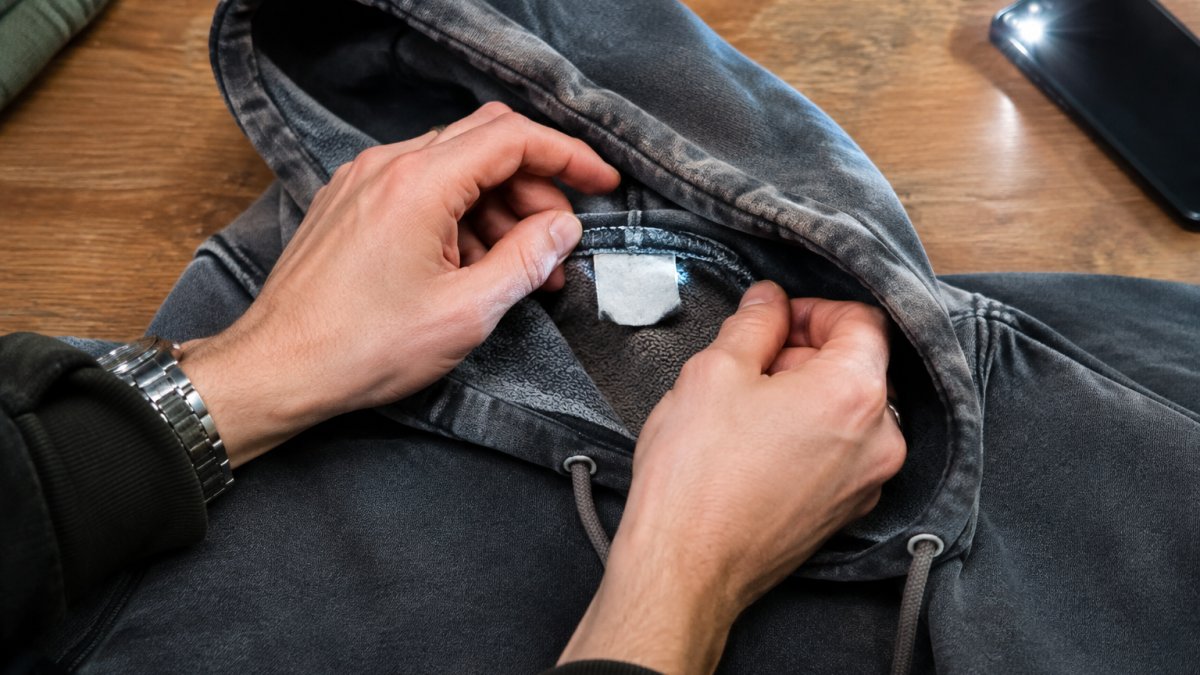
Work through this checklist before money changes hands:
- Neck tag matches known era labels, font, and stitching
- Care label and country of origin are consistent with the era
- Print method fits the period (screen print crackling versus modern digital)
- Stitching density and seam type match the brand's known construction
- Hardware, zippers, and drawcord tips are period-correct
- Seller can explain provenance without a rehearsed story
Watch out: a single perfect tag proves nothing. Our guide on how to find authentic streetwear brands goes deeper on brand-level authentication.
Best Vintage Streetwear Brands for Resale
The best vintage streetwear brands for resale are the ones with documented era output, recognizable graphics, and a collector base that still bids. Brand recognition drives liquidity more than any single design, but within streetwear the resale picture splits sharply by category. A grail hoodie and a grail graphic tee do not behave the same way, and treating "vintage streetwear" as one asset class is the fastest way to misprice a purchase.
Streetwear categories behave differently
Graphic tees. The deepest and most liquid vintage streetwear category.
Hoodies and crewnecks. Heavier fabric survives, so condition is easier to find, but the buyer pool is narrower and more label-driven. Era-correct blank manufacturers, taped neck seams, and intact ribbing are the value markers.
Denim and workwear-adjacent pieces. Construction is verifiable in hand, selvedge, chain stitching, period-correct hardware, which makes authentication more tractable than with tees.
Collaborations and limited graphics. The highest ceiling and the lowest floor. A documented collaboration with a clear release era can appreciate, but demand is trend-dependent and the buyer pool is thin.
What the resale signals actually tell you
| Signal | Strong | Weak |
|---|---|---|
| Era documentation | Clear, dateable tag and print | Vague or disputed era |
| Graphic recognition | Iconic, documented design | Generic or altered graphic |
| Construction | Heavy fabric, intact seams, taped necks | Thin fabric, repaired hems, replaced tags |
| Condition | Light wear, full print, no fading | Cracking, fading, holes, pit stains |
| Buyer pool | Active, broad collector base | Trend-dependent, thin |
| Category liquidity | Graphic tees, core hoodies | Niche collabs, oversized denim |
Read the table as a scoring sheet, not a checklist. A piece that is strong on four signals and weak on condition is usually a wear purchase, not an investment.
Watch out: brand recognition is not the same as brand liquidity. A label can be famous and still have a thin resale market for a specific era or category, so check completed sales for that exact type of piece before you assume the name carries the price.
For brand-level authentication detail, our guide on how to find authentic streetwear brands covers tag and construction checks by label.
Depop vs Poshmark for Streetwear: Where Pieces Actually Sell
Depop vs Poshmark for streetwear comes down to audience, but the investment question is narrower: where will this specific piece actually sell, how long will it take, and what will you net after fees? Most vintage guides treat resale value as a general claim. The evidence-led approach is to judge value by completed sales, not asking prices, and to price the platform's costs and speed into the decision before you buy.
Match the platform to the piece
Depop skews younger and more trend-driven, which suits graphic-heavy streetwear, Y2K-era pieces, and lower-to-mid price points.
Poshmark reaches a broader buyer base with stronger search traffic for recognizable labels. It is often better for core hoodies, denim, and pieces where the buyer searches by brand rather than by aesthetic. The trade-off is that trend-driven graphics can get scrolled past.
Niche and auction channels matter for grails. A rare archive piece often moves fastest with an informed audience that is actively bidding, even if the audience is smaller. Price discovery is better when buyers compete.
Evaluate resale performance with completed sales
Asking prices are not evidence. Before you buy a piece as an investment, check what actually sold:
- Search completed and sold listings for the same design, era, and size
- Compare sold prices, not active asking prices
- Note how long listings sat before selling (where the platform shows it)
- Check whether the same piece relists repeatedly, a sign of an unrealistic price
- Confirm the sold item was authentic and complete, not a reprint or altered piece
A common pattern is a wide gap between asking and sold prices on trend-driven graphics, and a much narrower gap on core, well-documented pieces. That gap is your liquidity risk in plain numbers.
Price in total cost and time to sell
Total cost is the number nobody calculates: purchase price plus authentication, cleaning, repairs, storage, platform fees, and shipping both ways.
Liquidity is the bigger risk. Vintage streetwear can take weeks or months to sell, and a rare item may take far longer than a common one.
Watch out: a high asking price on a rare piece is not proof of value.
Market trends also shift. A style that commands attention this season can sit unsold the next. That is investment risk in plain terms, and it is why we treat vintage as a wardrobe decision first.
Total Cost, Liquidity and the Risks Nobody Prices In
Total cost is the number nobody calculates: purchase price plus authentication, cleaning, repairs, storage, and platform fees. Add shipping both ways and the margin shrinks fast.
Liquidity is the bigger risk. Vintage streetwear can take weeks or months to sell, and asking prices are not completed sales. Judge value by what actually sold, not what sellers hope to get.
Market trends also shift. A style that commands attention this season can sit unsold the next. That is investment risk in plain terms, and it is why we treat vintage as a wardrobe decision first.
Buying Vintage Versus Buying New Premium Streetwear
New premium streetwear wins on predictability. You know the fabric weight, the fit, the return policy, and the condition. Vintage wins on uniqueness and story, when you can verify both.
Cost per wear is the fair comparison. If you want a framework for that math, read whether expensive streetwear is worth the price.
Our own answer to the vintage-versus-new question is the snow-washed finish: a Heavyweight Sun-Faded Hoodie, STL 314 at $64.00 or an LA "City of Angels" Snow-Washed Tee at $40.00 gives you a worn-in look on a new garment.


Build a Rotation You Can Wear and Sell
Build around pieces you will actually wear, then let resale be a bonus. A rotation of five to seven core pieces covers most weeks and keeps each garment in rotation rather than in storage.
- Buy one statement piece per season, not five
- Prioritize fabric weight and seam integrity over hype
- Track cost per wear for every purchase
- Sell pieces you have not worn in a year
- Store knitwear folded, out of direct sun
For the full method, our guide on curating a seasonal streetwear rotation walks through the process.
The real challenge is not finding vintage pieces. It is building a wardrobe where every piece earns its place, whether you bought it secondhand or new. NewCity Brand makes that easier with high-grade fabrics, snow-washed textures, and city-specific graphics, so you get the lived-in look without the authentication risk.
Frequently Asked Questions
Does vintage streetwear hold its value over time?
Some of it does, most of it does not. Value holds when a piece combines rarity, documented era, strong condition and steady demand, such as an original graphic tee from a landmark drop or a deadstock hoodie in a sought-after colorway. Ordinary secondhand streetwear usually resells below what you paid once fees and shipping are counted. Treat vintage streetwear as a wearable collection first and an asset second, and only put money into pieces you can authenticate and would happily keep wearing.
What are the best vintage streetwear brands for resale?
Look for brands with a documented archive, recognizable graphics and a collector base that keeps bidding: early skate and surf labels, heritage sportswear, and archive-era designer streetwear. The strongest resale signals are limited edition runs, deadstock condition and original tags. Before buying, search completed sales rather than asking prices, and compare at least three recent results. A brand name alone does not carry value; the specific piece, size and condition do most of the work.
How do you authenticate vintage streetwear?
Start with the tag: font, stitching, placement and care label wording should match known examples from that era. Check construction details such as double-stitched hems, taped neck seams and hardware stamps. Fades and patina should look uneven and natural, not printed or sanded. Ask the seller for close-ups of the neck tag, care label and any flaws, plus provenance like a receipt or original packaging. If a price sits far below market value for a rare piece, assume counterfeit risk until the details prove otherwise.
Is it better to buy vintage or new premium streetwear?
It depends on whether you want wearability or upside. New premium pieces give you a known fit, a return window and no authenticity risk, which matters if you plan to wear the item weekly. Vintage can deliver rarity and character, but it comes with sizing surprises, condition issues and slower resale. Many collectors run both: a core rotation of new heavyweight pieces they wear hard, plus a small number of vintage buys they store carefully and sell when demand peaks.
