

Table of Contents
- The Real Question: What Are You Actually Paying For?
- How to Identify High Quality Streetwear
- Luxury Streetwear vs Fast Fashion: Key Differences
- Cost Per Wear Calculation for Clothing
- The Psychology of Expensive Streetwear
- Care and Maintenance for Longevity
- Where NewCity Brand Fits
- Conclusion
- Frequently Asked Questions
Last Updated: September 20, 2026
The Real Question: What Are You Actually Paying For?
Walk into any high-end boutique and you'll see a hoodie priced higher than a week of groceries. The question isn't whether expensive streetwear is worth the price. It's whether you can tell the difference between a garment built to last and one selling a logo.
This guide from NewCity Brand breaks down the actual construction, math, and psychology behind premium streetwear so you can make that call yourself.

Most shoppers assume price equals quality. That's only half true. A $400 hoodie can be a masterpiece of heavyweight cotton and reinforced seams, or it can be a $40 blank with a screen-printed logo and a massive retail markup.
How to Identify High Quality Streetwear
Quality in streetwear comes down to two measurable things: fabric weight and seam construction. Everything else, from the graphic to the fit, sits on top of that foundation.
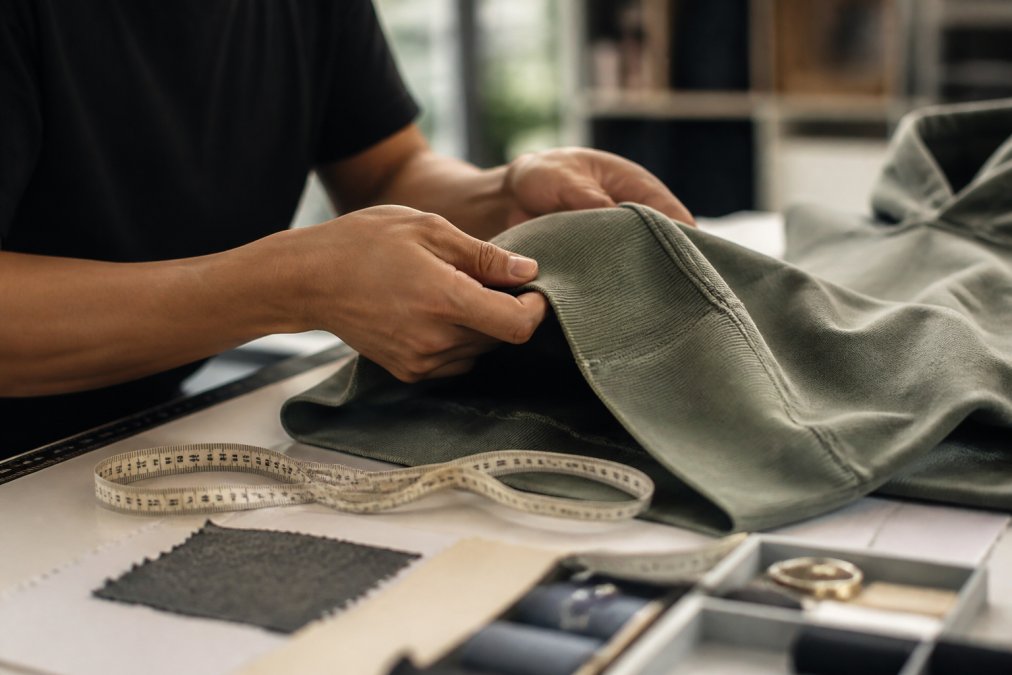
Fabric Weight and Feel
Fabric weight is measured in grams per square meter (GSM), and it tells you how dense and durable a garment is. A standard fast-fashion hoodie often lands in the 250-300 GSM range. Premium streetwear typically starts around 380 GSM and climbs past 400 GSM.
Seam Construction and Stitching
Seam construction determines whether a garment holds together or falls apart at the stress points. Look for:
- Double-stitched ribbed cuffs and hems
- Taped or binding-taped neck and shoulders
- Side-seamed construction rather than tubular bodies
Luxury Streetwear vs Fast Fashion: Key Differences
The difference between luxury streetwear and fast fashion isn't the logo. It's the production model behind the garment.
Materials and Production Runs
Fast fashion relies on mass production and cheap blended fabrics to hit low price points at enormous volume. Luxury streetwear uses premium materials and limited production runs, which raises the per-unit cost but also the garment's lifespan and resale potential.
The Hype Factor and Resale Value
Here's where the math gets uncomfortable. Some expensive streetwear holds value because of hype culture and status signaling, not craftsmanship. A piece can resell for multiples of retail purely on brand name, while a technically superior garment from a smaller label sells for less.
| Factor | Fast Fashion | Luxury Streetwear |
|---|---|---|
| Fabric weight | 250-300 GSM | 380-420+ GSM |
| Production scale | Mass production | Limited runs |
| Seam construction | Often single-stitch | Double-stitched, taped |
| Cost per wear | Low upfront, high over time | High upfront, low over time |
| Resale value | Near zero | Brand-dependent |
Cost Per Wear Calculation for Clothing
Cost per wear is the real price of a garment. Divide the purchase price by the number of times you'll actually wear it.
Run the numbers before you buy:
- Estimated wears: Be honest. A statement piece you wear monthly is not a daily driver.
- Lifespan: Heavier cotton with reinforced seams typically outlasts thin blends by a wide margin.
- Care cost: Dry cleaning and special handling add up fast.
The Psychology of Expensive Streetwear
Price signals status. That's not a flaw in the system, it's the system working as designed. But understanding why it works lets you decide when signaling is worth paying for and when it isn't.
The Veblen Good Mechanism
A Veblen good is a product for which demand increases as price rises, because the high price itself is the point. Luxury watches, certain handbags, and a meaningful slice of streetwear behave this way. When a brand raises the retail price on a limited drop and the piece sells out faster, that's not a pricing error, it's Veblen dynamics in action.
How Status Signaling Actually Works
Signaling theory holds that people buy visible goods to communicate group membership, taste, or resources to others. Streetwear is unusually efficient at this because the codes are legible to insiders and opaque to outsiders, a feature, not a bug. A recognizable logo, a specific silhouette, or a regional design cue all function as shorthand.
Three signals streetwear commonly carries:
- Scene membership, the piece says you're part of a specific subculture, city, or era.
- Resource signaling, the price itself communicates willingness to spend.
- Taste signaling, choosing an obscure label over a mainstream one signals discernment.
Separating Signaling Value From Construction Value
Run two independent questions before you buy:
- Signaling: Does this piece communicate something I actually want to communicate, to people whose opinion I actually care about?
- Construction: If the logo were removed, would I still pay this price for the fabric, seams, and fit?
If the answer to question two is no, you're buying signaling only. That's a legitimate purchase, but price it as signaling, not as an investment in a garment. If the answer to question two is yes, the signaling is a free bonus on top of a well-built piece.
Psychological Pricing Tactics to Recognize
Charm pricing drops a price just below a round number, $395 instead of $400, because the leftmost digit anchors perception. Prestige pricing does the opposite: luxury brands deliberately avoid discounts and round numbers to signal exclusivity. Anchoring works by placing a high-priced item next to the one the brand actually wants you to buy, making the target feel reasonable by comparison.
Care and Maintenance for Longevity
How you wash a garment determines whether it lasts three years or three months, and that lifespan is the single biggest variable in the cost-per-wear math. A $200 hoodie worn 300 times costs $0.67 per wear. The same hoodie ruined in 40 washes costs $5.00 per wear. Care is not a footnote to value; it is the value.
Why Heat and Agitation Destroy Cotton
Cotton fibers are cellulose chains held together by hydrogen bonds and natural waxes. Hot water and high-heat drying break those bonds, strip the waxes, and cause the fibers to swell and abrade against each other. The result is what you see as pilling, thinning, and loss of structure. Heavier fabrics resist this longer because there's more fiber mass to lose before the garment fails, but they're not immune.
A Maintenance Schedule That Protects the Investment
- Wash frequency: Every 3-5 wears for hoodies and tees, not every wear. Spot-clean between washes.
- Water temperature: Cold, always. There is no benefit to warm water for cotton streetwear.
- Detergent: Neutral or pH-balanced, no bleach, no fabric softener. Softener coats fibers and reduces absorbency and hand-feel over time.
- Cycle: Delicate or gentle, low spin. Turn garments inside out to protect prints and face fabric.
- Drying: Hang dry whenever possible. If tumble drying, low heat and remove slightly damp.
- Storage: Fold heavyweight knits; hanging stretches shoulders and collars.
Handling Washed and Distressed Finishes
Snow-washed, sun-faded, and garment-dyed pieces have already been through an intentional distressing process. That means the color is less stable than a reactive-dyed piece by design. Expect slight color transfer on the first one or two washes, wash with similar colors and avoid pairing with whites. Do not attempt to "restore" a faded finish with color-safe bleach; you'll strip the deliberate wash effect you paid for.
Repair Before You Replace
A blown seam, a loose cuff, or a small hole is a repair, not a replacement. A tailor can re-stitch a seam for a fraction of the cost of a new garment, and a well-executed repair often outlasts the original stitching. For heavyweight pieces with reinforced construction, repairs are almost always the better economic choice.
Where NewCity Brand Fits
NewCity Brand builds premium urban apparel around high-grade fabrics, iconic graphics, and snow-washed textures that celebrate local city identity. The approach is straightforward: heavyweight cotton, reinforced construction, and designs rooted in specific cities rather than generic "urban" branding.
Conclusion
The real challenge with expensive streetwear is that most buyers can't tell construction from branding, so they pay premium prices for average garments. Learning to read fabric weight, seam type, and cost per wear puts that decision back in your hands.
Frequently Asked Questions
Is it worth buying expensive clothing?
It depends on construction and how often you wear it. A $64 heavyweight hoodie worn twice a week for two years costs about $0.62 per wear. A $15 fast fashion hoodie that pills after three months costs more per wear despite the lower sticker price. Look for fabric weight above 300g/m², double-stitched seams, and pre-shrunk cotton. Those details separate expensive streetwear that lasts from expensive streetwear that just costs more.
How can you tell if a streetwear brand is high quality?
Check the fabric weight and construction details. High-quality streetwear lists specs like 380g/m² or 400g/m² cotton, side-seamed construction, taped neck and shoulders, and double-stitched ribbed cuffs. Look for transparency about materials and manufacturing. Brands that share these details, like NewCity Brand does with its snow-washed hoodies, give you concrete reasons to trust the price. If a brand hides its specs, that is a red flag.
Does price always correlate with garment durability?
No. Price reflects brand equity, marketing, and hype as much as materials. A $200 hoodie with a large logo but thin fabric will not outlast a $56 heavyweight cotton hoodie with reinforced seams. Use cost-per-wear calculation for clothing to compare real value. Divide the price by the number of times you realistically wear it. Durability comes from fabric weight, seam construction, and care, not the number on the tag.
What is the 3-3-3 rule for clothing?
The 3-3-3 rule suggests buying items you can wear at least three times in three different ways for three years. It is a practical filter for expensive streetwear purchases. Before buying, ask if the piece works with at least three outfits in your rotation and if the construction supports three years of regular wear. A heavyweight hoodie with neutral graphics passes this test more often than a trend-driven piece with limited styling options.
The challenge isn't finding expensive streetwear. It's finding pieces that earn their price through construction rather than hype. NewCity Brand builds premium urban apparel with high-grade fabrics, snow-washed textures, and city-rooted graphics, with fabric weights and construction details listed on every product page. Get started with NewCity Brand and build a wardrobe where every dollar shows up in the seams.