

Table of Contents
- Why a Seasonal Streetwear Rotation Matters
- Build Your Streetwear Capsule Wardrobe Foundation
- Master Streetwear Layering Tips for Temperature Changes
- How to Transition a Wardrobe Between Seasons
- Create Summer Streetwear Outfits That Actually Work
- Balance Proportions and Mix Silhouettes
- Maintain Your Rotation and Rotate Pieces Intentionally
- Frequently Asked Questions
Last Updated: October 13, 2026
Why a Seasonal Streetwear Rotation Matters
Building a seasonal streetwear rotation isn't just about staying warm or cool. It's about creating a wardrobe that works with your life, not against it. When you curate pieces intentionally, you wear more of what you own and waste less money on clothes that sit unworn.
A solid rotation means you have the right pieces ready when the weather shifts. No more digging through your closet at 6 AM. No more buying the same basic tee three times because you forgot you already owned it. At NewCity Brand, we've watched how intentional curation transforms how people dress, they feel more confident, spend smarter, and actually enjoy getting dressed.
The real benefit? You stop chasing trends and start building a personal uniform. When your pieces work together across seasons, mixing and matching becomes effortless. Your outfits feel cohesive. Your style becomes recognizable.
Here's what we mean: a heavyweight oversized long sleeve from our collection can layer under a jacket in fall, work solo in spring, and pair with shorts in summer. One piece, three seasons. That's the power of smart curation.

Build Your Streetwear Capsule Wardrobe Foundation
Your foundation is everything. Without it, you're just collecting clothes. With it, you're building a system.
Start with streetwear capsule wardrobe essentials that anchor everything else. Think base tees, oversized long sleeves, and neutral outerwear. These pieces should be high quality and built to last. They're the pieces you'll reach for again and again, so invest here.
For a solid foundation, you need:
- Base tees in neutral colors (white, black, gray, cream)
- Oversized long sleeves for layering and standalone wear
- Statement graphic tees that reflect your personal style
- Lightweight outerwear for spring and fall transitions
- Heavyweight outerwear for winter layering
The American Apparel Association notes that quality basics form the backbone of sustainable wardrobes. When your foundation pieces are built right, they don't need replacing every season.
Our Oversized Sun-Faded Long Sleeve Top features a heavyweight construction and natural sun-faded finish that works across multiple seasons. Pair it with shorts in summer, layer it under a jacket in fall, or wear it solo in spring. The versatility is built in.
Don't skip the basics. A quality base tee costs more upfront but lasts through countless wears. Calculate cost-per-wear: if a $40 tee gets worn 100 times, that's 40 cents per wear. A $15 tee worn 20 times costs 75 cents per wear. Better fabrics survive washing, maintain their shape, and actually feel good against your skin.
Your capsule should have roughly:
- 5-7 base tees
- 3-4 oversized long sleeves
- 2-3 statement graphic pieces
- 2 lightweight layers
- 1-2 heavyweight outerwear pieces
This isn't about minimalism for its own sake. It's about having enough variety to feel fresh while keeping everything cohesive.
Master Streetwear Layering Tips for Temperature Changes
Layering is the secret to making one wardrobe work across four seasons. Done right, it solves the biggest problem with seasonal dressing: unpredictable weather.
The key to streetwear layering tips is understanding removable layers. You want pieces you can add or subtract as temperature shifts throughout the day. Morning cold becomes midday warmth.
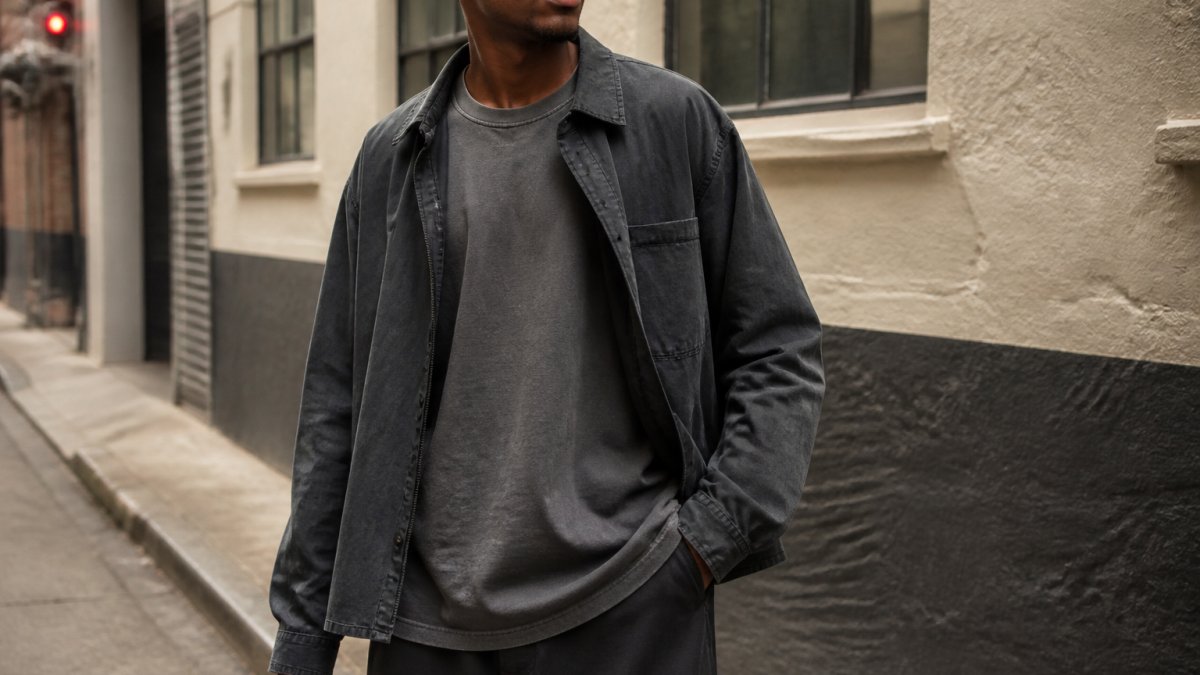
Your layering system works like this:
- Base layer: Fitted tee or long sleeve that sits close to your body
- Mid layer: Oversized long sleeve or lightweight shirt for warmth and visual interest
- Outer layer: Jacket, overshirt, or hoodie for wind and temperature control
The magic happens when your base and mid layers are different weights and textures. A fitted base tee under an oversized long sleeve creates proportion contrast.
Oversized silhouettes work best for layering because they don't bunch up under jackets. Fitted pieces underneath keep the look sharp. This balance prevents you from looking bulky.
Textures matter too. Pair smooth cotton with textured fabrics. A snow-washed tee under a smooth overshirt creates visual depth. The eye catches the contrast. Your outfit feels intentional, not accidental.
Think about your climate. In cooler regions, you need heavier mid-layers and substantial outerwear. In warmer climates, focus on lightweight removable layers that breathe. The principle stays the same: pieces that add or subtract easily.
Our Heavyweight Sun-Faded Hoodie works as a mid-layer or outer layer depending on the season. The oversized fit means it layers cleanly over fitted pieces. The dense, premium cotton construction keeps it structured, so it doesn't collapse when you remove it.

How to Transition a Wardrobe Between Seasons
Transitional periods are when most wardrobes fall apart. You're caught between seasons. Nothing quite fits the weather. This is where intention saves you.
How to transition a wardrobe between seasons starts with overlap pieces, clothes that work in both seasons. These are your bridge between rotations.
Spring and fall are your overlap seasons. These months demand pieces that work in cool mornings and warmer afternoons. This is where lightweight jackets, oversized long sleeves, and cardigans earn their place.
Create a transition checklist:
- Lightweight jackets that layer over everything
- Long sleeves in breathable fabrics
- Overshirts that work open or closed
- Accessories like hats and scarves for temperature control
- Footwear that bridges seasons (not heavy boots, not sandals)
The goal is having pieces that work in both seasons without buying a completely different wardrobe. A quality lightweight jacket worn in spring and fall gets double use.
Fashion Institute of Technology's seasonal wardrobe research emphasizes that overlap pieces reduce overall wardrobe size while increasing outfit variety. This is efficiency.
Rotate your storage. Heavy winter pieces go to the back of your closet in spring. Pull transition pieces forward. As summer hits, rotate again. This physical organization makes getting dressed easier and prevents you from forgetting what you own.
Don't buy new pieces just because the calendar changed. Look at what you have and ask: does this work in the new season? If yes, it stays in regular rotation. If no, it moves to storage.
Create Summer Streetwear Outfits That Actually Work
Summer demands a different approach. Heat and humidity change everything. Your heavy pieces go away. Your focus shifts to breathable fabrics, shorter sleeves, and strategic layering with lightweight pieces.
Heavyweight Sun‑Faded Hoodie — STL 314 →
Summer streetwear outfits start with a solid base. A quality base tee is your foundation. Pair it with shorts that fit well and move with you. Add sneakers that feel good after hours of wear. This is your everyday uniform.
The challenge with summer is avoiding monotony. Without layering, outfits can feel flat. Fix this with strategic accessories and texture mixing.
Build summer outfits around these combinations:
- Base tee + shorts + sneakers + lightweight overshirt
- Oversized long sleeve + shorts + sneakers + minimal accessories
- Statement graphic tee + neutral shorts + footwear + one accent piece
- Lightweight layers + shorts + footwear + hat or bag for visual interest
Summer is where graphic tees shine. A bold statement piece becomes your outfit's anchor. Our Snow-Washed St. Louis "The Lou" Graphic Tee works as a statement piece because the washed finish and bold graphic carry the outfit.

Texture becomes more important in summer because you're wearing fewer pieces. A smooth cotton tee next to textured shorts creates visual interest. Washed fabrics catch light differently than smooth ones. This detail-level thinking separates intentional outfits from accidental ones.
Footwear matters in summer because your shoes are more visible. Clean sneakers in neutral colors work with almost everything. One statement sneaker in a bold color or unique silhouette adds personality without overwhelming the outfit.
Balance Proportions and Mix Silhouettes
Proportion is the invisible force that makes outfits work or fall apart. Get this right and average pieces look intentional. Get it wrong and expensive pieces look sloppy.
The core principle: balance oversized and fitted pieces. Never wear oversized on top and oversized on bottom. Never wear fitted on top and fitted on bottom.
Mixing oversized and fitted silhouettes follows a simple rule:
- Oversized top + fitted bottom = balanced, modern look
- Fitted top + oversized bottom = balanced, modern look
- Oversized top + oversized bottom = sloppy, unfocused
- Fitted top + fitted bottom = tight, uncomfortable
This isn't opinion. This is visual balance. When everything is the same size, your proportions look undefined. When you contrast sizes, your shape reads clearly.
An oversized long sleeve over fitted shorts creates definition. Your shoulders get width from the oversized piece. Your legs get shape from the fitted shorts.
Layering makes proportion play even more interesting. A fitted base tee under an oversized long sleeve creates multiple silhouette layers.
Color and texture amplify proportion play. A light-colored oversized piece over dark fitted pieces creates contrast that makes proportions even more obvious.
The Casual Sportswear Set demonstrates proportion balance built in. The oversized hoodie works with the relaxed-fit sweatpants because the proportions are intentional. The hoodie's width balances the pants' length.
Think about your body type when applying proportion rules. Taller frames can carry more volume in oversized pieces. Shorter frames need more fitted pieces to avoid getting swallowed.
Maintain Your Rotation and Rotate Pieces Intentionally
A rotation only works if you actually rotate pieces. This sounds obvious. Most people don't do it.
Intentional rotation means moving pieces in and out of regular reach based on season. It means washing and storing pieces properly so they last.
Start with physical organization. Divide your closet by season. Heavy winter pieces go in the back in summer. Lightweight pieces move forward.
Wash pieces correctly to extend their life. Most quality streetwear pieces need gentle care. Wash in cold water on a gentle cycle. Hang dry when possible.
Our pieces include specific care instructions because fabric matters. The Heavyweight Sun-Faded Hoodie should be washed on the reverse side with neutral detergents.
Track what you wear. Notice which pieces make it into regular rotation and which stay in the closet. After one season, you'll know exactly what works.
Rotate seasonally but also rotate throughout the week. Don't wear the same piece three days in a row. Let fabrics rest.
Consider cost-per-wear when deciding what to keep.
Building a seasonal streetwear rotation requires intention, but the payoff is massive. You'll wear more of what you own. You'll feel confident in your outfits.
Frequently Asked Questions
How do you layer for streetwear?
Start with a fitted base tee or long sleeve, add a statement layer like an oversized graphic tee or long sleeve top, then use removable outerwear such as a hoodie or lightweight jacket. Keep proportions balanced: if your base is oversized, your outerwear should be fitted, or vice versa. This creates visual interest while maintaining comfort across temperature changes.
How many pieces should a seasonal streetwear rotation include?
A functional seasonal rotation typically includes 8-12 core pieces: 3-4 base tees, 2-3 graphic or statement tees, 2 layering pieces (like hoodies or long sleeves), 1-2 outerwear items, and 2-3 bottoms. This allows you to build 15-20+ outfit combinations without feeling repetitive. Focus on pieces that work across multiple seasons and mix well together, prioritizing versatile essentials and statement pieces that reflect your personal style.
What should I include in my streetwear capsule wardrobe for hot weather?
For summer streetwear outfits, prioritize lightweight, breathable pieces: oversized cotton tees, graphic tees, and minimal long sleeves for layering when needed. Include neutral shorts and lightweight bottoms that pair with multiple tops. The Snow-Washed St. Louis Graphic Tee works year-round and keeps you cool while making a statement. Add one lightweight overshirt or unstructured jacket for evening temperature drops. Stick to a cohesive color palette to maximize mix-and-match potential.
How do you maintain and rotate your streetwear pieces to extend their lifespan?
Wash pieces inside out in cold water on a gentle cycle with mild detergent. Do not bleach, soak, rub, or wring. Wash with like-colored garments. Hang dry and avoid direct sunlight. Rotate pieces seasonally to prevent overwear, store off-season items in a cool, dry space. This extends cost-per-wear and keeps your rotation feeling fresh. Premium pieces like the Casual Sportswear Set deserve intentional care to maintain their structured fit and color vibrancy across multiple seasons.