

Table of Contents
- Understanding Fabric Quality: The Foundation of Premium Streetwear
- Heavyweight Cotton and GSM Explained
- Long-Staple Cotton and Supima: The Luxury Difference
- How to Identify High Quality Clothing
- Fabric Construction and Print Mechanics
- Is Expensive Streetwear Worth the Price
- Fabric Aging, Wash-Testing, and Garment Longevity
- Synthetic Blends and Performance Fabrics
- Frequently Asked Questions
Last Updated: September 1, 2026
Understanding Fabric Quality: The Foundation of Premium Streetwear
Premium streetwear fabric is engineered to perform, age gracefully, and maintain its structure long after casual alternatives deteriorate. The distinction comes down to fiber quality, construction methods, and finishing. When you buy premium streetwear, you're paying for durability and pieces that improve with age rather than fall apart.
The foundation starts with raw material. Cotton quality varies dramatically, from cheap short-staple fibers that pill and fade quickly to long-staple varieties that maintain integrity through dozens of washes. Ring-spun processing, textile density measured in GSM, and reinforced stress points explain why two identical-looking hoodies have vastly different lifespans.
Heavyweight Cotton and GSM Explained
Heavyweight cotton is the backbone of premium streetwear. GSM (grams per square meter) quantifies fabric weight: 100 GSM is lightweight, 200 GSM is mid-weight, and 300+ GSM is heavyweight. Most premium hoodies fall into the 280-350 GSM range, providing enough body to hold graphics cleanly, resist wrinkles, and maintain shape through regular wear.
Heavier fabrics have more fiber per square inch, meaning more surface area to resist pilling, better structural integrity at stress points, and superior color retention. A 320 GSM hoodie will show wear much slower than a 250 GSM equivalent.
Heavyweight doesn't mean uncomfortable. Ring-spun processing determines whether heavy fabric feels stiff or soft.
Ring-Spun vs. Open-End Cotton
Ring-spun and open-end cotton are fundamentally different processing methods. Open-end cotton uses centrifugal force to spin fibers quickly and cheaply, creating fuzzy yarn prone to pilling. Ring-spun cotton twists fibers tightly around a ring, creating compact, uniform yarn with fewer loose fibers. This takes longer and costs more, but produces a smoother surface, better color vibrancy, and significantly better pilling resistance.
For streetwear, ring-spun cotton is essential if you want a piece looking premium after six months of wear. Open-end fabrics show wear immediately; ring-spun fabrics develop intentional character, fading and holding structure in ways that look deliberate rather than deteriorated.
Premium hoodies like the Brushed Fleece St. Lou 314 Hoodie use ring-spun construction because they're designed to represent your city identity for years, not months. The ring-spun yarn creates smooth, structured surfaces that communicate quality and maintain it through regular wear.

Long-Staple Cotton and Supima: The Luxury Difference
Long-staple cotton fibers are typically 1.25 inches or longer, compared to 0.75 inches for standard cotton (peer-reviewed research). Longer fibers create stronger yarn with fewer joins and weak points, producing smoother surfaces with better color retention and graphics reproduction.
Supima cotton is a premium long-staple variety grown primarily in the United States, with fibers approximately 1.4 inches long (usda.gov). This creates yarn that feels silky and maintains appearance through dozens of washes. A standard cotton t-shirt might look faded after 15-20 washes; a Supima equivalent might look virtually unchanged after 50 washes.
Long-staple and Supima cotton cost more to source and manufacture, which is why they appear primarily in higher-end brands. For community-focused streetwear like NewCity Brand, signature pieces designed to represent your city identity use long-staple or Supima construction to maintain visual integrity for years.
How to Identify High Quality Clothing
Identifying premium streetwear requires multiple sensory and visual checks beyond price or brand name.
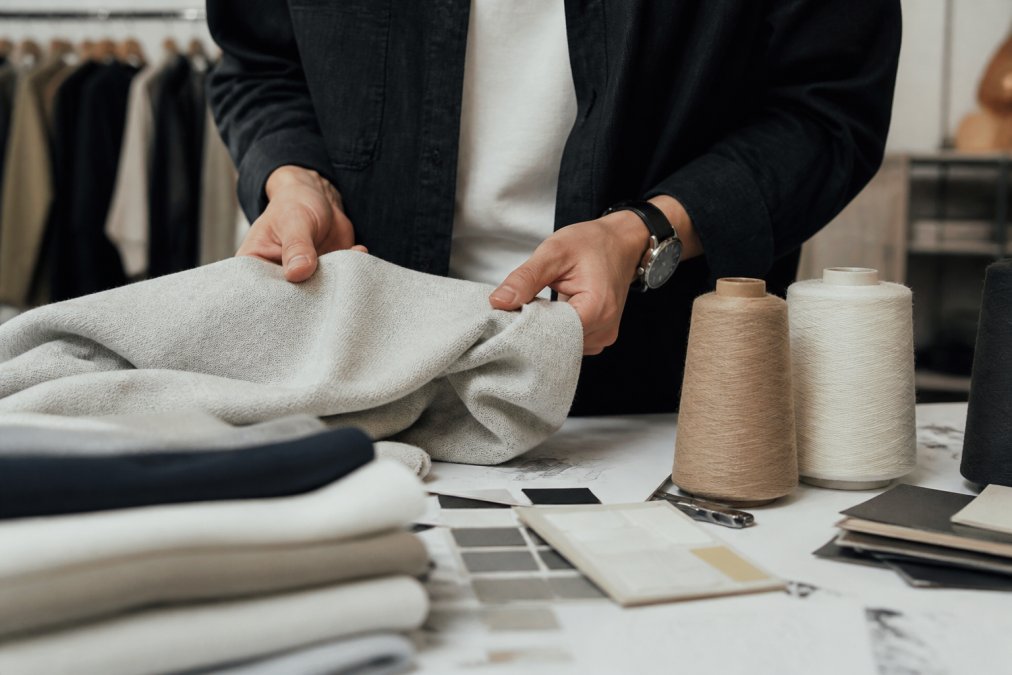
Start with the hand-feel test. Premium fabrics have consistent, smooth surfaces. Run your hands across the fabric in multiple directions, does it feel uniform? Premium fabrics maintain consistent texture; budget fabrics feel fuzzy, thin, or have irregular texture.
Check fabric weight. Premium streetwear should feel substantial without being stiff. Look at seams and stitching. Premium streetwear uses reinforced seams at stress points with 2-3 stitches per quarter-inch. Examine how the fabric is finished, does the hem lie flat? Does the neckline maintain shape? Premium pieces are finished carefully; budget alternatives skip these steps.
The Hand-Feel Test and Tactile Indicators
Run your fingers across the fabric surface in multiple directions. Premium ring-spun fabrics feel smooth and consistent without loose fibers or fuzz. The surface should have subtle luster indicating fiber quality.
Squeeze the fabric gently. Premium fabrics compress slightly and spring back immediately, indicating good fiber elasticity. Budget fabrics either stay compressed or feel stiff and unyielding.
Check weight distribution. Hold the garment and move it around, does weight feel evenly distributed? Premium construction maintains consistent density throughout.
Rub a small area vigorously for 10-15 seconds. If loose fibers immediately ball up, you're looking at open-end cotton or low-quality construction. Premium ring-spun fabrics resist this immediately.
The tactile experience of wearing premium streetwear reinforces investment every time you wear it. NewCity Brand pieces like the Snow-Washed Zip Front Hoodie, Bushwick 718 are designed with tactile quality in mind, creating intentional texture variation that develops character with wear.

Stitch Integrity and Reinforced Stress Points
Stitch quality separates premium streetwear from everything else. Premium construction uses reinforced stitching at every stress point: shoulders, underarms, sleeve attachment, and hem. These areas experience the most mechanical stress during wear and washing.
Count stitches per inch on a seam. Premium construction typically has 2.5-3 stitches per quarter-inch (10-12 per inch) (astm.org). Budget alternatives often have 1-1.5 stitches per quarter-inch. More stitches mean the seam withstands more stress before failing.
Look at thread color, premium brands use thread matching fabric color or colors that won't show if seams eventually fail. Examine the stitch pattern itself. Box stitching (rectangular pattern) at sleeve bases or pockets distributes stress and prevents tearing.
Premium hems are folded twice and stitched securely so they won't curl or fray. Budget hems are often single-folded or use cheap binding that deteriorates quickly.
Fabric Construction and Print Mechanics
Premium streetwear isn't just about base fabric, it's about how graphics are applied and survive repeated wear and washing.
Tight weaves with high textile density create smoother surfaces that hold graphics cleanly. Loose weaves create rougher surfaces that distort graphics and allow ink to settle unevenly.
Premium brands invest in high-density printing, using multiple ink passes to build color saturation and create durable bonds with fabric. Budget brands use single-pass printing that looks good initially but doesn't survive repeated washing.
Textile Density and High-Density Printing
Higher textile density means more fibers packed into the same space, creating smoother, more durable surfaces. For streetwear, smooth, dense surfaces are essential because they hold graphics cleanly. When printing on loose, rough fabric, ink sits on top of fibers rather than bonding with them. On dense fabric, ink bonds properly, creating better color saturation and durability.
High-density printing uses multiple ink passes to build color and create durable bonds. This takes longer and uses more ink, making it more expensive. Budget printing uses single-pass screen printing or direct-to-garment printing with minimal ink saturation. After a few washes, graphics begin to crack and fade.
The Black Raw Seam Paneled St. Louis 314 Boxy Tee from NewCity Brand uses high-density printing because the graphic represents your city identity and needs to survive regular wear and washing.

Ink Curing and Long-Term Print Durability
Ink curing permanently bonds ink to fabric fibers through heat, pressure, or chemical processes. Properly cured ink becomes part of the fabric rather than sitting on top. This is why premium prints survive washing, ink has migrated into fiber structure. Improperly cured ink remains on the surface and cracks and peels immediately.
Budget manufacturers often skip proper curing to save time and money. Graphics look perfect initially but deteriorate after a few washes. Premium brands invest in proper curing because durability is part of the value proposition.
Is Expensive Streetwear Worth the Price
The honest answer depends on how you measure value. If a $40 hoodie lasts 20 washes and a $65 hoodie lasts 100 washes, the cost per wear is dramatically different. The premium piece is actually cheaper over time.
However, not all expensive streetwear is premium. Some brands charge high prices for marketing rather than fabric quality. Evaluate what you're actually paying for.
Cost-Benefit Analysis for Streetwear Buyers
Calculate cost-per-wear. A $50 hoodie worn 100 times costs $0.50 per wear. A $65 hoodie worn 300 times costs $0.22 per wear. The expensive piece is cheaper.
Premium streetwear maintains value better. Well-maintained pieces from respected brands can be resold for significant percentages of original cost. Budget pieces have essentially zero resale value.
Consider emotional value. Streetwear represents identity and community. A piece representing your city identity and lasting years has value beyond material cost. A piece falling apart in months feels wasteful regardless of initial price.
NewCity Brand pieces are priced to reflect actual costs of premium materials and construction, not hype markup. The Brushed Fleece St. Lou 314 Sweatpants at $42 deliver value for someone wanting to represent their city identity with a piece that lasts.
Sustainability and Ethical Sourcing
Premium streetwear increasingly incorporates sustainability and ethical sourcing, adding to cost but also adding value. Sustainable practices include using long-staple or organic cotton, reducing water usage, minimizing chemical treatments, and ensuring fair labor practices. These practices cost more but result in better fabric quality and lower environmental impact.
Ethical sourcing means verifying workers were paid fairly and worked in safe conditions. Truly ethical brands are transparent about supply chains.
Sustainable farming practices often produce longer-staple, stronger fibers because plants aren't stressed by excessive chemical treatment. For streetwear buyers, sustainability matters if buying pieces meant to last. A sustainably-sourced piece lasting years has lower environmental impact than cheap pieces replaced every few months.
Fabric Aging, Wash-Testing, and Garment Longevity
Premium streetwear is designed to age intentionally. Budget fabrics deteriorate, fading unevenly and developing pilling. Premium fabrics develop character, fading in intentional patterns that look authentic and actually looking better after a year of regular use.
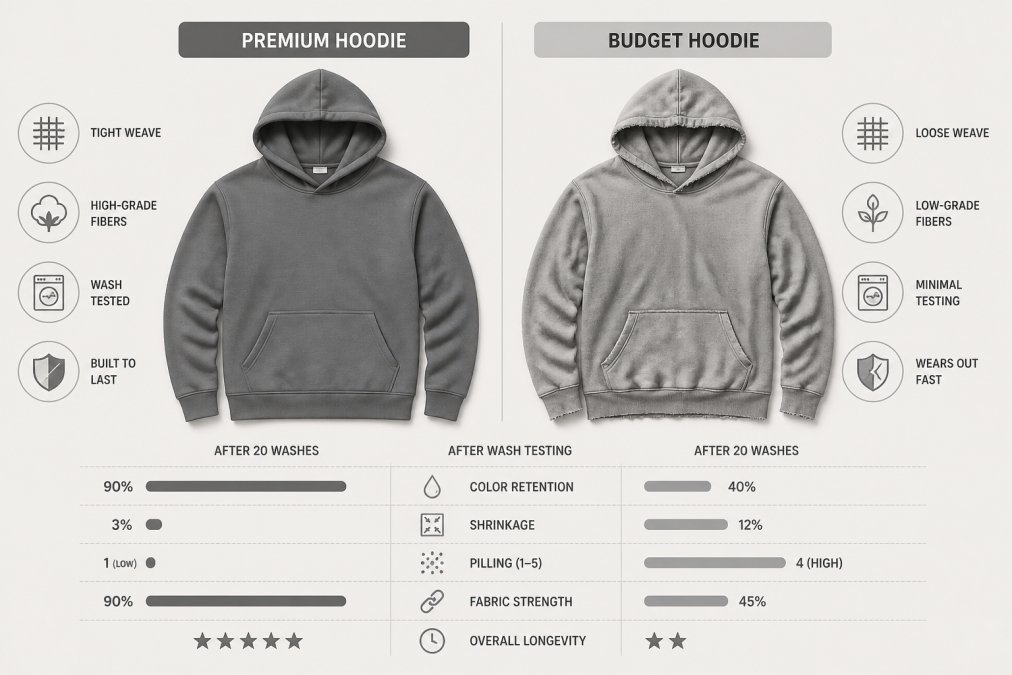
This difference comes from fiber quality and construction. Premium long-staple or Supima cotton fades evenly because fibers are uniform and hold color better. Budget short-staple cotton fades unevenly and quickly.
How Premium Fabrics Age Over Time
Premium fabrics improve with age. The fabric softens as mechanical stress from washing breaks down fiber structure slightly, creating more comfortable hand-feel. Color develops a patina, it fades, but intentionally and authentically.
Ring-spun construction contributes to positive aging. Tight, uniform yarn structure means fading happens evenly. You don't get blotchy, uneven fading from open-end cotton.
High-density printing ages well because ink bonds to fiber structure rather than sitting on top. As fabric fades, graphics fade at the same rate, maintaining visual coherence. Budget printing cracks and peels as ink separates from fabric.
Premium aging depends on consistency. Premium fabrics are uniform, so they age uniformly. Budget fabrics are inconsistent, aging unpredictably.
Shrinkage Resistance and Pilling Prevention
Shrinkage is a major budget streetwear issue. A hoodie shrinking 10-15% after the first wash is essentially ruined. Premium fabrics are processed to minimize shrinkage, typically under 3-5% after multiple washes.
Premium fabrics shrink less because fiber quality and processing create more stable structures. Long-staple cotton fibers are more stable and less prone to mechanical stress causing shrinkage. Ring-spun processing creates more stable yarn structure resisting shrinkage.
Pilling is another major issue. Budget open-end cotton pills immediately because loose fibers on yarn surface ball up when rubbed. Ring-spun construction prevents this by creating smooth, compact yarn surfaces.
For streetwear, shrinkage and pilling are deal-breakers. Premium construction prevents both issues, which is why quality brand pieces actually improve with age rather than deteriorating.
Synthetic Blends and Performance Fabrics
Not all premium streetwear is 100% cotton. Synthetic blends and performance fabrics serve specific purposes and can enhance durability and functionality.
Cotton-polyester blends are common in premium streetwear. A 90/10 or 85/15 blend adds durability without sacrificing cotton feel. Polyester fibers reinforce cotton fibers, reducing pilling and improving shrinkage resistance.
The key is ratio. A 50/50 blend feels synthetic and loses cotton comfort. Premium blends maintain cotton feel while adding durability benefits.
Performance fabrics like moisture-wicking blends are used in athletic streetwear or pieces for active wear. These combine cotton with synthetic fibers that pull moisture away from skin. This is useful for pieces worn during physical activity but unnecessary for everyday streetwear.
Synthetic blends should enhance durability or functionality without compromising feel and aesthetic. A blend making pieces feel cheap or synthetic isn't worth the durability gain.
Premium streetwear fabric is about intentional engineering. Every choice, from fiber length to GSM to stitch pattern, affects how pieces look and feel after a year of regular wear. NewCity Brand pieces are designed with this understanding, using premium materials and construction methods because we're building pieces meant to represent your city identity for years, not months. When you invest in quality streetwear, you're buying durability, authenticity, and pieces that actually improve with age. That's what makes the price worth it.
Frequently Asked Questions
Q: What is the difference between ring-spun and open-end cotton?
A: Ring-spun cotton is twisted using a slower, more controlled process that aligns fibers tightly together, creating stronger, softer yarn. Open-end cotton is processed faster with less fiber alignment, resulting in lower tensile strength and a rougher hand-feel. Premium streetwear brands favor ring-spun cotton because it resists pilling, holds dyes better, and maintains its shape through repeated washing. The difference becomes obvious after 5-10 washes, where ring-spun garments retain their original drape while open-end pieces deteriorate faster.
Q: Why does heavyweight cotton GSM matter for streetwear?
A: GSM (grams per square meter) measures fabric density and weight. Higher GSM fabrics provide better durability, superior drape, and longer garment lifespan. A 350 GSM tee will feel substantial and structured compared to a thin 150 GSM alternative. Heavier fabrics also print better because the textile density creates a stable surface for high-density printing, preventing ink from bleeding or cracking after washing.
Q: How can I tell if streetwear is actually premium quality before buying?
A: Check the fiber content first: look for 100% cotton or high-percentage cotton blends with Supima or long-staple varieties. Examine the hand-feel by touching the fabric, premium pieces feel soft but structured, never flimsy. Look at the seams: reinforced stitching at stress points (shoulders, armpits, hem) indicates quality construction. Check the weight by holding the garment; it should feel substantial. Finally, research the brand's sourcing and manufacturing practices. Transparent brands publish their textile sourcing information, which signals confidence in quality.
Q: Is expensive streetwear worth the price?
A: Premium streetwear costs more because of superior fabric quality, ethical sourcing, better construction, and longer garment lifespan. A $60 brushed fleece hoodie from a brand using high-grade cotton will outlast three $20 alternatives through repeated washing. You're paying for durability, better hand-feel, superior print longevity, and authentic design that reflects local culture. For urban tastemakers who wear streetwear daily, premium pieces justify the cost through reduced replacement frequency and the confidence that comes with quality craftsmanship.
This article was written using GrandRanker