

Last Updated: November 6, 2026
Quick Summary
Is organic cotton better for streetwear? It is better for the farming process, but at equal weight and construction the fabric performs much like conventional cotton on your body. Weight, knit and garment construction matter more than the organic label for how a streetwear piece feels and lasts.
- Organic cotton is grown without synthetic pesticides and fertilizers, while conventional cotton is not.
- At equal weight and construction, organic and conventional cotton feel and wear comparably.
- Collar, shoulder seams and hems are the most common failure points on streetwear tees and hoodies.
- Wash inside out in cold water on a gentle cycle, and avoid bleach and high-heat drying.
- Check the certification scope and standard name before trusting an organic claim on a garment.
Table of Contents
- Organic Cotton vs Regular Cotton: What Actually Differs
- Streetwear Performance: Weight, Drape and Structure
- Organic Cotton Durability and Garment Lifespan
- Organic Cotton T-Shirts Side by Side: Pros and Cons
- How to Identify Certified Organic Cotton and Read Labels
- Choosing Your Next Tee: Cost per Wear and Your Next Step
- Frequently Asked Questions
Organic Cotton vs Regular Cotton: What Actually Differs
Is organic cotton better for streetwear? The honest answer depends on what you mean by "better." At NewCity Brand, we handle fabric choices every day, and the difference between organic and conventional cotton is real but narrower than the marketing suggests, so whether is organic cotton better for streetwear comes down to what you value most. Organic cotton is grown without synthetic pesticides and fertilizers. Conventional cotton is not. That is the core distinction, and it matters for growers far more than for the person wearing the shirt.
Most of the debate around organic cotton centers on how the fiber is grown. Here, the fabric itself starts to look much more similar across the two categories. A heavyweight tee made from organic cotton and one made from conventional cotton can feel nearly identical in hand, and they can wear similarly over time. The real question for streetwear buyers is what the garment does on your body and how long it holds up.
How organic cotton is grown and processed
Organic cotton is cultivated under farming rules that restrict synthetic inputs and rely on crop rotation, soil management and natural pest control. Conventional cotton uses synthetic pesticides and fertilizers, which is why cotton has historically been one of the more chemically intensive crops in agriculture.
The processing stage is where many buyers get confused. Organic certification covers the growing process and, in some standards, the processing of the fiber. It does not automatically mean that the dyes, finishes or washes applied to the finished garment are chemically gentler. Those steps depend on the brand and the factory. Read the certification scope before assuming the finished product is "clean" in every sense.
Where the differences stop at the fiber
Once spun into yarn and knit into fabric, organic and conventional cotton share the same basic structure. Fiber length, weight and knit construction have far more influence on performance than the farming method. A 280g/m² jersey will behave like a 280g/m² jersey regardless of its origin.
This is the point most product pages skip. If you are comparing two tees at the same weight and construction, the organic label tells you about the farm, not the wardrobe experience.
Streetwear Performance: Weight, Drape and Structure
For streetwear, the things that change how a piece feels and looks are weight, drape and structure. Weight is measured in grams per square meter (GSM). Heavier fabrics feel more substantial and hold a boxy silhouette. Lighter fabrics fall closer to the body and wrinkle more easily.
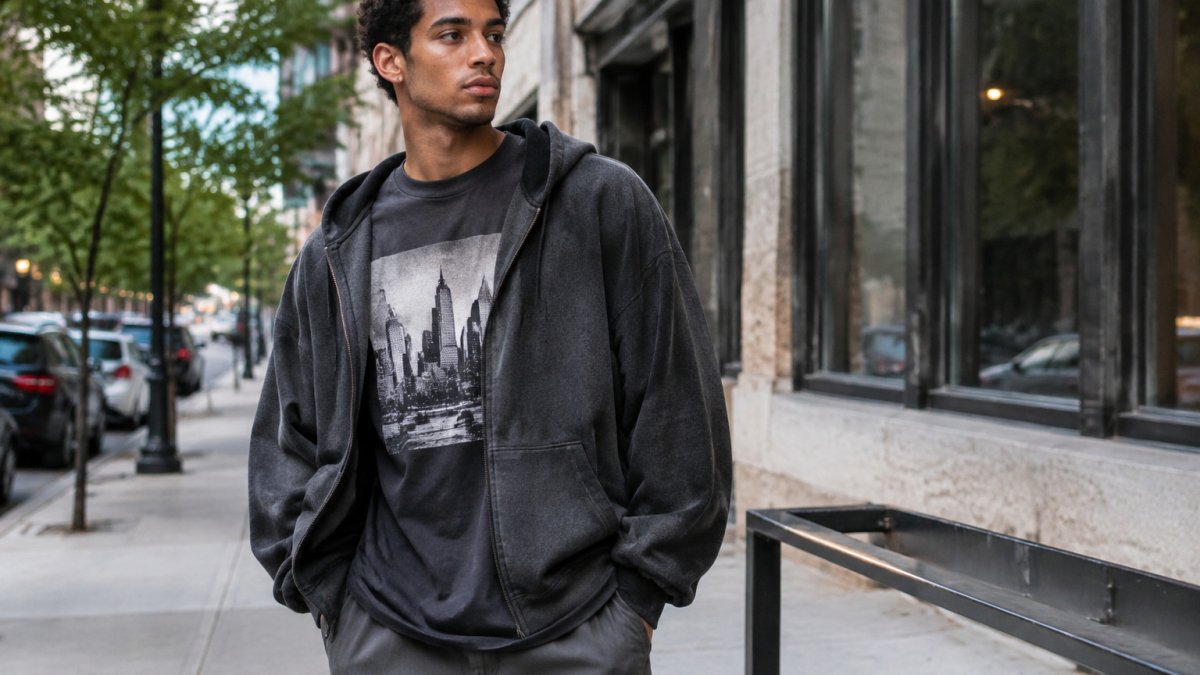
Drape describes how fabric hangs. A tee cut with drop shoulders and an oversized fit needs enough body to keep its shape. Too light, and the silhouette collapses. Structure comes from the knit and from pre-shrinking, which keeps the garment's proportions stable through repeated washing.
Our NewCity Brand tees are built to these specifications. The Snow-Washed St. Louis "The Lou" Graphic Tee uses a 14 count plain weave at 285g/m² for a broken-in texture with a relaxed, oversized fall. The Unisex Classic Boxy Tee, Liberty City 305, uses a 26 count plain weave at 280g/m² for a cleaner, more structured silhouette. Both are 100% cotton.
Print quality also depends on the surface. A smoother, tighter knit holds graphics crisply. A snow-washed or sand-washed finish softens the surface and gives prints a faded, vintage character, which is the look many streetwear buyers want.
Fabric weight of streetwear tees and hoodies (GSM)
Organic Cotton Durability and Garment Lifespan
Durability is where organic cotton claims are most often overstated, and where streetwear buyers get the least useful guidance. Fiber length matters: longer staple cotton tends to produce stronger, smoother yarn with less pilling. See how long premium streetwear lasts in our durability guide. Organic cotton is not automatically longer-staple than conventional cotton, staple length is a property of the cotton variety and the gin, not the farming certificate, so durability depends on the specific cotton and the spinning quality, not the organic label alone.
At equal weight and construction, organic and conventional cotton wear comparably. The variables that actually decide how long a streetwear piece lasts are construction and care, and they are the same variables whether the fiber is certified or not.
What actually fails first on a streetwear tee or hoodie
Most garment failures are structural, not fiber failures. The common failure points, in rough order of frequency:
- Collar and neckline. A single-stitch or narrow ribbed collar stretches out and waves within a season. A double-needle or taped neckline with a heavier rib holds its shape far longer. This is the single biggest visible difference between a tee that looks new after 30 washes and one that does not.
- Shoulder seams. Set-in shoulders on an oversized cut take stress at the seam. Taped or coverstitched shoulder seams distribute that load; a plain overlock seam can pull and pucker.
- Hems. A coverstitch hem resists curling better than a single-fold hem, especially on heavier jersey where the fabric weight pulls against the stitch.
- Side seams and armholes. On boxy, drop-shoulder cuts, the armhole and side seam carry more tension than on a fitted tee. Flatlock or double-stitched seams handle that better than a basic overlock.
- Print adhesion. A plastisol or water-based print on a tight, smooth knit bonds better than on a loose, brushed, or heavily washed surface. Snow-washed and sand-washed finishes look great but give the print a softer, more textured base, which is part of the vintage look and also part of why those prints age faster by design.
Shrinkage, colorfastness and care
Pre-shrinking reduces shrinkage after the first wash, and that applies whether the fiber is organic or conventional. If fit matters to you, check whether the fabric is pre-shrunk before you buy.
Colorfastness depends on the dye process, not the cotton. The Classic Fit Crew Neck T-Shirt, STL 314, and the Raw Seam Boxy Tee are reactive-dyed for long-lasting color, while washed pieces are designed to fade.
Wash like colors together, especially for the first cycles, since some products may bleed during the first wash. Follow our step-by-step care instructions for snow washed cotton hoodies.
Practical care for streetwear cotton:
- Wash inside out in cold water on a gentle cycle with mild detergent.
- Do not bleach, soak, rub, or wring.
- Hang dry or tumble dry low. High heat is the main cause of shrinkage and print cracking.
- Keep heavy graphics out of direct sun for long periods; UV fades both dye and print.
- Wash like colors together for the first several cycles, and turn graphic pieces inside out before washing to protect the print surface.
Organic Cotton T-Shirts Side by Side: Pros and Cons
Here is how the main tradeoffs compare when you hold weight and construction constant.
| Factor | Organic cotton | Conventional cotton |
|---|---|---|
| Growing method | No synthetic pesticides or fertilizers | Synthetic inputs permitted |
| Feel at equal weight | Comparable | Comparable |
| Durability at equal construction | Comparable | Comparable |
| Price | Often higher | Often lower |
| Certification | Third-party certified | Not applicable |
Organic cotton pros:
- Grown without synthetic pesticides and fertilizers
- Certification gives a verifiable growing standard
- Appeals to buyers who prioritize farming practices
Organic cotton cons:
- Does not automatically mean better fabric performance
- Dyes and finishes can still be conventional
- Often costs more without a measurable wear advantage
Conventional cotton pros:
- Same fabric performance at equal weight and construction
- Often more affordable
- Widely available in every weight and knit
Conventional cotton cons:
- Heavier synthetic input use on the farm
- No third-party growing certification
For streetwear, the decision usually comes down to whether the farming standard matters to you and whether you are paying for it knowingly. Compare ethical streetwear materials side by side.
How to Identify Certified Organic Cotton and Read Labels
Certification is the only reliable way to check an organic claim, but "certified organic" is not one thing. Learn how to verify streetwear fabric quality before you buy. Different standards verify different stages of the supply chain, and knowing which one you are looking at tells you how much of the garment the claim actually covers.
A garment can carry a GOTS label and a USDA organic fiber claim, but they are not interchangeable, and one does not imply the other.
Read the scope, not just the logo. Ask three questions: Which standard is named? What stage does it cover, fiber, yarn, fabric, or finished garment? And what is the certified content percentage?
Watch out: a hangtag that says "organic" with no certifying body, license number, or standard name is an unverifiable claim, treat it as marketing until the brand can name its certifier and the certificate scope.
Blends are where labels get slippery. A tee described as organic cotton with a polyester content will perform differently from 100% cotton even if the cotton portion is certified, and the organic claim applies only to that portion. Read the composition line as a whole: "60% organic cotton / 40% recycled polyester" tells you the cotton is certified and the rest is not cotton at all. "100% cotton" tells you the fiber, not the growing method, those are two separate facts, and product pages often blur them.
Traceability has a ceiling worth understanding. A fiber certificate confirms the cotton's origin and growing standard; it does not by itself establish the garment's full environmental footprint or labor conditions. Dyeing, finishing, cut-and-sew, and transport sit outside a fiber-only certificate, and a GOTS processing certificate covers more of that chain but still not transport or end-of-life.
Choosing Your Next Tee: Cost per Wear and Your Next Step
Price per tee is not the only number to compare. Cost per wear divides the purchase price by how many times you expect to wear and wash the garment before it fails.
If you want a tee that holds its structure and prints well, focus on weight, knit and construction first. Our Heavyweight Sun-Faded Hoodie, STL 314, at $64.00 is made from 400g/m² brushed fleece with double flatlock-seamed hood. The Classic Fit Crew Neck T-Shirt, STL 314, at $36.00 uses a 16 count plain weave at 240g/m² for a lighter everyday fit.
The answer to whether organic cotton is better for streetwear is this: it is better for the farm, and the fabric is largely comparable on your body. Buy for weight, construction and care. If the growing standard matters to you, choose a certified option and pay for it knowingly.
Shop the full range at NewCity Brand and find the weight and fit that suit how you wear streetwear.
Frequently Asked Questions
What are the downsides of organic cotton fabric?
Organic cotton costs more to produce, so garments often carry a higher price, and organic fiber is not automatically stronger or softer than conventional cotton. Yields per acre are typically lower without synthetic inputs, which affects supply and price. Certification also does not guarantee that a garment is free of every processing chemical, since dyes and finishes are regulated separately. For streetwear, the fabric weight, knit construction and wash finish usually matter more to how a tee feels and holds up than the organic label alone.
Does organic cotton last as long as regular cotton?
Fiber origin alone does not decide lifespan. Durability depends mostly on fiber length, yarn spinning, fabric weight and how the garment is finished and washed. A heavier organic tee built from good yarn can outlast a lighter conventional one, while a thin organic tee may wear faster. Check fabric weight in grams per square meter and wash it inside out in cold water to extend its life.
How can you tell whether a cotton garment is genuinely organic?
Look for a certification mark from a recognized standard such as GOTS or the USDA Organic seal on the label or product page, and check whether the label states the percentage of organic fiber. Blended or multi-step garments may carry only partial claims. Verified brands usually name their certifier. Treat vague wording like natural or eco-friendly without a certificate as unverified.
