

Table of Contents
- Why Verifying Streetwear Fabric Quality Matters
- What Is GSM in Clothing and Why It Signals Quality
- Test Fabric Elasticity and Stretch Recovery
- Evaluate Seam Strength and Signs of High Quality Stitching
- Check Fiber Content and Identify Natural vs. Synthetic Blends
- Is Expensive Streetwear Worth the Price?
- Digital Verification and Post-Purchase Quality Checks
Last Updated: August 24, 2026
Why Verifying Streetwear Fabric Quality Matters
The difference between a piece that holds up for years and one that falls apart after a few washes often comes down to fabric quality. When you're investing in streetwear that represents your identity and community, understanding how to verify streetwear fabric quality is essential.
Streetwear is more than clothing; it's a statement. A piece with poor seam construction might look sharp in your closet, but after a few washes or regular wear, graphics fade unevenly, seams split, and fabric loses its structure. This guide walks you through exact methods to evaluate streetwear before and after purchase: fabric weight, elasticity and recovery, seam construction, and how to spot natural versus synthetic blends. You'll also learn digital verification techniques for online shopping and post-purchase checks that reveal whether a piece lives up to its price tag.
What Is GSM in Clothing and Why It Signals Quality
GSM stands for grams per square meter, a standard measurement that tells you how heavy and dense a fabric is (iso.org). In streetwear, GSM is one of the most reliable indicators of durability and longevity. Higher GSM typically means thicker, more durable fabric that resists wear, maintains shape, and handles repeated washing better.
Lightweight fabrics (under 150 GSM) feel insubstantial and thin quickly with wear. Mid-weight fabrics (150-250 GSM) hit the sweet spot for everyday streetwear, durable without being stiff. Heavyweight fabrics (250+ GSM) deliver maximum durability and structure, which is why premium hoodies often sit in this range.
A heavyweight sun-faded hoodie like the Heavyweight Sun-Faded Hoodie, STL 314 ($64.00) uses dense, premium cotton that maintains structure through repeated washes. Lighter hoodies cost less upfront but won't hold up the same way.

The relationship between GSM and price is straightforward: higher GSM fabrics cost more to produce. Brands cutting corners use lighter fabrics to reduce manufacturing costs. When you see streetwear priced suspiciously low, GSM is often the culprit.
To verify GSM when shopping online, check the product description or tag details. Quality brands list this specification explicitly. If it's not listed, that's a red flag.
Test Fabric Elasticity and Stretch Recovery
Elasticity determines how fabric responds to movement and stress. Testing stretch recovery, how well fabric bounces back after being stretched, is one of the most revealing quality checks you can do yourself.
Grab a section of fabric and stretch it firmly for about 5 seconds, then release immediately. Quality streetwear fabric snaps back to its original shape within a second or two. Fabric with poor elasticity remains stretched out, staying noticeably larger than before. That signals fibers lack the resilience needed for durability.
The pinch test is another quick check. Pinch fabric between your thumb and forefinger for 3-5 seconds, then release. Wrinkles should fade within seconds. Stubborn wrinkles indicate poor recovery; the fabric won't bounce back from wear either.
Synthetic blends often have better elasticity than pure natural fibers. A blend of cotton with elastane (spandex) stretches more and recovers faster than 100% cotton. A small amount of elastane (2-5%) adds recovery without changing the fabric's feel (peer-reviewed research). Too much (over 10%) can make the piece feel plasticky.
When testing elasticity on a finished garment, focus on areas that get the most stress: armholes, cuffs, and waistband. These should have the best recovery.
Evaluate Seam Strength and Signs of High Quality Stitching
Seams are where streetwear either proves its quality or reveals weakness. A piece can have perfect fabric, but poor seam construction will fail under normal wear. Evaluate three things: stitch density, reinforcement, and thread quality.
Stitch density refers to stitches per inch. Quality streetwear typically has 8-12 stitches per inch (astm.org). Fewer stitches (5-6 per inch) mean the seam is more likely to split. This is visible to the naked eye.
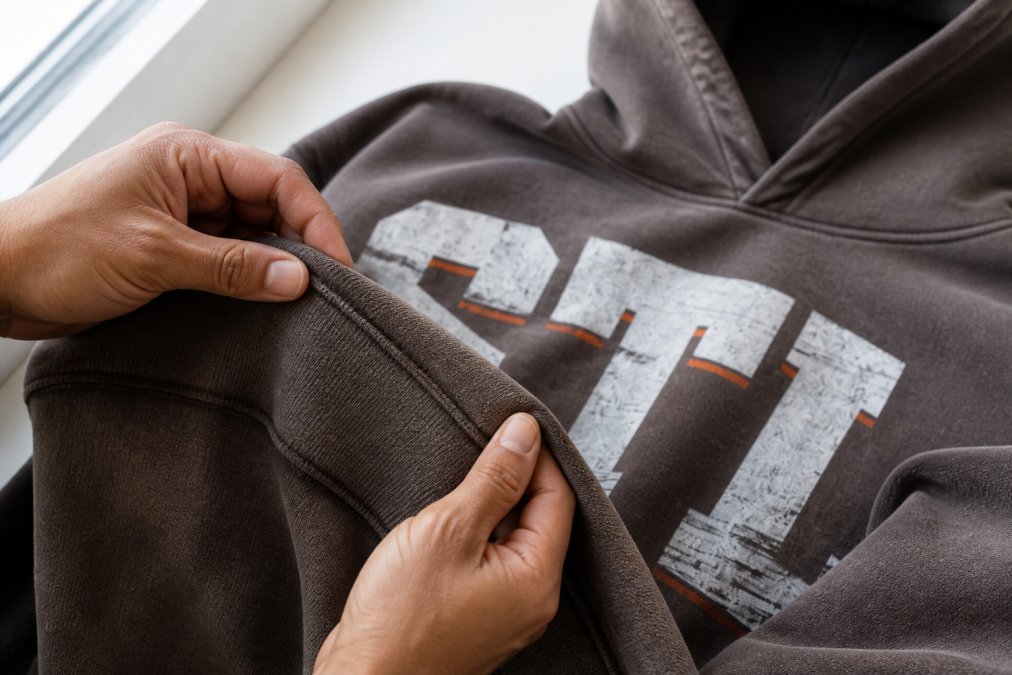
Reinforcement is the second indicator. High-quality seams often feature double-stitching or reinforced stress points where extra stitches are added where the seam gets the most pull. Look at armholes, shoulder seams, and side seams. Quality pieces show visible reinforcement stitching, sometimes in a box or X pattern.
Thread quality matters too. Quality thread is strong and matches the fabric color seamlessly. Poor thread looks thin, frays easily, or contrasts awkwardly. When you run your finger along a seam, it should feel smooth and secure.
Flip a piece inside-out and examine seams from the back. Quality construction shows clean, even stitching on both sides. Messy, uneven stitching signals rushed manufacturing. Seams should be finished with a serged edge or clean fold, not raw edges that fray.
Pay special attention to where multiple seams meet, like the underarm. These junction points experience the most stress. Weak or loose stitching here means the piece won't hold up.
Check Fiber Content and Identify Natural vs. Synthetic Blends
The fiber content label tells you what the fabric is actually made from, fundamentally affecting how the piece performs.
Natural fibers like cotton and linen are breathable, comfortable, and age beautifully. Pure cotton feels soft and has excellent moisture-wicking properties. However, pure cotton wrinkles easily, can shrink in the wash, and loses elasticity over time. It's also prone to pilling after repeated wear.
Synthetic fibers like polyester and nylon are durable, resist wrinkles, and maintain shape. They don't breathe as well as natural fibers, but they're significantly more durable. Polyester blended with cotton creates fabric that's breathable, durable, and wrinkle-resistant.
Elastane (spandex) is added to quality streetwear in small percentages (2-8%) to improve stretch and recovery. This allows fabric to move with your body and bounce back to shape.
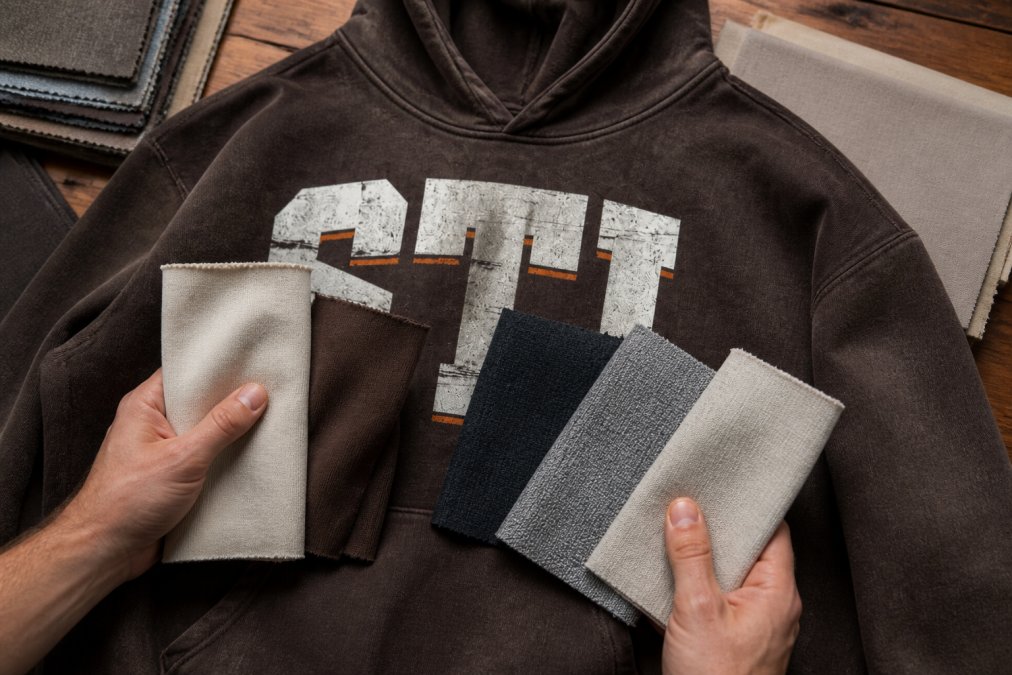
For hoodies and sweatshirts, an 80% cotton and 20% polyester blend delivers durability while maintaining breathability. For sweatpants, a 65% cotton and 35% polyester blend offers better shape retention and wrinkle resistance. The Brushed Fleece St. Lou 314 Hoodie and matching Brushed Fleece St. Lou 314 Sweatpants ($42.00) use this balanced blend to ensure pieces hold their shape through repeated wear and washing.

Check the care label for fiber content percentages. If it just says "cotton blend" without percentages, that's a red flag. Quality brands specify exact ratios. Be wary of vague descriptions like "premium fabric" without actual fiber percentages.
Blended fabric feels slightly smoother and has less texture than pure cotton. It also resists wrinkles better. For streetwear meant to be worn regularly, blends typically outperform pure natural fibers and maintain color better through repeated washing.
Is Expensive Streetwear Worth the Price?
When you verify streetwear fabric quality, you answer whether the price reflects actual quality or just branding. Expensive pieces cost more because of materials used, construction methods, and durability. A premium hoodie uses heavier fabric (higher GSM), better stitching, quality blends, and reinforced seams. These cost more to produce.
The real question isn't whether expensive streetwear is worth it, but whether the specific piece justifies its price. A $65 heavyweight hoodie with reinforced seams, premium fabric, and quality stitching is worth every dollar if worn regularly for years. The same $65 hoodie is overpriced if seams are weak and fabric is thin.
Check the GSM, test elasticity, count stitches, and examine fiber content. If those elements justify the price, you're making a smart investment. If not, you're paying for a logo, not quality.
Consider cost-per-wear: a $65 hoodie worn 200 times over three years costs 33 cents per wear. A $30 hoodie that falls apart after 50 wears costs 60 cents per wear. Premium quality often wins on this metric.
NewCity Brand pieces like the Casual Sportswear Set, ST. LOU 314 ($52.00) reflect this philosophy. Premium fabric, reinforced construction, and attention to detail justify the investment for pieces that hold their shape, maintain color, and represent your city identity for years.

Digital Verification and Post-Purchase Quality Checks
Online shopping makes verifying streetwear fabric quality harder, but it's not impossible. Specific strategies reveal quality without holding the piece.
Before purchasing online: Look for detailed product descriptions including GSM, fiber content percentages, and construction details. Quality brands provide these because they're confident in their materials. Photos should show close-ups of seams, fabric texture, and construction details. Read customer reviews for durability comments like "held up well after washing" or "still looks new after six months." Red flags include complaints about seams splitting, fabric pilling, or shrinkage.
Check whether the brand offers a detailed size and fit guide. Brands caring about quality also care about fit. Vague size information is a warning sign.
After receiving your purchase: Inspect immediately upon arrival, before washing. Check all seams for loose stitching or gaps. Examine fabric for defects, thin spots, or uneven coloring. Test elasticity using the pinch test. This is your window to return if quality doesn't match the description.
Wash according to care instructions and inspect again. Quality streetwear maintains shape, color, and integrity after the first wash. If seams have loosened, fabric has pilled, or colors have faded significantly, you've identified a quality issue.
The first few washes are the real test. Low-quality pieces often fail early. Quality pieces look essentially the same after five washes as when new.
Verifying streetwear fabric quality transforms you from a passive buyer into someone who makes intentional, informed decisions. You stop overpaying for pieces that won't last and start investing in garments that deliver on their promise. When you understand GSM, seam construction, fiber content, and elasticity, you can evaluate any piece and know exactly what you're getting.
The pieces you wear represent your identity and community. Use these verification methods consistently, and you'll build a wardrobe of quality pieces that hold their shape, maintain their color, and make you feel confident every time you wear them.
Frequently Asked Questions
Q: How do I tell if streetwear fabric is high-quality?
A: High-quality streetwear shows consistent stitch density, reinforced seams at stress points, and appropriate fabric weight (typically 240-350 GSM for hoodies). Run the pinch test: pinched fabric should spring back quickly without creasing. Check the fiber content label, premium pieces use at least 80% natural fibers like cotton or blends with quality synthetics. Look for tight weaves or knits with no loose threads, and inspect buttons and hardware for secure attachment and quality finish.
Q: What does GSM mean in clothing, and does it determine quality?
A: GSM (grams per square meter) measures fabric weight and density. Higher GSM generally indicates more durable, substantial fabric, hoodies typically range 240-350 GSM. However, GSM alone doesn't guarantee quality; a 300 GSM hoodie with poor stitching won't outlast a well-constructed 260 GSM piece. GSM works alongside fiber content, construction technique, and finishing to create durability. Premium streetwear balances appropriate weight with tight construction and quality materials.
Q: How can I verify fabric quality before buying streetwear online?
A: Request detailed product photos showing fabric texture, seam construction, and close-ups of graphic placement. Check the fiber content percentage in the product description, authentic premium pieces list specific cotton types or blend ratios. Read customer reviews mentioning durability, shrinkage, and post-wash performance. Ask about washability and shrinkage rates if not listed. For brands like NewCity Brand, examine product descriptions for specific fabric treatments like snow-washing or brushed fleece, which indicate intentional quality finishing.
Q: Is expensive streetwear actually worth the price?
A: Premium streetwear justifies higher prices through superior fabric weight (240-350+ GSM), reinforced construction with higher stitch density, and quality finishing details. Pieces retain shape through multiple washes, resist pilling, and develop character rather than deteriorate. Budget alternatives often use thinner fabrics (150-200 GSM), single-ply stitching, and loose weaves that pill and fade quickly. If you wear streetwear regularly, premium pieces cost less per wear over time. NewCity Brand's pieces, like the Heavyweight Sun-Faded Hoodie ($64), combine authentic city graphics with durable construction that justifies the investment through longevity.
This article was written using GrandRanker