

Last Updated: November 4, 2026
Quick Summary
To distress denim at home, start with rigid, mostly cotton denim and use medium-grit sandpaper on high-wear areas like knees and thighs. Work in short, firm strokes and check progress every few passes to avoid thinning the fabric too much.
- Choose 100% cotton denim around 12-14 oz for the most forgiving results.
- Avoid stretch denim with elastane, since cut threads snap back and holes look fake.
- Mark high-wear areas with chalk before sanding so you target the right spots.
- Pull blue cotton threads one at a time with a seam ripper to reveal white threads.
- Wash distressed denim cold, inside out, in a mesh bag, and hang it to dry.
Table of Contents
- Choosing the Right Denim to Distress
- Tools and Supplies You Need to Distress Denim
- How to Distress Jeans with Sandpaper
- How to Rip Jeans and Leave the White Thread
- How to Distress Jeans Without Holes
- How to Distress Jeans Hem at Home
- Fixing Mistakes and Caring for Distressed Denim
- Your Next Step: Pick a Piece and Start Distressing
- Frequently Asked Questions
Choosing the Right Denim to Distress
Distress denim at home is easier when you start with the right jeans. Choosing the right fabric matters as much as technique when distressing denim. Pick a pair you already own and love less, or buy a cheap pair you're happy to ruin.
A common mistake is grabbing thin, stretchy jeans. Elastane-heavy denim tears unpredictably and snaps back, so your holes look fake. Stick with a rigid, mostly cotton denim for clean, believable wear. Our guide to whether snow washed fabric holds up to wear explains how durable this kind of finish is over time.
Denim weight and fabric composition
Fabric composition is a key factor in how denim responds to distressing. The cotton percentage and the fabric weight (measured in ounces per square yard) decide how the denim behaves under sandpaper, a seam ripper, and a washing machine. Our guide to snow washed texture and finish shows how the finish changes the feel and look of the garment.
- 100% cotton, 12-14 oz: The classic rigid denim. The yarns are strong and the weave is tight, so sanding takes longer but you get fine control. Holes fray cleanly and the white core threads stay intact when you pull blue threads. This is the most forgiving fabric for a first attempt.
- 100% cotton, 10 oz and under: Lighter and softer. It fades fast, which sounds good until a few passes of sandpaper turn into a hole you did not plan. Work in shorter strokes and check progress every few passes.
- Cotton with 1-2% elastane (stretch denim): The elastane lets the fabric recover, so cut threads snap back and the hole closes up or looks puckered. Fraying is uneven because the stretch yarns do not break at the same rate as cotton. If you must distress stretch denim, cut smaller openings than you want and expect them to shrink visually after the first wash.
- Cotton-polyester blends: Polyester does not fray the same way cotton does. It tends to pill and leave a fuzzy edge instead of the stringy white-thread look. Blends are fine for fading with sandpaper but poor for cut-and-fray holes.
Check the care label for the cotton percentage before you start. If the label says "98% cotton, 2% elastane," treat it as stretch denim and adjust your cuts down. If it says "100% cotton" with no weight listed, feel the fabric: stiff and heavy means you can be aggressive, soft and drapey means go slow.
If you want the finished look without the work, a guide to how distressed and washed finishes wear over time can help you judge what your fabric will do. For a ready-distressed option, you can also browse our shop the Sun-Faded Distressed Tee, Bronx 718 to see the finished look before deciding.

Tools and Supplies You Need to Distress Denim
You do not need a workshop. Most people already own what they need, and the rest costs very little.
- Medium-grit sandpaper or a pumice stone
- A seam ripper for fraying and thread removal
- Fabric scissors or a box cutter for controlled cuts
- Tweezers for pulling loose threads
- Chalk for marking areas before you cut
- A cutting mat or cardboard to protect the surface beneath
Keep your tools sharp. Dull blades drag and tear unevenly. Wear cut-resistant gloves when using a box cutter, and always cut away from your body.
How to Distress Jeans with Sandpaper
Sanding is the gentlest method and the best place to start. It fades the surface and thins the fabric without making holes, so you can stop whenever you like.
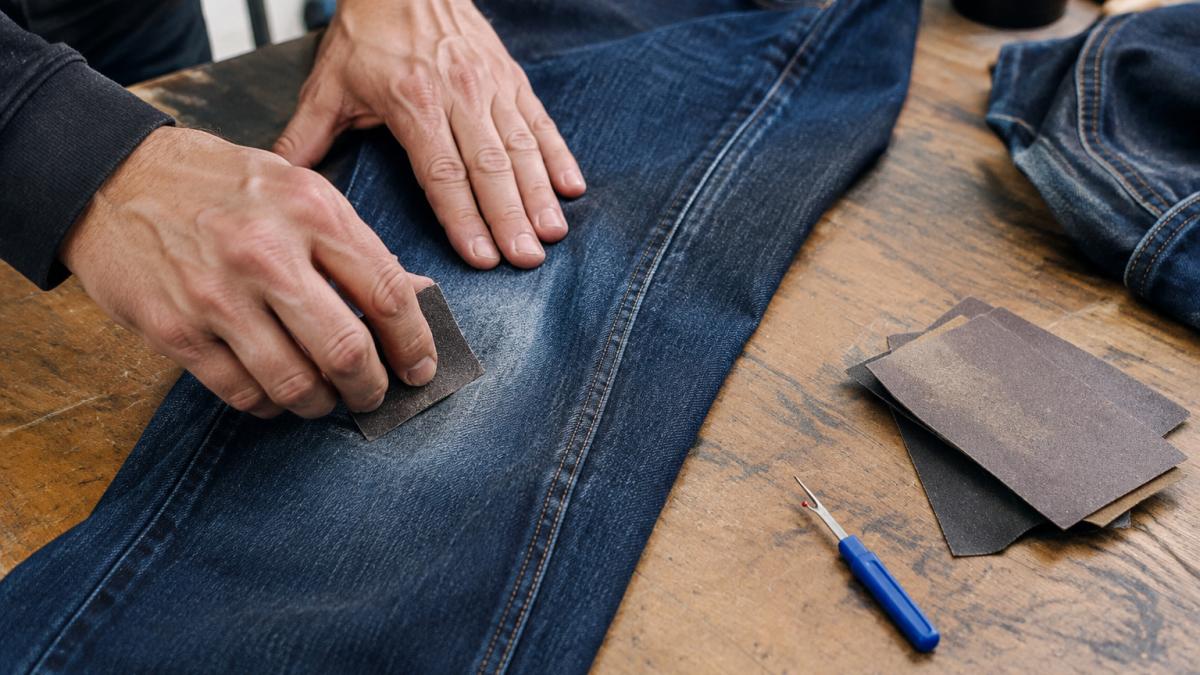
Lay the jeans flat on a hard surface. Mark the high-wear areas with chalk, usually the knees, thighs, and back pockets. Then rub the sandpaper over those spots in short, firm strokes.
Work slowly. Check your progress every few passes, because it is easy to overdo one area.
Watch out: sanding too hard in one spot can thin the fabric enough to tear without warning.
How to Rip Jeans and Leave the White Thread
This look comes from pulling out the blue cotton threads while the white core threads stay intact. The result looks like natural, lived-in wear.
Use a seam ripper or tweezers to lift one thread at a time. Pull the blue threads in the direction of the weave, not against it. Repeat until the white threads show through in a clean patch.
Sun‑Faded Distressed Tee — Bronx 718 →
How to Distress Jeans Without Holes
If you want the faded, worn look without openings, combine sanding with a wash cycle. Sand the high-wear areas as described above, then wash the jeans inside out with a small amount of bleach-free detergent. Repeat until the color lightens to your liking.
Avoid chlorine bleach on dark denim unless you want uneven white patches. Test any product on a hidden seam first.
How to Distress Jeans Hem at Home
A frayed hem is the quickest distressing job. Turn the hem up, mark where you want the fray to start, and pull the cross threads one by one with tweezers. Wash the jeans once to soften the frayed edge.
Fixing Mistakes and Caring for Distressed Denim
Mistakes happen, and most are fixable. The two failures that ruin a distress job are a hole that keeps growing and a wash cycle that turns your carefully frayed threads into lint. Both have specific fixes.
Repairing a hole that went too far
If a cut or sanded spot is larger than you wanted, stop handling it immediately. Every tug on loose threads widens the opening because the weft yarns are already broken. The fix depends on how far it has gone:
- Small overrun (under about an inch): Turn the jeans inside out and sew a patch of similar-weight denim behind the opening with a matching thread. Use a simple running stitch around the perimeter, catching the patch and the denim edge. This stabilizes the hole and keeps it from growing in the wash.
- Large overrun or a tear along a seam: A fusible interfacing patch on the inside, applied with an iron per the product instructions, holds the edges in place before you stitch. Follow with a zigzag stitch around the opening to lock the frayed edge.
- A hole that is too light or too dark: Wash the jeans a few more times in a darker wash cycle to blend the area, or sand the surrounding denim lightly so the contrast drops. Do not bleach a single spot to match; it rarely blends.
Washing distressed denim without destroying it
Distressed denim needs gentler care than intact denim because the threads holding the frayed areas together are already weakened. The goal is to clean the garment without agitating the loose threads into breaking.
- Wash inside out in cold water on a gentle or delicate cycle. Cold water slows dye loss and reduces the mechanical action that snaps frayed threads.
- Use a mesh laundry bag for heavily distressed pieces. The bag keeps loose threads from catching on other garments or the drum.
- Skip the dryer. High heat shrinks the fabric and weakens the already-thinned threads. Hang dry or lay flat.
- Wash less often. Spot-clean instead of full washes when possible; every cycle removes some of the frayed character you worked to create.
- Avoid chlorine bleach on dark denim unless you want uneven white patches. Test any product on a hidden seam first.
For printed or treated garments, follow the care instructions closely, since harsh detergents can fade graphics. For guidance on caring for printed pieces, read how to care for graphic print streetwear to keep your garments looking sharp.
If your distressed piece wears out faster than expected, it may be worth checking the fabric quality before you buy a replacement. Our guide to identifying quality streetwear before you buy covers what to look for.
The table below summarises the fixes and care steps for distressed denim covered in this section.
| Problem | Cause | Fix |
|---|---|---|
| Hole grows after a tug | Weft yarns already broken | Stop handling it and stabilize the opening |
| Small overrun under about an inch | Cut or sanded spot too large | Sew a matching denim patch behind the opening |
| Large overrun or seam tear | Opening extends past plan | Apply fusible interfacing, then zigzag around the edge |
| Hole too light or too dark | Uneven fading | Wash in a darker cycle or sand surrounding denim lightly |
| Frayed threads break in wash | Agitation and heat | Wash cold, inside out, in a mesh bag |
| Fabric shrinks or weakens | High dryer heat | Hang dry or lay flat |
| Uneven white patches | Chlorine bleach on dark denim | Avoid it and test products on a hidden seam |
Your Next Step: Pick a Piece and Start Distressing
Start with the sanding method on a pair of jeans you don't mind losing. Work slowly, check your progress often, and save the bolder cuts for later. If you'd rather skip the process, explore our Sun-Faded Distressed Tee, Houston 713 for a finished look you can wear right away.

Frequently Asked Questions
What is the easiest way to distress denim?
The easiest method is sanding the high-wear areas, such as the knees, thighs and pocket edges, with medium-grit sandpaper. Work in short strokes and check your progress often, because removing color is faster than putting it back. For a subtle result, begin with a light pass and build up gradually.
Can you distress jeans without making holes?
Yes. Sanding and abrasion remove surface indigo and fade the fabric without breaking the threads. Light scraping with a box cutter or a dull blade can also whiten the surface, and gentle washing with pumice or a short wash cycle adds softness. Holes only appear when you cut or sand aggressively through the weave. Stop as soon as the fabric looks thin, and keep the most aggressive work to the knees and back pockets where natural wear occurs.
How do you rip jeans and leave the white threads intact?
Make a small snip with fabric scissors or a box cutter, then use tweezers to pull the blue warp threads out in one direction. The white weft threads remain, creating horizontal lines. Pull slowly so the fabric does not bunch. For vertical white lines, pull the weft threads instead. Working in small sections keeps the rip controlled, and a seam ripper helps clear stubborn threads at the edges.
What tools do you need to distress jeans at home?
You will need sandpaper in medium and fine grits, a box cutter or fabric scissors, a seam ripper, tweezers, and tailor's chalk to mark your areas before you start. Protective gloves and a cutting mat are useful for safety. A washing machine and mild detergent round out the kit for fading. Most of these items are inexpensive at a hardware or fabric store, and many are already in a home sewing kit.
