

Table of Contents
- What Is Snow Washed Fabric, Exactly?
- Does Snow Washing Weaken Fabric Fibers?
- Snow Wash vs. Stone Wash Durability: Which Finish Lasts Longer?
- How to Care for Distressed Streetwear So It Lasts
- Is Expensive Streetwear Worth the Price?
- Fade, Shrinkage, and Color Fastness: What to Expect Over Time
- Conclusion
- Frequently Asked Questions
Last Updated: September 27, 2026
What Is Snow Washed Fabric, Exactly?
Snow washed fabric is cotton treated with a cold, enzyme-based wash to soften it and create a faded, lived-in look. It's a finishing technique, not a cleaning method, giving new garments the broken-in feel of a well-worn favorite from day one.
That distinction matters: two different things are called "snow washing" in fashion and textile circles, and they get mixed up constantly.
Snow wash (the finishing process) happens at the factory, where manufacturers tumble garments with pumice, enzymes, or abrasives in cold water. This strips surface fibers and dye, producing a soft hand feel, vintage highs and lows, and a distressed texture.
Snow washing (the cleaning method) is done at home: spot-cleaning a garment with clean snow instead of detergent. Some wool enthusiasts swear by it for lanolin preservation.
Only the first matters for durability. So "is snow washed fabric durable" really asks whether the factory treatment weakens the cotton. It does, but not as much as you'd think.
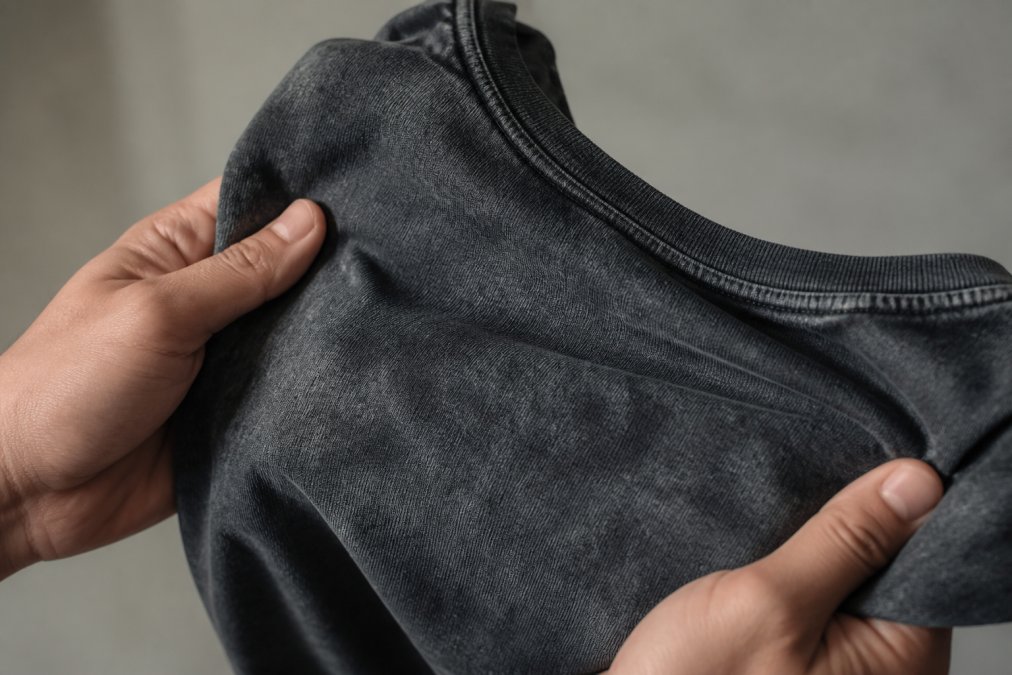
Snow washing is controlled mechanical stress: the abrasion that creates the vintage look also removes fiber mass. The question isn't whether the fabric weakens, but whether it weakens enough to matter.
At NewCity Brand, we use snow-washed textures because the trade-off is worth it: the fabric feels and looks better, and holds up to regular wear with proper care.
Snow Wash vs. Stone Wash: Two Different Finishes
Stone washing uses pumice stones to physically beat the fabric; snow washing uses finer abrasives and cold water for a softer, more even fade. Both create distressed visuals, but abrasion resistance after treatment differs.
Stone wash hits harder, removing more surface fiber and creating deeper texture. Snow wash is gentler, preserving more tensile strength while still delivering the faded, worn-in look.
If you want maximum durability, snow wash wins. If you want maximum distress, stone wash goes further.
Does Snow Washing Weaken Fabric Fibers?
Yes, snow washing weakens fabric fibers, but the damage is surface-level in most cases. The treatment abrades the outer layer of cotton, which reduces overall fiber integrity slightly. The core structure usually stays intact.
A cotton fiber is a hollow, twisted tube of cellulose. Its thin, waxy primary wall surrounds a thick secondary wall that holds most of the fiber's strength. Industrial snow wash attacks the primary wall and outermost secondary layers, producing the faded highs and lows and softer hand feel, while the load-bearing core survives, which is why a snow-washed tee doesn't disintegrate on the hanger.
Most guides skip this: "snow washing" describes two completely different processes, and only one affects fiber integrity.
Snow wash (industrial finishing). A factory tumbles finished garments with fine abrasives, pumice powder, cellulase enzymes, or synthetic stones, in cold water. Cellulase enzymes selectively break down cellulose at the fiber surface, eating surface fibrils and loose dye without chewing through the whole yarn. This process creates the vintage look and removes measurable fiber mass.
Snow washing (traditional cleaning). The old wool-care practice of laying a garment in clean snow and beating or brushing it to lift soil. No abrasion, no enzymes, no fiber loss, and wool's natural lanolin stays in the fiber. It has nothing to do with snow-washed cotton durability, and conflating the two is the most common mistake in this category.
Snow‑Washed St. Louis “The Lou” Graphic →
For a snow-washed cotton tee or hoodie, only the industrial process matters. The fiber loss is real but bounded: a controlled snow wash removes a fraction of surface fiber mass, while a badly controlled one, too much enzyme, too long in the drum, too hot, can eat into the secondary wall and create thin spots that become holes within a season.
Tensile Strength and Abrasion Resistance After Treatment
Tensile strength drops after any abrasive wash: thinner fibers snap under less force, but cotton starts strong enough that a modest reduction rarely shows in daily wear. Abrasion resistance is the bigger concern, snow-washed fabric has already been roughed up once, so a second round of mechanical stress, like a hot dryer or heavy wash cycle, does more damage than it would to untreated cotton.
- Fabric weight. A 380 g/m² or 440 g/m² cotton fleece has more fiber mass to lose before it thins. A 150 g/m² jersey has very little margin. Weight is the single best proxy for how much abrasion a garment can absorb.
- Yarn type. Ring-spun cotton has longer, more tightly twisted fibers than open-end cotton. Longer fibers mean fewer loose ends for the wash to pull free, so ring-spun fabric usually holds its structure better after treatment.
- Pre-shrunk vs. not. Pre-shrunk cotton has already been through its first shrinkage cycle. Untreated cotton will keep shrinking for the first several washes, which stresses seams and can distort the fade pattern.
- Stitch density. Double-stitched cuffs, hems, and neck seams distribute stress across more thread. On a snow-washed garment, the seams are often the first place wear shows.
Snow Wash vs. Stone Wash Durability: Which Finish Lasts Longer?
Snow wash lasts longer than stone wash in most cases. The finer abrasives and shorter treatment time mean less fiber loss. Stone-washed garments often show thinning and holes sooner, especially at stress points like knees and elbows.
Here's how the two compare:
| Factor | Snow Wash | Stone Wash |
|---|---|---|
| Abrasion level | Light to moderate | Heavy |
| Fiber loss | Lower | Higher |
| Surface texture | Soft, even fade | Deep, rough distress |
| Tensile strength retained | More | Less |
| Best for | Everyday wear | Heavy vintage look |
How to Care for Distressed Streetwear So It Lasts
Follow these rules:
- Wash inside out on a gentle cycle
- Use cold water only
- Skip bleach, fabric softener, and harsh detergent
- Never soak or wring
- Hang dry away from direct sunlight
- Tumble dry on low only if you must
Hand-sewn repair is worth learning for distressed streetwear. A loose seam or small hole is easy to fix early. Ignore it and the tear spreads.
Is Expensive Streetwear Worth the Price?
What are you actually paying for? A few things:
- Higher-grade cotton that holds its shape after washing
- Reinforced construction like double-stitched cuffs and taped neck seams
- A finish that ages well instead of falling apart
The honest limitation: not every expensive piece earns its price. Some brands charge more for hype. Check the specs before you buy.
Fade, Shrinkage, and Color Fastness: What to Expect Over Time
Here's what to actually expect, in plain terms:
- First wash. Expect slight dye release. This is normal and does not mean the garment is defective. Wash alone or with similar colors.
- First five washes. Most residual shrinkage happens here on any cotton that wasn't fully pre-shrunk. Pre-shrunk cotton should move very little. Untreated cotton can lose a noticeable amount of length and width.
- Long term. Color continues to soften. The base color stays recognizable for years on well-dyed fabric. The highs and lows become more pronounced, which is the intended effect.
One more thing: the fade on a snow-washed garment differs from raw or rigid denim. Raw denim fades where you sit, walk, and bend, a record of your wear. Snow wash fades uniformly because the abrasion happened in a drum, not on your body. Want a fade that tells your story? Buy raw. Want broken-in on day one and even? Buy snow-washed. They're different products with different aging curves, and neither is more durable by default, base fabric and care routine decide that.
Conclusion
The real challenge with snow-washed streetwear isn't the fabric. It's knowing which pieces are built to last and which ones are just faded for looks.
Frequently Asked Questions
Does snow washing weaken fabric fibers?
Snow washing uses cold water and mild abrasion, which is gentler on cotton fibers than stone washing. The process removes some surface dye and softens the hand feel, but it does not break down the structural integrity of the yarn the way heavy mechanical agitation can. Pre-shrunk, tightly woven cotton holds up well. The main change is cosmetic: color fades and texture softens, while tensile strength stays largely intact for everyday wear.
How does snow washing compare to stone washing for durability?
Stone washing physically abrades fabric with pumice stones, which can thin the material and stress seams over time. Snow washing relies on cold water and gentler agitation, so it removes less fiber mass. In practice, snow-washed garments tend to retain more tensile strength and resist tearing better than heavily stone-washed pieces. If you want the distressed look without sacrificing longevity, snow wash is the more durable finish.
How should you care for snow washed streetwear to maintain its integrity?
Wash inside out in cold water on a gentle cycle with mild detergent. Avoid bleach, soaking, and wringing. Slight bleeding may occur on the first wash, so wash like colors together. Hang dry away from direct sunlight, or tumble dry on low heat (max 30°C / 90°F). Proper care preserves the faded texture and prevents unnecessary shrinkage or color loss.
Does the snow wash effect fade faster than other distressed finishes?
The snow wash effect is designed to fade gradually with wear, similar to other washed finishes. Because the finish is achieved through cold-water processing rather than heavy chemical treatment, the color holds reasonably well if you follow care instructions. Cold washing and air drying slow the fade. Over time, the garment develops a unique patina, which is part of the appeal for streetwear fans.