

Last Updated: October 30, 2026
Quick Summary
Supporting local independent fashion designers means buying clothing directly from small, city-based labels instead of large chains, so your money funds real people in your area. Find them at weekend markets, through Instagram location tags, and on local shop notice boards, then buy from brand websites, markets, and curated pop-ups.
- Independent labels make a few hundred pieces and check every seam, while chains print one design a million times.
- Search Instagram for your city name plus streetwear or apparel to find local labels.
- An independent brand has a named founder, limited runs, and real fabric specs listed.
- Post a fit pic and tag the designer in the photo, not the caption.
- You can support designers without buying by following, sharing drops, and sending fit feedback.
Table of Contents
- Why Supporting Local Independent Fashion Designers Changes Your Wardrobe
- The Benefits of Supporting Independent Designers
- How to Find Local Fashion Designers in Your City
- Where to Buy Independent Fashion Brands Without Guesswork
- How to Promote Independent Designers on Social Media
- Supporting Designers When You Are Not Ready to Buy
- Start With One Piece From a City You Actually Rep
- Frequently Asked Questions
Why Supporting Local Independent Fashion Designers Changes Your Wardrobe
Supporting local independent fashion designers is the practice of buying clothing directly from small, city-based labels instead of large chains. It puts your money behind real people in your area, not a distant corporate machine. Below, we'll show you exactly how to find these designers, buy from them without risk, and back them even when your budget is tight.
The difference shows up fast. A big chain makes one design and prints it a million times. An independent designer makes a few hundred pieces, checks every seam, and answers your messages personally. That gap is the whole point.
Here is the core argument: independent fashion is not a charity purchase. It is a better purchase, and the quality and accountability prove it. Most guides get this wrong. They frame it as a feel-good choice. It is really a smart one.
The Benefits of Supporting Independent Designers
The benefits of supporting independent designers fall into two groups: what you get as a buyer, and what your city gets as a whole. Both matter, and both are concrete.
Better construction, smaller runs, real accountability
Small labels cannot hide behind volume. When a designer makes fewer pieces, they have the room to check the stitching, the fabric weight, and the fit. A common mistake is assuming expensive equals better. The real difference between a chain tee and an indie tee often comes down to fabric weight and seam construction, not the logo.
Accountability is the other half. Message an independent designer about a loose hem and you reach the person who made it. Try that with a chain.
For a deeper look at whether price tracks quality, read is expensive streetwear actually better quality.
What your money actually funds
Your money goes somewhere specific with an independent label:
- The designer's rent and materials
- Small production runs, often local
- Photography and marketing done in-house
- The next collection
With a chain, most of your money funds stores, ads, and shareholders. Neither is evil. But only one keeps the cash in your community.
If you want a concrete list of labels doing this well, see our roundup of ethical streetwear brands to watch.
How to Find Local Fashion Designers in Your City
Finding local fashion designers starts with three places: weekend markets, Instagram location tags, and local shop notice boards. Many independent labels sell in person before they build a big website, so look where they show up.
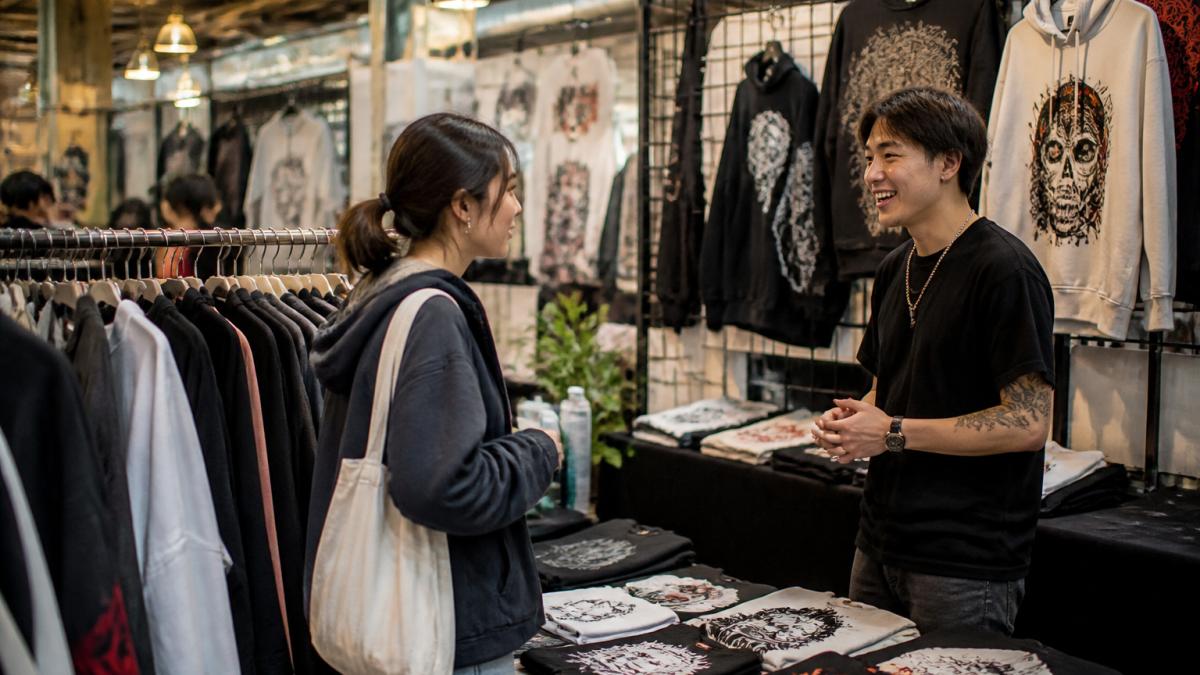
Here is a simple search routine:
- Search Instagram for your city name plus "streetwear" or "apparel"
- Check local flea and craft markets on weekends
- Ask at independent coffee shops and record stores about pop-ups
- Follow local stylists and photographers, who tag designers constantly
- Search hashtags built from your neighborhood name
One insider tip: designers often sell through a link in their bio before they launch a full site. Follow first, buy second.
Here is a simple search routine for tracking down independent labels near you.
| Where to look | What to do |
|---|---|
| Search your city name plus "streetwear" or "apparel" | |
| Local flea and craft markets | Check them on weekends |
| Independent coffee shops and record stores | Ask about pop-ups |
| Local stylists and photographers | Follow them, they tag designers constantly |
| Neighborhood hashtags | Search hashtags built from your neighborhood name |
| Designer bio links | Follow first, buy second before a full site launches |
Where to Buy Independent Fashion Brands Without Guesswork
The safest places to buy independent fashion brands are direct brand websites, in-person markets, and curated local pop-ups. Each one lets you check the seller before money changes hands.
Black Raw Seam Paneled St. Louis 314 Boxy Tee →
How to tell a brand is genuinely independent
An independent fashion brand is a small label that designs and sells its own pieces, usually in limited runs, rather than reselling mass-produced goods under a licensed name. Look for these signals:
- A named founder who posts about the work
- Limited runs that sell out and do not restock endlessly
- Real fabric specs listed on the product page
- Behind-the-scenes production content
- A small, consistent product line
Watch out: some "independent" labels are just drop-shippers with a nice grid. A brand with a large catalog, no founder name, and no fabric details is worth questioning.
For a full method on verifying a label, read how to find authentic streetwear brands. And if you want a shortcut, our guide to the best streetwear brands for city pride points you to labels that already pass the test.
How to Promote Independent Designers on Social Media
Promoting independent designers on social media works best when you show the clothes in real life, not in a studio. A phone photo on your block beats a polished flat lay every time.
Try these:
- Post a fit pic and tag the designer in the photo, not the caption
- Share a short video of the piece in motion
- Write one honest line about why you bought it
- Comment on the designer's posts with real feedback
- Repost their drops to your story the day they launch
Small labels tend to notice shares. Word of mouth from real customers can be persuasive, because buyers often trust people more than banners.
Supporting Designers When You Are Not Ready to Buy
You can back independent designers without spending a dollar. Attention and feedback cost nothing and often help more than a single sale.
- Follow and engage with their posts
- Share their drops with friends who shop that style
- Send fit feedback and photos they can reshare
- Offer to model or shoot content if you have the skill
- Sign up for their email list so they can plan production
A common mistake is thinking support means buying. It does not. Engaged followers can help a small designer when dealing with suppliers and press. You can help build that.
Start With One Piece From a City You Actually Rep
Begin with a single piece that names your city, and wear it until it means something. That is how supporting local independent fashion designers becomes a habit instead of a one-time gesture.
What most guides miss is that city pride is not a slogan. It is a design brief. A tee with your area code hits differently than a generic logo, because it says something true about where you are from.
That is the idea we build on at NewCity Brand. Our tees and hoodies carry city graphics, cotton fabrics, and washed textures. Take the Black Raw Seam Paneled St. Louis 314 Boxy Tee at $42.00: 100% cotton, exposed raw seams, a boxy cut built for movement. Or the Snow-Washed Snap Collar Hoodie at $56.00, with a washed, distressed finish and a snap button collar.


If you want the story behind city-based design, read why urban fashion represents local culture.
Frequently Asked Questions
Why should you support independent fashion designers?
Your money goes to a person, not a shareholder. Independent fashion designers usually run small production batches, so they can afford heavier fabrics, tighter stitching and real quality control. They can also be more directly accountable for what they sell. Buying from them keeps design money in your own city and pushes back against the sameness of mall racks. The practical result is a wardrobe with pieces nobody else on your block owns.
How can you tell if a fashion brand is actually independent?
Look for a named founder and a real story behind the label. Independent brands typically list fabric weights, construction details and care instructions on product pages, because the maker is proud of the specs. Check whether they run small drops instead of permanent inventory, and whether they answer comments and DMs personally. A brand that shows its production process, its city and its people is usually independent. One that hides all of that behind lifestyle photography is usually not.
How do you promote independent designers on social media without sounding like an ad?
Post the piece in context, not the product page. A photo of you wearing it, a short clip of the fabric moving, or a note on why you bought it does more than a reposted campaign image. Tag the designer and link their shop in your story. Comment on their posts with something specific, like how the seams are finished. Word of mouth from a real customer converts better than any paid placement, and most small labels will repost you in return.
Are independent fashion brands more sustainable?
Often, but not automatically. Small-batch production means less unsold stock headed for landfill, and some independent designers use heavier fabrics and careful finishing methods. That said, independence is not a certification. Ask about fabric weight, dye process and where the garment is sewn. A brand that can answer those three questions clearly is usually making a lower-waste product than a mass retailer selling the same silhouette at half the price.
The hardest part is not finding independent designers. It is trusting that one piece from a small label will beat five from a chain. We built NewCity Brand for that exact bet: minimalist design with luxury finishes, high-grade fabrics, and graphics that celebrate your city instead of erasing it. Start with one piece, wear it hard, and see how it holds up. Shop now →
