

Table of Contents
- What Makes an Ethical Streetwear Brand Worth Your Attention
- Sustainable Streetwear Brands Setting the Standard
- Streetwear Brands with Transparent Supply Chains
- Eco-Friendly Streetwear Clothing: Materials That Matter
- How to Shop for Ethical Streetwear Without Compromise
- Building Your Ethical Streetwear Wardrobe: The Staples
- The Real Trade-Offs: What Ethical Streetwear Demands
- Frequently Asked Questions
Last Updated: October 4, 2026
What Makes an Ethical Streetwear Brand Worth Your Attention
Ethical streetwear brands reflect a shift in consumer priorities: urban tastemakers now demand transparency about where clothes come from, who makes them, and their environmental impact.
At NewCity Brand, we recognize that true style requires transparency. Ethical streetwear brands prove that responsible production doesn't compromise on design, fit, or cultural relevance.
Supply chain transparency and labor practices
Leading ethical streetwear brands document their supply chains: where garments are manufactured, who owns the factories, and what workers earn. Transparency is accountability, not marketing.
Fair labor practices mean living wages, reasonable hours, and safe conditions. Brands setting the standard provide third-party audits and publicly share factory locations, separating genuine commitments from greenwashing.
When evaluating a brand, ask: Can you trace a piece back to the makers? Do they publish factory audits? Are workers' stories featured? These details prove the brand views its supply chain as identity, not liability.
Material choices and environmental impact
Ethical streetwear brands prioritize materials that reduce water consumption, chemical pollution, and waste. Organic cotton, recycled fibers, and regenerative materials are now industry standards among serious brands.
Organic cotton cuts water consumption significantly. Recycled materials eliminate virgin resource extraction and landfill waste. Low-impact dyes reduce chemical runoff into waterways.
Leading brands specify what percentage of each collection uses sustainable fibers, explain dyeing processes, and report carbon emissions, signaling genuine commitment over surface-level claims.
Sustainable Streetwear Brands Setting the Standard
Building an ethical streetwear wardrobe starts with identifying brands that back claims with verifiable practices.
Sustainable streetwear brands invest in better materials, maintain long-term factory relationships, publish sustainability reports, and engage with communities.
NewCity Brand embodies this approach, crafting premium urban apparel with transparent practices and high-grade fabrics celebrating local city identity. When selecting ethical streetwear brands, look for those combining bold design with documented responsibility.
Streetwear Brands with Transparent Supply Chains
Supply chain transparency is the defining metric for ethical credibility. Brands that openly share factory information, worker wages, and production timelines build trust and differentiate themselves.
Leading brands publish detailed supply chain maps, share independent audit reports, name specific factories, and feature the people who make their clothes.
When researching brands, look for a dedicated sustainability page. If information isn't easily accessible, that's a red flag. Trustworthy brands make practices visible because they're proud of them.
Eco-Friendly Streetwear Clothing: Materials That Matter
The materials you choose determine your wardrobe's environmental impact. Eco-friendly streetwear clothing prioritizes fibers that reduce harm at every stage: cultivation, production, dyeing, and disposal.
Organic cotton and regenerative fibers
Organic cotton eliminates synthetic pesticides and fertilizers. Regenerative cotton actively improves soil health through carbon sequestration. These materials cost more but justify the environmental benefit.
Recycled and low-impact alternatives
Recycled polyester transforms plastic bottles and textiles into new fibers, eliminating virgin extraction and landfill waste. Low-impact dyes reduce chemical runoff.
Deadstock fabric, excess material from previous seasons, prevents waste. This approach requires design flexibility but demonstrates genuine sustainability thinking.
How to Shop for Ethical Streetwear Without Compromise
Navigating the ethical streetwear market requires a critical eye. Understanding how to evaluate claims and avoid greenwashing protects your wallet and values.
Evaluating certifications and brand claims
Certifications like Fair Trade Certified, GOTS, and B Corp indicate third-party verification and regular audits.
Certifications aren't mandatory for ethical practices. Look beyond logos to actual information: factory audits, worker testimonials, material documentation.
Beware of vague language. Terms like "sustainable" lack legal definitions. Trustworthy brands quantify claims: "We reduced water usage by 40%," "Factory workers earn 150% of minimum wage," "85% uses organic cotton."
Price-per-wear and durability considerations
An expensive ethical piece that falls apart after ten wears is worse than a cheaper conventional garment worn for years. Price-per-wear is a useful metric: divide the cost by the number of times you'll realistically wear the item.
Quality construction and durable materials extend garment life. Reinforced seams, premium fabrics, and timeless designs resist trends. Ethical streetwear brands that focus on longevity are making a sustainability argument: fewer replacements mean fewer resources consumed.
Ask yourself whether a piece fits your actual lifestyle. A $200 ethical hoodie that perfectly matches your aesthetic and lasts five years is a better investment than a $60 conventional hoodie you'll replace annually. Ethical shopping isn't about spending more, it's about spending smarter.
Common greenwashing traps to avoid
Greenwashing thrives on vagueness and selective storytelling. A brand might highlight one sustainable initiative while hiding less ethical practices elsewhere. Watch for these red flags:
One sustainable collection doesn't mean an ethical brand. If a company produces one organic line while most of their output uses conventional materials, they're using sustainability as marketing, not philosophy.
Unverified claims lack credibility. "Made with sustainable materials" means nothing without specifics. Which materials? What percentage? From where?
Absence of information is suspicious. If a brand doesn't publish factory locations, worker wages, or material sourcing details, assume they have something to hide.
Beautiful sustainability messaging without supporting data is pure marketing. The brands worth supporting let their practices speak louder than their marketing copy.
Building Your Ethical Streetwear Wardrobe: The Staples
Starting an ethical streetwear wardrobe doesn't require replacing everything at once. Strategic investments in core pieces create a foundation you'll wear constantly, maximizing value and minimizing waste. The key is choosing pieces that combine aesthetic fit with practical durability and inclusive sizing.
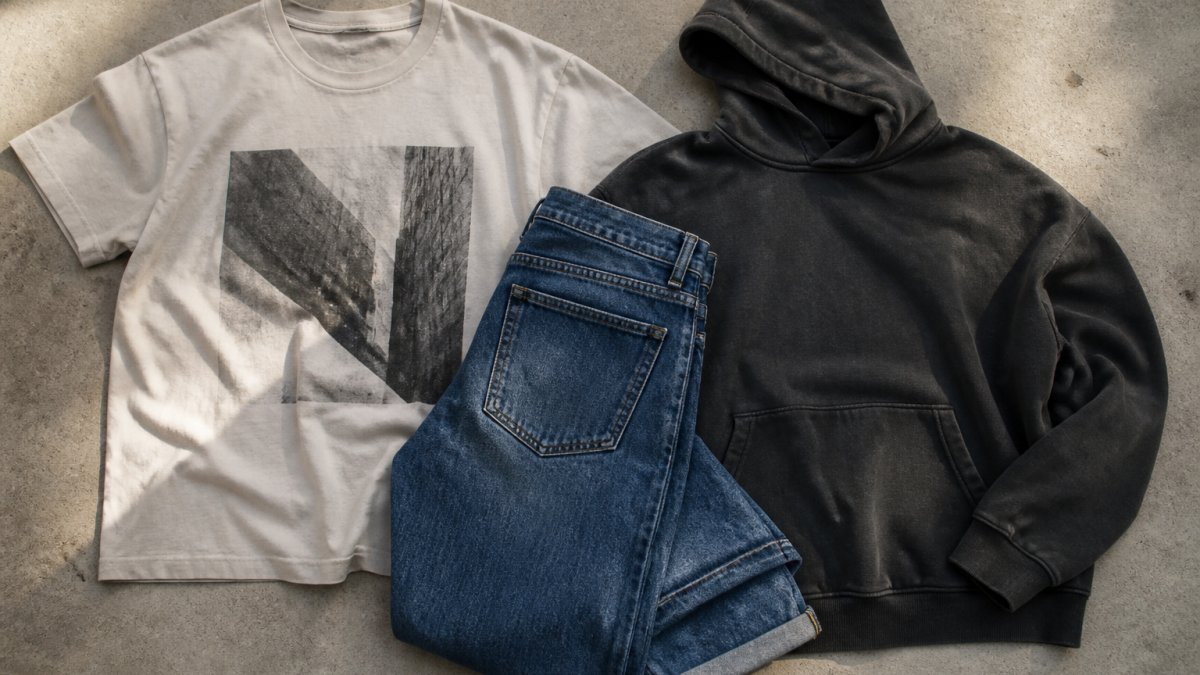
T-shirts, hoodies, and graphic prints
T-shirts and hoodies are the backbone of streetwear. Quality basics in organic cotton or recycled blends offer versatility and durability. Look for brands that source these essentials from factories with documented fair labor practices.
When evaluating a t-shirt or hoodie, compare these durability factors:
- Fabric weight: Heavier weight (6 oz or above for t-shirts, 10-12 oz for hoodies) resists pilling and maintains shape through repeated washing. Lightweight basics deteriorate faster.
- Seam construction: Reinforced side seams and double-stitched necklines last longer than single-stitch construction. Check product photos or ask brands directly about seam specifications.
- Shrinkage and colorfastness: Ethical brands using low-impact dyes should specify expected shrinkage (typically 2-5% for organic cotton) and provide care instructions that preserve color. This affects long-term wearability.
Graphic prints should reflect your aesthetic and community. Ethical streetwear brands create designs that age well visually, pieces you'll want to wear for years, not months. Bold, iconic graphics on premium fabrics justify the investment. However, print durability varies. Screen-printed graphics can crack or fade after 30-50 washes; embroidered or woven labels last longer. Ask brands about print methods and expected longevity.
Hoodies deserve particular attention. A well-made ethical hoodie becomes a wardrobe staple. Proper weight, quality zippers (YKK or equivalent branded hardware lasts longer than generic zippers), and reinforced drawstrings separate pieces that last from those that deteriorate quickly. Check whether the brand offers replacement parts, zippers, drawstrings, or patches, for repair. Brands that support garment longevity through repair options demonstrate genuine sustainability thinking.
Price-per-wear calculation for basics:
A $65 ethical organic cotton t-shirt worn 100 times costs $0.65 per wear. A $20 conventional t-shirt worn 30 times costs $0.67 per wear, similar cost per wear but with four times the environmental impact and labor concerns. A $120 ethical hoodie worn 200 times costs $0.60 per wear; a $40 conventional hoodie worn 60 times costs $0.67 per wear.
Denim and cargo pants that last
Denim quality defines longevity. Heavy-weight organic cotton denim (13-14 oz) withstands hundreds of wears and washes. Look for brands using low-impact dyes that reduce environmental harm without compromising color quality or colorfastness.
When comparing denim, evaluate:
- Fabric weight and construction: Heavier denim resists fading and maintains structure. Sanforized denim (pre-shrunk) minimizes shrinkage variance.
- Hardware durability: Branded hardware (YKK zippers, Corozo buttons made from tagua nut rather than plastic) lasts longer and can often be replaced.
- Fit consistency: Ethical brands should specify measurements (inseam, waist, thigh width) rather than relying on vanity sizing. Consistent sizing reduces returns and waste.
- Repair accessibility: Some brands offer hemming services, patch kits, or replacement buttons. This extends garment life significantly.
Cargo pants represent streetwear authenticity. Ethical brands producing cargo styles focus on functional design: proper pocket placement, durable hardware, and construction that handles real use. These pieces should feel substantial, not flimsy. Look for reinforced stress points (pocket corners, seams where straps attach) and quality zippers on cargo pockets.
Size range and inclusivity:
Ethical streetwear brands vary widely in size offerings. Some produce XS-XXL; others stop at XL. Inclusive sizing is itself an ethical practice, it reduces waste from unsold inventory and serves more customers. When evaluating brands, check whether they offer your size consistently across collections.
Price-per-wear for bottoms:
A $150 pair of ethical organic denim worn 200 times costs $0.75 per wear. The same calculation for a $40 conventional pair worn 50 times comes to $0.80 per wear, and you're replacing it four times as often, multiplying environmental impact and labor concerns.
Repair and longevity programs:
The strongest ethical brands offer repair services or sell repair kits (patches, thread, replacement hardware). Some offer free hemming or tailor services. A few operate take-back programs where you can return worn pieces for repair or recycling. These programs extend garment life and demonstrate commitment to durability beyond the initial sale.
The Real Trade-Offs: What Ethical Streetwear Demands
Choosing ethical streetwear involves genuine trade-offs. Understanding what you're gaining and what you're sacrificing helps you make decisions aligned with your priorities.
Higher prices are real. Ethical production, quality materials, and transparency cost more. Brands can't maintain rock-bottom prices while paying living wages and investing in sustainable materials. If a brand's prices seem too low, their ethics claims deserve scrutiny.
Limited availability is another trade-off. Ethical brands often produce smaller quantities to reduce waste and maintain quality control. This means pieces sell out faster. Building relationships with brands you trust, following their releases and subscribing to notifications, becomes necessary.
Design variety may be narrower than fast fashion. Ethical brands typically focus on timeless pieces rather than chasing every trend. This limitation is actually a feature: it encourages thoughtful purchases and builds cohesive wardrobes.
The upside is substantial. You know where your clothes come from. You support workers earning fair wages. You reduce environmental impact. You own pieces that last. You align your wardrobe with your values.
| Trade-Off | Cost | Benefit |
|---|---|---|
| Higher prices | More upfront spending | Quality and durability offset costs |
| Limited availability | Less frequent shopping | Thoughtful, intentional purchases |
| Smaller design range | Fewer trend-chasing options | Timeless pieces that last years |
| Research required | Time spent evaluating brands | Confidence in your choices |
Building an ethical streetwear wardrobe reflects your commitment to responsible consumption. The brands setting the standard in 2026 prove that bold design, premium quality, and transparent ethics create pieces worth wearing for years.
Frequently Asked Questions
How can you tell whether an ethical streetwear brand is actually ethical?
Look for specific supply chain disclosures: factory locations, worker wage standards, and third-party certifications like Fair Trade or B Corp. Vague language about 'responsible production' without details is a red flag. Check if the brand publishes annual sustainability reports and responds to direct questions about labor conditions. Brands with transparent supply chains typically highlight their manufacturing partners by name.
What materials should you look for in sustainable streetwear?
Prioritize organic cotton, recycled polyester, and regenerative fibers like Tencel or hemp. These reduce water use, chemical pollution, and carbon emissions compared to conventional materials. Check for low-impact dyes and certifications like GOTS (Global Organic Textile Standard) or OEKO-TEX. Durability matters too, a well-made piece from recycled materials worn for years beats a cheap garment discarded after months.
Are ethical streetwear brands more expensive than conventional options?
Yes, typically. Fair wages, sustainable materials, and traceability add cost. However, price-per-wear often favors ethical pieces because they last longer and stay in style. A durable organic cotton hoodie worn 200 times costs less per wear than a cheaper alternative worn 50 times. Quality fabrics and construction also mean better fit and comfort, which keeps pieces in rotation longer.
How can you build a more sustainable streetwear wardrobe without starting over?
Start by buying fewer, higher-quality pieces from ethical brands. Invest in versatile staples, classic t-shirts, well-fitting denim, neutral hoodies, that mix and match across your existing wardrobe. Extend the life of current pieces through proper care and repair. Consider secondhand ethical brands to reduce environmental impact while building your collection. Prioritize brands with inclusive sizing and timeless designs so pieces remain wearable for years.