

Quick Summary
Screen printing vs DTG comes down to how ink meets the fabric: screen printing pushes ink through a stencil and sits on top of the fibers, while DTG sprays water-based ink into the cotton like an inkjet. Screen printing gives bold, raised graphics that suit solid designs, and DTG handles detailed artwork and gradients well.
- Screen printing uses a separate screen for each color and pushes ink through a stencil.
- DTG works best on 100% cotton, and print quality depends on pretreatment and curing.
- Screen-printed graphics usually feel bold and raised, while DTG prints feel softer.
- Screen printing's main wear risk is cracking from heat; DTG's is fading if poorly cured.
- Wash printed streetwear inside out, cold, on a gentle cycle, and hang dry to protect either print.
Table of Contents
- Screen Printing and DTG in Plain Terms
- Screen Printing vs DTG Durability on Streetwear
- DTG vs Screen Printing Cost at Different Order Sizes
- DTG Printing on Heavyweight Shirts: What Changes
- Print Quality, Feel and Detail on Graphic Tees
- How to Wash Printed Streetwear So the Print Lasts
- Choosing the Right Print Method for Your Next Drop
- Frequently Asked Questions
Screen Printing and DTG in Plain Terms
Last Updated: November 6, 2026
Screen printing and direct-to-garment (DTG) printing both put artwork on a shirt, but comparing screen printing vs DTG shows they do it in very different ways. Choosing between them shapes how a tee feels, how long the graphic lasts, and what a drop costs to produce. For streetwear labels, that choice matters because a hoodie or boxy tee has to look sharp and hold up under constant wear.
Screen printing forces ink through a stencil onto fabric, one color at a time. DTG works more like an inkjet printer, spraying water-based ink straight into the cotton. Each method has a clear sweet spot, and the difference shows up in the details.
How screen printing lays ink on fabric
Screen printing starts with a separate screen for each color in the design. Ink is pushed through the open areas of the stencil with a squeegee, and the shirt is then cured under heat. Because the ink sits on top of the fibers, the graphic usually has a bold, raised feel.
How DTG prints directly onto the shirt
DTG handles detailed artwork, gradients, and small runs well. It works best on 100% cotton, and the result depends heavily on how the shirt was pretreated and cured. A poorly cured print can wash out faster than expected.
Screen Printing vs DTG Durability on Streetwear
Durability is where most streetwear buyers feel the difference, and the reason comes down to how each ink bonds to cotton.
For more on how fabric choices affect wear, see How Long Does Premium Streetwear Last: A Durability Guide.
Before judging any print, check the blank itself. How to Verify Streetwear Fabric Quality walks through what to look for in cotton weight and construction.
The two methods bond ink to cotton in different ways, which is what most streetwear buyers notice over time.
| Factor | Screen printing | DTG |
|---|---|---|
| How ink sits | Sits on top of the fibers | Sprayed into the cotton |
| Feel | Bold, raised graphic | Softer, less raised |
| Best for | Bold, solid designs | Detailed artwork and gradients |
| Main wear risk | Cracking from heat | Fading if poorly cured |
DTG vs Screen Printing Cost at Different Order Sizes
Cost is the deciding factor for most small streetwear labels, and the math is more specific than "setup costs versus no setup costs."
Streetwear buyers should also weigh cost per wear, not just cost per unit. The cheaper shirt is not always the better value. Fabric weight, construction, and print method all feed into how long a garment stays in rotation.
For a deeper look at how blanks and construction affect longevity, see How Long Does Premium Streetwear Last: A Durability Guide.
DTG Printing on Heavyweight Shirts: What Changes
Choosing the right blank matters more than the printer. A structured heavyweight piece, such as the Heavyweight Sun Faded Hoodie The Lou, suits DTG when the print is planned for the fabric's surface. Our Classic Fit Crew Neck T‑Shirt, STL 314 shows how a lighter-weight tee takes DTG differently.


Print Quality, Feel and Detail on Graphic Tees
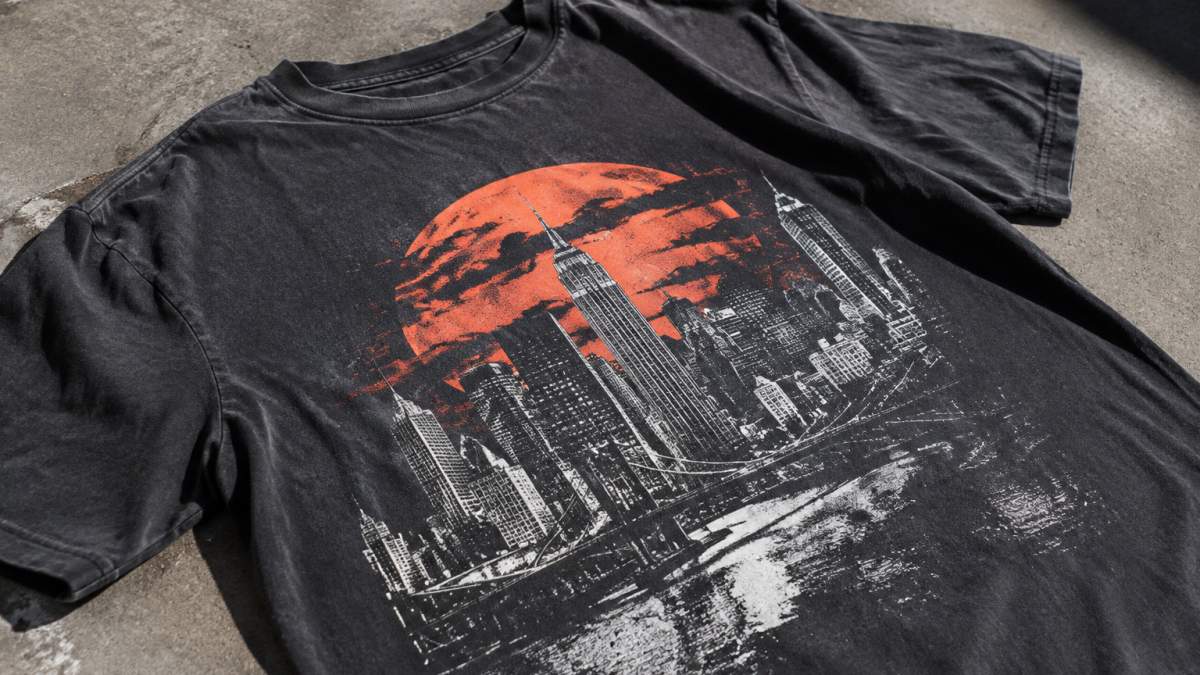
Neither method is automatically better; the right choice depends on the design.
How to Wash Printed Streetwear So the Print Lasts
Washing habits decide how long any print survives. Turn garments inside out, wash cold on a gentle cycle, and avoid bleach. Hang dry rather than tumble dry on high heat, since heat is the fastest way to crack screen-printed ink or fade DTG graphics.
Wash like colors together to prevent dye transfer. Following these habits extends the life of either print method far more than the printing process itself.
Choosing the Right Print Method for Your Next Drop
Explore current pieces: Snow‑Washed St. Louis “The Lou” Graphic Tee and Raw Seam Boxy Tee, The Lou 314 show two different takes on boxy streetwear.
Frequently Asked Questions
What is the difference between screen printing and DTG printing?
Screen printing pushes ink through a mesh stencil, one color at a time, so each color needs its own screen and setup. DTG, or direct-to-garment, works like an inkjet printer that sprays water-based ink straight onto the shirt. Screen printing usually produces bolder, more opaque colors on dark fabric, while DTG handles photographic detail and many colors in one pass. The right choice depends on the design, the fabric weight and how many pieces you are producing.
Which lasts longer on streetwear: screen printing or DTG?
Wash inside out in cold water, avoid high heat in the dryer, and keep the print away from harsh detergents to extend the life of either method.
Is screen printing cheaper than DTG for bulk orders?
For larger runs of a simple design with few colors, screen printing is usually cheaper per shirt, because the setup cost is spread across many pieces. DTG has little setup, so it is often more economical for small batches, single pieces or highly detailed artwork. As an example, NewCity Brand's Classic Fit Crew Neck T-Shirt - STL 314 is priced at $36.00.
Can DTG printing work on heavyweight streetwear shirts?
DTG can print on heavyweight shirts, but results depend on fabric density, pretreatment and curing. Thick, tightly woven cotton can absorb ink unevenly if the garment is not prepared correctly, so ask the printer whether they pretreat heavy fabrics.
