

Last Updated: November 7, 2026
Quick Summary
Clean premium sneakers at home by brushing off dry dirt first, then using a soft brush with mild, pH-neutral soap and lukewarm water, and drying them fully away from heat. Treat leather, suede and canvas differently, and never machine wash premium pairs.
- Brush off loose dirt before any water touches the shoe.
- Use a soft brush, mild soap and lukewarm water, never dish soap, bleach or hot water.
- Dampen only the surface you are cleaning and never soak the entire shoe.
- Condition smooth leather once it is completely dry, and use a light hand.
- Never machine wash premium sneakers, since tumbling and heat can warp them and loosen glue.
Table of Contents
- Why Premium Sneakers Need a Different Routine
- What You Need Before You Start Cleaning
- How to Clean Premium Sneakers at Home, Step by Step
- Caring for Leather, Suede, Canvas and Mesh Uppers
- Best Leather Conditioner for Sneakers and How to Apply It
- How to Keep White Leather Sneakers Clean
- How to Clean Nike Shoes With Mesh Uppers
- Stain Troubleshooting, Protection and Storage for Long-Term Care
- Frequently Asked Questions
Why Premium Sneakers Need a Different Routine
Premium sneakers often use better leather, suede, and detailed finishes. Those same materials are also easier to damage.
Most people treat all sneakers the same way. That is the main mistake. A good routine depends on the material, the construction, and the finish.
The core idea is simple: go gentle, go slow, and test first.
- Leather can crack or stiffen when it gets too wet.
- Suede and nubuck show water marks and lose their nap.
- Glued midsoles can separate if they soak for too long.
- Mesh and knit uppers can stretch or pull when scrubbed hard.
What You Need Before You Start Cleaning
You do not need expensive gear. You need the right gear and a little patience. Gather these items before you begin:
- A soft-bristle brush, such as an old toothbrush or a suede brush
- Two microfiber cloths, one damp and one dry
- A mild, pH-neutral soap or a gentle sneaker cleaner
- A bowl of lukewarm water
- Paper towels or newspaper to stuff the shoes
- Shoe trees or stuffing to keep the shape while drying
Skip dish soap, bleach, and hot water. They strip oils from leather and can cause color to fade. Check the care tag or the manufacturer's site first.
Watch out: Never machine wash premium sneakers. The tumbling and heat can warp the shape and loosen the glue.
How to Clean Premium Sneakers at Home, Step by Step
Work through the steps in order. Rushing is where most mistakes happen. Plan on about 30 to 45 minutes for a careful clean.
Removing Loose Dirt and Debris First
Start dry. Knock the shoes together gently to shake out loose grit.
Dry brushing comes first for a reason. If you add water to grit, you create a muddy paste that can scratch the surface.
Pay extra attention to the welt, where the upper meets the sole. Dirt collects there and is often missed.
Cleaning Uppers, Midsoles and Outsoles
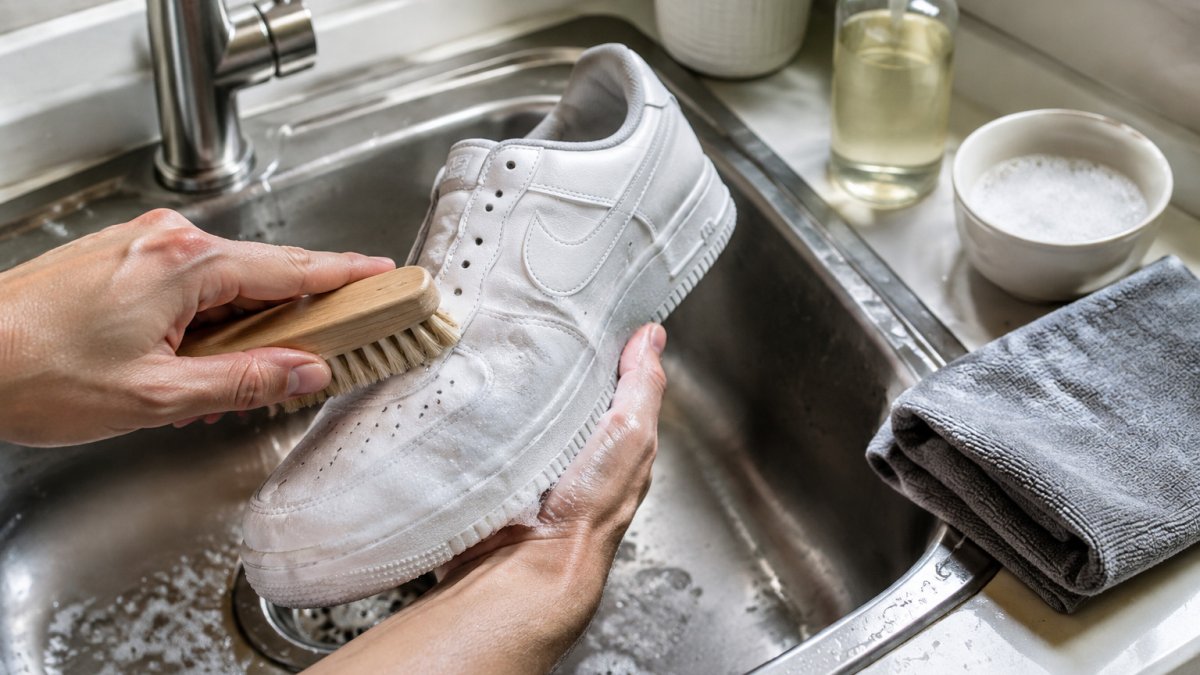
Mix a small amount of mild soap into the lukewarm water. You want light suds, not a heavy foam.
For the midsole, use a little more soap and scrub gently.
Wipe the suds off with the damp microfiber cloth.
A common mistake is soaking the entire shoe. Only dampen the surface you are cleaning.
Cleaning Shoelaces and Insoles Separately
Remove the laces and insoles before cleaning. Laces can be hand washed in the same mild soapy water, rinsed, and laid flat to dry. Insoles can be wiped with a damp cloth.
Clean these parts separately so they do not dye the shoe or trap dirt in the body of the sneaker.
Caring for Leather, Suede, Canvas and Mesh Uppers
Material is the single biggest variable in premium sneaker care. Two pairs can look identical and need opposite methods, so treat this section as a decision guide rather than a list of tips. Before you touch the upper, identify what you are actually cleaning: the base material, any coating or finish, and whether the shoe mixes panels.
Smooth and Full-Grain Leather
Smooth leather is the most forgiving premium upper, but it still punishes over-wetting. Wipe with a damp microfiber cloth and a pH-neutral soap, then dry immediately with a second cloth.
Watch out: coated or patent-finished leather can cloud or flake if you scrub it. Use only a damp cloth on those finishes and skip conditioner unless the manufacturer says otherwise.
Suede and Nubuck
Suede and nubuck are where most at-home damage happens. Never start with a wet cloth. Let the shoe dry fully, then brush with a suede brush in one direction to lift the nap and release dust.
A common pattern is that people wet suede to "clean" a mark and end up with a water ring that is harder to fix than the original spot.
Canvas and Heavy Fabric
Canvas is the most tolerant upper and the one place you can use a little more water and friction. Brush off dry dirt, then scrub gently with a soft brush and mild soapy water. Rinse the cloth and wipe away suds rather than soaking the shoe. Canvas can yellow if soap residue is left behind, so do a final wipe with a clean damp cloth.
Knit, Mesh and Engineered Textiles
Knit and mesh hold dust and sweat in the weave and stretch when scrubbed hard. Use a soft brush and light pressure, working in short strokes. Rinse the brush often so you are not pushing dirt back into the fabric. For stains, use a sneaker-specific cleaner rather than more pressure. Let the shoe air-dry away from direct heat, because heat can shrink or warp engineered textiles.
Mixed-Material and Specialty Finishes
Many premium pairs combine leather panels with suede overlays, mesh tongues, or glued decorative elements. Clean the most delicate panel first and keep water away from glued seams and edges. Coatings, metallic finishes, and delicate dyes change the method: a cleaner that is safe on smooth leather can dull a coated panel or lift a dye.
A Quick Material Decision Guide
- Smooth leather: damp cloth, mild soap, dry immediately, condition when dry.
- Coated or patent leather: damp cloth only, no abrasives, no conditioner unless approved.
- Suede and nubuck: dry brush first, suede eraser for marks, suede cleaner sparingly, never soak.
- Canvas: soft brush and mild soapy water, wipe residue, air-dry.
- Knit and mesh: soft brush, light pressure, sneaker cleaner for stains, air-dry away from heat.
- Mixed materials: clean the most delicate panel first, keep water off glued seams, patch test everything.
Test any product on a small, hidden spot and let it dry fully before you judge the result. The finish, not just the material name, decides whether a method is safe.
Best Leather Conditioner for Sneakers and How to Apply It
Leather needs moisture to stay supple. Once the shoe is clean and fully dry, a light conditioner helps prevent cracking.
Apply a small amount to a clean cloth. Rub it into the leather in thin, even layers.
Do not over-condition. Too much product can darken the leather, leave a greasy feel, or attract dirt.
How to Keep White Leather Sneakers Clean
White leather shows every mark, so a little routine goes a long way. Wipe the shoes after each wear if you notice scuffs.
For yellowing or stubborn marks, a gentle paste of baking soda and water can help on the midsole.
Keep white pairs away from dark denim and rubber mats, since dye transfer can leave marks that are hard to remove.
How to Clean Nike Shoes With Mesh Uppers
Many sneakers use breathable mesh panels. For more on caring for printed and fabric-based streetwear, see practical care guidance for printed and fabric-based streetwear.
Work in short strokes and avoid pressing into the weave. Rinse the brush often and wipe the area with a damp cloth.
If the mesh is still stained, try a stain-specific cleaner made for sneakers before you increase scrubbing.
Stain Troubleshooting, Protection and Storage for Long-Term Care
Cleaning is only half of maintenance. The other half is handling stains before they set, protecting the finish after cleaning, and storing pairs so they do not degrade between wears. This section covers what happens before and after the wash step.
Stain-Specific First Response
Act fast, but act correctly. The wrong first move can set a stain permanently.
- Salt stains: Let the shoe dry completely, then brush off the salt with a soft brush. Wipe with a cloth dampened with a mild soap solution and dry immediately. Do not soak leather to dissolve salt; that drives it deeper.
- Oil and grease: Blot, do not rub. Sprinkle cornstarch or a similar absorbent powder on the spot, let it sit to pull oil out, then brush it off. Repeat before applying any cleaner.
- Grass and mud: Let mud dry, then brush it off. For grass, use a small amount of mild soap on a cloth and work from the edge of the stain inward.
- Scuffs: Start with a damp cloth or a sneaker eraser. On smooth leather, a small amount of conditioner on a cloth can lift light scuffs; on suede, use a suede eraser and brush the nap back.
- Water marks: These are common on suede and nubuck. Lightly dampen the entire panel evenly, then let it dry away from heat so the mark does not ring. Do not spot-wet one area.
Watch out: never rub a fresh stain aggressively or apply heat to dry it. Heat sets many stains and can bake dirt into the finish.
Protection and Waterproofing After Cleaning
Apply protection only after the shoe is completely dry. A water-repellent spray can guard against rain, spills, and everyday grime, but compatibility matters. Suede and nubuck need a protectant formulated for those materials; smooth leather and knit may take a general sneaker protectant. Patch test on a hidden area first, apply in a well-ventilated space, and follow the product's reapplication guidance based on wear.
Storage, Rotation and Long-Term Preservation
Store sneakers in a cool, dry place away from direct sunlight, which fades dyes and can crack leather over time. Use shoe trees or stuffing to hold shape, and avoid sealing pairs in plastic, which traps moisture and can encourage mildew. Rotate pairs so each one has time to dry fully between wears; wearing the same pair daily accelerates creasing and odor.
When to Use a Professional Cleaner or Repair Service
Some problems are beyond at-home care. Deep oil stains, dye transfer, separated soles, cracked leather, and crushed suede nap are thresholds where a professional cleaner or shoe repair service is the safer choice. Repair pricing depends on the damage and the pair, so ask for a quote before you commit and weigh it against the value of the pair.
NewCity Brand designs premium urban apparel with high-grade fabrics and snow-washed textures, and the same care principles help keep premium finishes looking sharp. For more on choosing quality materials, see how to spot premium streetwear fabrics and premium streetwear stitching: what to look for. If you want to see how these pieces fit into a broader wardrobe, read how to build a premium streetwear wardrobe in 2026.
The table below summarises the stain-specific first responses covered in this section.
| Stain | First response | Watch out |
|---|---|---|
| Salt | Dry fully, brush off, wipe with mild soap | Do not soak leather |
| Oil and grease | Blot, apply cornstarch, brush off | Do not rub |
| Grass and mud | Let mud dry, brush, work from edge inward | Use only mild soap |
| Scuffs | Damp cloth or sneaker eraser | Suede needs suede eraser |
| Water marks | Dampen whole panel evenly, dry away from heat | Do not spot-wet |
Frequently Asked Questions
How can I clean my expensive sneakers without damaging them?
Start by removing loose dirt with a soft-bristle brush, then wipe the upper with a damp microfiber cloth and a small amount of mild soap. Avoid soaking the shoe, keep water away from glued seams, and air-dry it at room temperature away from direct heat. Test any cleaner on a hidden area first, such as the tongue, because harsh solutions can strip finishes and cause color fading on premium leather.
Is Dawn dish soap safe for cleaning sneakers?
Dawn dish soap can work for light cleaning on durable synthetic and canvas uppers when it is diluted with warm water, but it is not ideal for premium leather or suede. Its degreasing action can dry out leather and leave residue that attracts dirt. A pH-balanced sneaker cleanser or a gentle leather-safe soap is a better choice for most premium pairs, and you should always rinse thoroughly and let the shoe air-dry.
How often should you clean premium sneakers?
Wipe down premium sneakers after each wear that exposes them to dirt, rain or sweat, and do a deeper clean every few wears or whenever visible grime builds up. Frequent light maintenance prevents stains from setting and reduces the need for aggressive scrubbing, which is what usually causes material damage over time.
