

Table of Contents
- What Makes Premium Streetwear Fabrics Different
- How to Tell If Fabric Is High Quality: The Basics
- Streetwear Hoodie Fabric Weight: What GSM Actually Means
- Best Fabrics for Streetwear: Cotton, Blends, and Fleece
- The Hands-On Fabric Inspection Checklist
- How Premium Streetwear Fabrics Perform After Washing
- Common Fabric Quality Red Flags
- Frequently Asked Questions
Last Updated: October 12, 2026
What Makes Premium Streetwear Fabrics Different
The difference between a hoodie that feels like luxury and one that feels cheap comes down to fabric quality. Premium streetwear fabrics hold their shape, feel soft against your skin, and stay durable through dozens of washes.
At NewCity Brand, we focus on fabrics that deliver both comfort and longevity. Understanding what separates premium fabrics from standard ones helps you build a wardrobe that actually holds up.
The real difference lives in the details: how the fabric feels, how it's stitched, how it responds to washing. This guide walks you through exactly what to look for.
How to Tell If Fabric Is High Quality: The Basics
High-quality fabric starts with raw material: fiber content, weight, and construction determine how a piece performs and feels.
Fiber Content and Cotton Composition
100% cotton is the gold standard for streetwear: breathable, soft, and ages well. Blends mix in polyester or elastane for stretch and durability.
Here's what matters:
- 100% cotton feels natural and softens over time
- Cotton blends (90% cotton, 10% polyester) add durability without sacrificing feel
- Low-quality cotton often feels stiff and scratchy when new
Premium streetwear brands use combed cotton or high-grade blends, because fiber quality affects softness, longevity, and wash performance.
Weight, Density, and Construction
Fabric weight signals density and durability, though heavier isn't automatically better.
Fabric weight is measured in GSM (grams per square meter). This number tells you how much material is packed into the fabric:
- Lightweight: under 200 GSM (thin, summery)
- Midweight: 200-350 GSM (versatile, everyday wear)
- Heavyweight: 350+ GSM (dense, structured, winter-ready)
For streetwear hoodies, most premium options fall in the 350-450 GSM range. This weight provides structure while staying comfortable.
Construction matters too. Loopback jersey has a textured, looped inside that traps warmth; fleece is brushed inside for softness.
Streetwear Hoodie Fabric Weight: What GSM Actually Means
GSM tells you how dense a fabric actually is, which predicts how a piece will perform.
A 380 GSM hoodie feels structured and holds its shape without sagging; a 420 GSM hoodie is denser, warmer, and more durable.
Lower GSM (250-300) feels lighter and is better for layering. Higher GSM (400+) is best for standalone wear in cooler months.
The Brushed Fleece St. The Heavyweight Sun-Faded Hoodie reaches 400 GSM, delivering extra durability and structure for pieces designed to become worn-in staples.

GSM also affects washing: lighter fabrics pill and lose shape, while heavier ones hold form and resist pilling.
Best Fabrics for Streetwear: Cotton, Blends, and Fleece
Different fabrics serve different purposes. Knowing each one's strengths helps you choose well.
100% Cotton and Cotton-Blend Options
100% cotton breathes well, feels natural, and softens with age, but it can shrink if not pre-shrunk and wrinkles easily.
Cotton blends add elastane or polyester for stretch and durability: 95/5 cotton-elastane keeps pure-cotton feel with flexibility, while 90/10 cotton-polyester boosts durability without changing hand feel much.
Premium brands pre-shrink cotton to prevent size changes after washing, a sign the manufacturer accounted for shrinkage upfront.
Fleece and Loopback Jersey
Brushed fleece is soft inside, smooth outside, warm, and ideal for everyday hoodies. Constructed well, it feels luxurious and resists pilling.
Loopback jersey has visible inside loops: slightly lighter than fleece but still warm, and more structured, less "fluffy."
The Brushed Fleece St. Lou 314 Hoodie features this construction, soft interior brushing combined with a clean exterior finish.
Heavyweight Sun‑Faded Hoodie — STL 314 →

The Hands-On Fabric Inspection Checklist
Most buying guides say premium fabric "feels substantial." That is not a test. What follows is a repeatable inspection sequence you can run in a store, on a swatch, or on a piece you own.
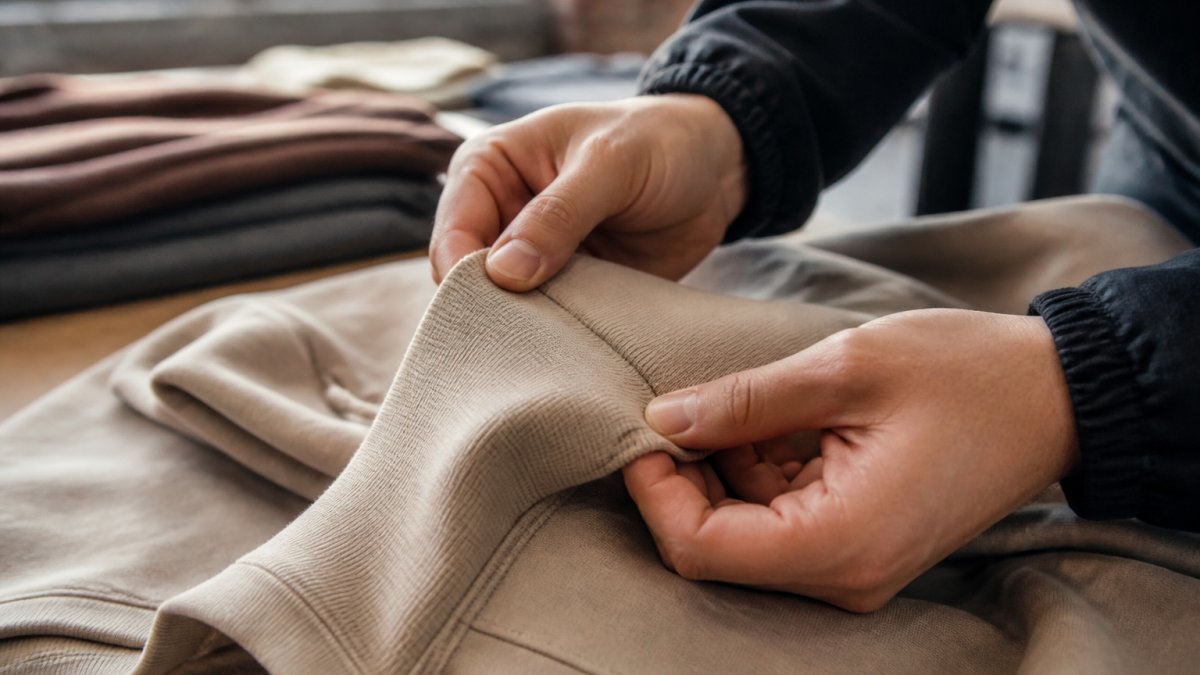
1. The Hand-Feel and Recovery Test
Run your palm across the surface, then pinch and release a section of the body.
- Surface consistency: Premium cotton and cotton-blend knits feel uniform. Rough patches, slubs, or a scratchy nap usually mean short-staple cotton or skipped finishing steps.
- Recovery: Stretch a 2-inch section gently and let go. It should snap back to roughly its original dimension within a second. Slow or incomplete recovery points to low elastane content, weak yarn twist, or a loose knit structure.
- Drape: Hold the garment by the shoulders and let it hang. A 380-420 GSM hoodie should fall with weight and hold a soft fold, not collapse like a t-shirt or stand up like cardboard.
2. The Opacity and Density Check
Hold the fabric up to a light source, a window or phone flashlight works.
- Single-layer opacity: On a midweight or heavyweight tee, you should not see your hand clearly through one layer. If you can, the fabric is thin or loosely knit regardless of what the GSM tag claims.
- Stretch-and-hold: Pull the fabric taut against the light. Premium knits show a tight, even grid of yarns. Visible gaps or a mesh-like pattern indicate a low-density knit that will pill and lose shape.
3. The Seam and Construction Inspection
Turn the garment inside out, quality is hardest to fake here.
- Stitch density: Look for 10-12 stitches per inch on main seams. Sparse, wide stitching pulls apart under stress.
- Double-stitched stress points: Shoulders, armholes, and side seams should carry two rows of stitching. Single-stitch stress seams are a cost-cutting tell.
- Taped neck and shoulder seams: Binding tape along the back neckline and shoulder seams prevents the collar from stretching and the shoulders from distorting. This is a common premium marker on hoodies and heavyweight tees.
4. The Pilling and Fiber-Length Test
Pilling is the most reliable early indicator of fiber quality.
- Rub test: Rub the fabric against itself or a rough surface (a key, a coin edge) for 10-15 seconds. Long-staple and combed cottons resist surface fuzz. Short-staple cotton and loose knits fuzz immediately.
- Existing pills: Check under the arms, along the sides, and at the cuffs of a worn sample. Pills there mean the fabric has already failed in high-friction zones.
5. The Color and Dye Check
- Evenness: Hold the garment under natural light. Streaky, patchy, or uneven dye indicates rushed or low-grade dyeing.
- Rub transfer: Rub a damp white cloth firmly across a hidden area (inside hem). If color transfers readily, the dye is not fully bonded and will fade or bleed.
- Care-label language: "Wash with like colors" on a new premium piece is a soft warning that dye is not fully set. Reactive-dyed fabrics, where the dye chemically bonds to the fiber, fade far more slowly.
6. The Quick Scorecard
Use this to compare two or three samples side by side. Score each 0-2 (0 = fail, 1 = partial, 2 = pass).
| Check | What You're Testing | Score |
|---|---|---|
| Hand feel | Smoothness, consistency, no scratch | 0-2 |
| Recovery | Snaps back after stretch | 0-2 |
| Opacity | No light show-through on single layer | 0-2 |
| Stitch density | 10-12 SPI, even lines | 0-2 |
| Stress seams | Double-stitched shoulders/armholes | 0-2 |
| Neck/shoulder tape | Binding tape present | 0-2 |
| Seam type | Flatlock on knits, not serged | 0-2 |
| Pill resistance | No fuzz after rub test | 0-2 |
| Dye evenness | No streaks, no rub transfer | 0-2 |
A total of 14+ out of 18 is a strong premium signal. Below 10, the "premium" label is marketing, not construction.
How Premium Streetwear Fabrics Perform After Washing
Washing is the most honest test a fabric will ever take: marketing claims survive the fitting room but rarely five laundry cycles. Here's how to evaluate performance after washing, and what each failure mode says about fiber and construction.
The Four Failure Modes to Track
1. Shrinkage. Cotton knits can shrink 3-7% on a first hot wash if not pre-shrunk or compacted.
2. Pilling. Agitation pulls short fibers to the surface where they tangle into balls. Long-staple and combed cottons resist this because fewer short fibers migrate.
3. Color loss and bleeding. Reactive dyes bond chemically to cellulose fibers and hold color through dozens of washes.
**4.
A Simple Wash-Test Protocol
Run this on any new piece before committing to a full wardrobe of it.
- Measure first. Lay the garment flat and record body length, chest width, and sleeve length.
- Wash cold, inside out, mild detergent. Skip bleach and fabric softener, softener coats fibers and masks hand feel.
- Tumble low or hang dry. High heat is the single biggest cause of shrinkage and fiber breakdown.
- Re-measure and inspect. Compare dimensions, check for pills under the arms and at cuffs, and look for color transfer on a white cloth.
- Repeat for three cycles. One wash tells you little. Three washes reveal the fabric's real trajectory.
What "Pre-Shrunk" and "Reactive-Dyed" Actually Mean
These terms get thrown around loosely, so know what they signal.
- Pre-shrunk / compacted: The fabric was mechanically compressed or washed before cutting so residual shrinkage is minimal. It is a real quality step, not a marketing phrase.
- Reactive-dyed: The dye forms a covalent bond with the fiber. This is why reactive-dyed pieces resist fading and bleeding far better than surface-dyed alternatives.
- Garment-dyed: The finished garment is dyed after sewing, which can produce richer, more uneven color and softer hand feel, but also more shrinkage risk if not controlled.
Care Practices That Preserve Premium Fabric
- Wash inside out in cold water with mild detergent.
- Skip bleach, fabric softener, and dryer sheets.
- Tumble dry low or hang dry; avoid direct sun for extended periods.
Common Fabric Quality Red Flags
Certain signs indicate lower-quality fabric. Spot them before you buy.
Watch for:
- Thin, flimsy feel, fabric should feel substantial and dense
- Loose, uneven stitching, seams should be tight and consistent
- Pilling immediately, shows short, weak fibers
Premium pieces feel confident. The fabric, stitching, and finish all signal quality. If something feels off when you touch it, trust that instinct.
Spotting premium streetwear fabrics comes down to knowing what to look for: fiber content, weight, construction, and finishing.
NewCity Brand pieces are built with this standard in mind. Shop now → newcitybrand.com
Frequently Asked Questions
How do I know if streetwear fabric is high quality?
Check the fiber content (100% cotton or quality blends are best), examine the GSM (380-420g/m² signals premium weight), inspect seams for tight, even stitching, and feel the hand feel for softness without scratchiness. Look at the fabric's recovery after stretching, quality fabrics snap back quickly. Examine the tag for construction details like 'brushed fleece' or 'loopback jersey,' which indicate deliberate quality choices. Brands that disclose fabric sourcing and pre-shrinking are typically more transparent about quality.
What fabric weight should premium streetwear hoodies have?
Premium streetwear hoodies typically range from 380 to 420 grams per square meter (GSM). A 380g/m² brushed fleece hoodie offers comfort and structure, while 400-420g/m² heavyweight options provide durability and a substantial feel. Higher GSM doesn't always mean better, it depends on the garment type and intended use. A 400g/m² sun-faded hoodie balances weight, durability, and wearability for everyday streetwear, while lighter fabrics may feel cheaper or wear faster.
Are heavier fabrics always better quality?
Not necessarily. Weight matters, but it's only one quality indicator. A 420g/m² fabric with poor stitching or low-grade cotton won't outperform a 380g/m² piece with tight seams and premium fiber. Context matters: heavyweight fabrics work well for hoodies and sweatpants but would feel stiff in t-shirts. Quality is a combination of GSM, fiber type, construction, and finishing. Look for brands that balance weight with breathability and comfort, not just maximum density.
What should I check before buying premium streetwear?
Inspect the product tag for fiber content, GSM, and construction method (side-seamed, double-stitched, binding-taped). Feel the fabric for softness and check for scratchy or stiff textures. Examine seams and hems for tight, even stitching, loose threads or uneven work signals poor quality. Look for details like pre-shrinking, reactive dyeing, and care instructions that show the brand invested in durability. Check customer reviews for color fastness and shape retention after washing. Brands that provide detailed fabric specs are typically more confident in their quality.