

Table of Contents
- What Makes a Heavyweight Urban Hoodie Worth the Investment
- Fabric Weight and GSM: Understanding Heavyweight Construction
- Warmth, Insulation, and All-Season Comfort
- Heavyweight vs. Lightweight Hoodie: Which Fits Your Lifestyle
- Durability, Shape Retention, and Long-Term Value
- How to Style an Oversized Hoodie for Urban Streetwear
- How to Wash a Heavyweight Hoodie and Preserve Quality
- Frequently Asked Questions
Last Updated: October 17, 2026
What Makes a Heavyweight Urban Hoodie Worth the Investment
A heavyweight urban hoodie combines durability, comfort, and authentic streetwear aesthetics. At NewCity Brand, we know the right hoodie becomes part of your daily rotation, holding its structure through constant wear. The difference comes down to fabric density, construction quality, and real-world performance.
A heavyweight urban hoodie is built to last, developing character over time while keeping the silhouette that makes streetwear styling work. The benefits of buying heavyweight urban hoodies go beyond aesthetics to temperature regulation, durability, and the structured fit that defines modern urban fashion.
Fabric Weight and GSM: Understanding Heavyweight Construction
Fabric density is measured in GSM (grams per square meter), and it tells you how substantial a garment will feel and perform. Heavyweight hoodies typically fall between 380-450 GSM, built with significantly more material than lightweight alternatives. This dense construction holds its shape, resists pilling, and maintains integrity through repeated washing.
A 400 GSM hoodie, like NewCity Brand's Heavyweight Sun-Faded Hoodie, STL 314, uses premium combed cotton in a brushed fleece construction. Combing removes short fibers for a smoother, more durable yarn, while brushed fleece delivers warmth without excess bulk.


Understanding GSM helps you make informed choices about weight and performance:
- Under 300 GSM: Lightweight, breathable, minimal insulation
- 300-350 GSM: Midweight, balanced comfort and warmth
- 380-450 GSM: Heavyweight, maximum durability and structure
- Over 450 GSM: Ultra-heavy, best for extreme cold or specialized use
Side-seamed construction matters too. Unlike tubular knits that shift and lose shape, side seams anchor the garment and prevent distortion from regular wear, separating pieces that hold their form from those that go shapeless.
Warmth, Insulation, and All-Season Comfort
Dense fabric traps body heat for insulation without jacket-level bulk, making heavyweight urban hoodies functional for layering in cool weather and comfortable year-round in milder climates.
Brushed fleece interiors amplify this: the micro-textured surface holds warmth more effectively, which is why a heavyweight hoodie can feel warmer than a midweight option despite similar thickness.
Temperature regulation also depends on breathability. The premium cotton in pieces like NewCity Brand's Brushed Fleece St. Lou 314 Hoodie breathes during active movement while retaining warmth when stationary, ideal for moving between heated interiors and outdoor conditions.
Pre-shrunk fabric is another critical factor: quality heavyweight hoodies are pre-shrunk during manufacturing, so the garment maintains its fit after washing instead of gradually shrinking out of shape.
Heavyweight vs. Lightweight Hoodie: Which Fits Your Lifestyle
The right fabric weight depends on your climate, commute, layering habits, and how often you run hot or cold.
Start with temperature and humidity. In a dry climate with cool mornings and mild afternoons, a 380-400 GSM heavyweight hoodie works standalone much of fall and spring, and as a mid-layer under a shell in winter.
Layering changes the calculus too. Heavyweight hoodies layer cleanly under open overshirts, coach jackets, and unlined shells because dense fabric holds its shape instead of bunching, but they don't layer well under slim outerwear, where bulk restricts arm movement. Tailored winter coat? Go midweight. Roomy outerwear?
Indoor versus outdoor use matters more than shoppers expect. In an office or classroom kept around 68-72°F, a 400+ GSM brushed fleece hoodie often becomes too warm within an hour, so many reserve heavyweight pieces for outdoor wear, errands, and evenings. Midweight is the more versatile crossover.
Use this practical framework rather than a single recommendation:
- Hot, humid summers and mild winters: midweight 300-350 GSM for year-round layering; one heavyweight 380-400 GSM for cool evenings.
- Cold, dry winters: heavyweight 400-450 GSM as a standalone or mid-layer; ultra-heavy 450+ GSM only if you run cold or spend long periods outdoors.
- Four-season climates with wide swings: one midweight and one heavyweight cover more days than two heavyweights.
- Active commuting (walking, cycling, transit): favor breathability and a slightly lighter heavyweight over maximum density.
- Mostly indoor wear: midweight wins on comfort; heavyweight wins on structure and drape.
A common pattern among long-term streetwear wearers is a two-weight rotation: a 320-350 GSM hoodie for mild days and indoor wear, plus a 400-420 GSM hoodie for cold mornings and evening layering. That pairing produces more total wear days than a single ultra-heavy piece.
| Factor | Lightweight (under 300 GSM) | Midweight (300-350 GSM) | Heavyweight (380-450 GSM) |
|---|---|---|---|
| Best temperature range | 60-75°F | 50-65°F | 35-55°F standalone; colder as a layer |
| Humidity tolerance | High | Moderate | Lower, feels clammy when active |
| Layering under slim outerwear | Easy | Easy | Difficult, adds bulk |
| Indoor comfort | High | High | Often too warm |
| Shape retention | Low | Moderate | High |
| Typical wear life | 1-2 years | 2-4 years | 3-5+ years with care |
| Streetwear structure | Soft, less defined | Balanced | Bold, defined silhouette |
The honest trade-off: heavyweight hoodies deliver structure, durability, and a stronger streetwear silhouette, but they're less forgiving in heat and humidity and less flexible under close-fitting layers. Midweight is the more adaptable everyday choice, and the strongest wardrobe includes both.
Durability, Shape Retention, and Long-Term Value
The real measure of a heavyweight hoodie's worth is how it performs over extended use, a product of construction quality, fabric behavior, and care. It's more useful to show what actually fails, why, and what it costs over time.
Construction details are the first line of defense.
Shape retention is where heavyweight fabric earns its reputation.
Pilling is the most visible durability failure, largely a function of fiber length and yarn twist. Lower-quality hoodies develop pills within weeks in high-friction zones like the chest, underarms, and cuffs.
Heavyweight Sun‑Faded Hoodie — STL 314 →
Repairability is an underrated value factor. A heavyweight hoodie with standard ribbed cuffs and straightforward body construction can be re-cuffed, re-hemmed, or patched by a local tailor for $15-$30, adding a year or more of wear.
The cost-per-wear math: a $64 heavyweight hoodie worn twice a week for three years is about 312 wears, or roughly $0.21 per wear. A $25 lightweight hoodie worn twice a week for six months is about 52 wears, or roughly $0.48 per wear.
Care multiplies all of this. Cold-water washing inside out, mild detergent, and hang drying in shade preserve fiber strength, color, and fit. Hot water and high-heat tumble drying accelerate fiber fatigue, shrinkage, and fading, the most common reasons a heavyweight hoodie fails early.
| Factor | Lightweight Hoodie | Heavyweight Hoodie |
|---|---|---|
| Typical wear life | 1-2 years | 3-5+ years with care |
| Shape retention | Gradually loses structure | Maintains silhouette consistently |
| Pilling resistance | Prone to pilling | Resists pilling with combed/ring-spun cotton |
| Repairability | Often not worth repairing | Re-cuff, re-hem, patch feasible |
| Cost per wear (example) | About $0.48 at $25 / 52 wears | About $0.21 at $64 / 312 wears |
| Seasonal use | Spring, fall, layering | Fall, winter, year-round layering |
How to Style an Oversized Hoodie for Urban Streetwear
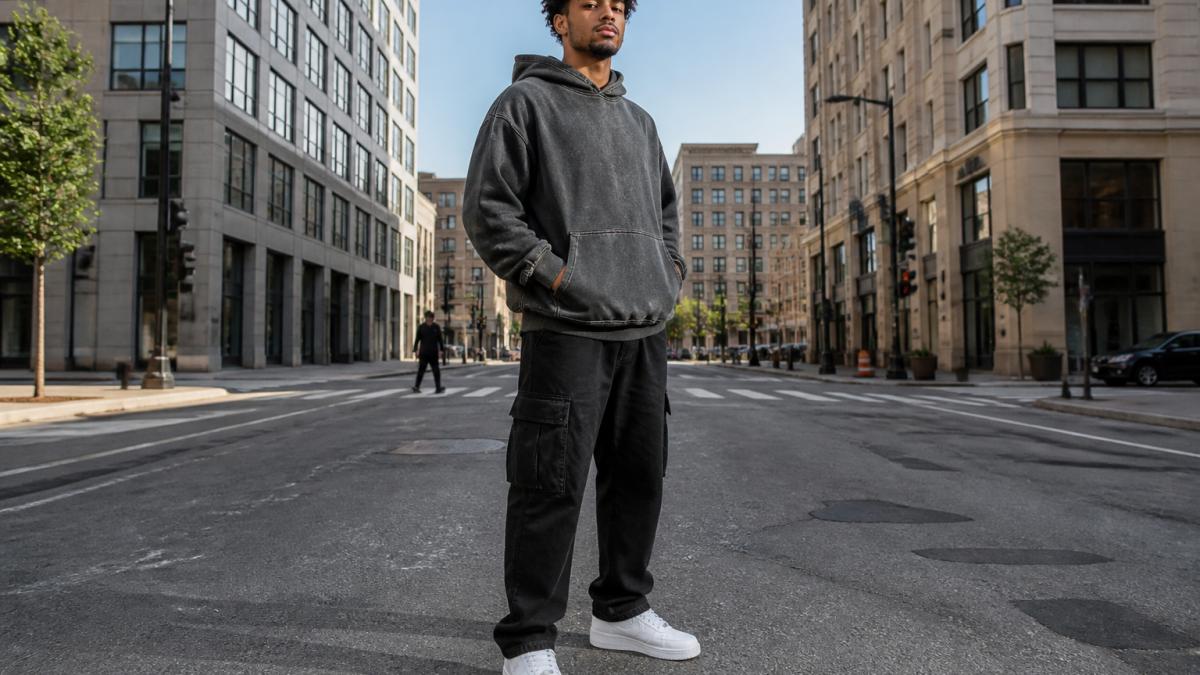
The oversized fit defines contemporary streetwear, and heavyweight hoodies are built for this silhouette. Drop shoulders and a relaxed cut create visual impact without looking sloppy, an intentional oversizing that maintains structure and separates authentic streetwear from generic baggy clothing.
Styling an oversized heavyweight hoodie works best with intentional proportions. Pair it with fitted or tapered bottoms like slim cargos, straight-leg denim, or tailored trousers. This contrast prevents the outfit from reading as entirely loose.
Layering extends versatility. Wear one under an open overshirt or lightweight jacket for depth and texture; the structured fabric creates clean lines even when partially covered, and the kangaroo pockets and snug collar make it functional, not just a statement.
The city-pride graphics on NewCity Brand pieces, whether repping STL, NYC, or Atlanta, become conversation starters when styled intentionally. Chest placement means the graphic reads clearly even under a partially open jacket, and the minimalist design prevents visual clutter alongside patterned bottoms or accessories.
Monochromatic styling amplifies the impact of a heavyweight hoodie. A sun-faded piece in muted tones becomes the focal point when paired with neutral bottoms. The natural color variation in faded fabric creates visual interest without competing prints or colors.
How to Wash a Heavyweight Hoodie and Preserve Quality
Proper care determines whether a heavyweight hoodie maintains its quality or degrades prematurely, preserving shape, color, and durability.
Wash inside out in cold water on a gentle cycle with mild detergent. This simple protocol protects the exterior finish while preventing excessive agitation that stresses seams. Cold water prevents color bleeding and reduces the likelihood of shrinkage despite pre-shrunk fabric.
Do not soak, expose to direct sunlight, or bleach. Extended soaking breaks down cotton fibers over time. Direct sunlight accelerates fading beyond the intentional fade already built into the garment. Bleach damages cotton permanently, creating weak spots that compromise durability.
Wash with like-colored garments to prevent color transfer, since even quality dyes can bleed slightly in the first few washes.
Dry by hanging rather than tumble drying. Heat accelerates wear on fibers and can cause unexpected shrinkage. Hang drying is gentler and preserves the garment's integrity. Avoid direct sunlight during drying, shade drying prevents additional fading.
When ironing or steaming becomes necessary, use low temperature settings (maximum 30°C or 90°F). High heat damages synthetic components in modern dyes and can melt or distort fabric. A gentle press on low heat restores crispness without risk.
This consistent routine extends a heavyweight hoodie's lifespan from two years to five or more. Quality fabric and construction only pay dividends if you protect that investment through thoughtful maintenance.
Choosing a heavyweight urban hoodie means prioritizing pieces that earn their place in your rotation through durability, structure, and authentic aesthetic. Shop now → Heavyweight Sun-Faded Hoodie, STL 314 or explore other city-pride options to find the piece that represents your identity.
Frequently Asked Questions
Are heavyweight hoodies worth buying?
Yes. A heavyweight urban hoodie at 380-400g/m² offers superior durability, better shape retention, and longer garment lifespan than midweight alternatives. The dense construction resists pilling and shrinkage, meaning your investment holds up through regular wear and washing. At $62-64, the cost per wear drops significantly over 2-3 years of consistent rotation, making heavyweight hoodies a smart value choice for anyone building a core streetwear wardrobe.
What fabric weight should I look for in a heavyweight hoodie?
Look for hoodies with a fabric weight between 380-400g/m². This GSM range provides the ideal balance of warmth, structure, and wearability. At 400g/m², you get maximum insulation and a substantial feel that holds its shape through layering and movement. The Heavyweight Sun-Faded Hoodies from NewCity Brand feature 400g/m² construction with 100% combed cotton and brushed fleece interiors, delivering the density needed for durable, all-season wear.
Can you wear a heavyweight hoodie year-round?
Yes. While heavyweight hoodies excel in cold months, their breathability makes them suitable for layering in spring and fall. The brushed fleece interior regulates temperature without overheating, and the dense cotton construction allows air circulation. Urban environments with variable weather benefit most from heavyweight hoodies, which adapt from morning chill to afternoon warmth through layering flexibility.
How should a heavyweight hoodie fit?
Heavyweight hoodies should have an oversized, relaxed fit with drop shoulders and room through the chest and sleeves for layering and movement. The structured fabric holds its shape, so slight bagginess is intentional, it prevents the hoodie from clinging or looking oversized in an unflattering way. Look for kangaroo pockets positioned comfortably and a snug collar for wind protection. Side-seamed construction adds durability and prevents warping at the seams during wear and washing.