

Table of Contents
- What Makes a Graphic Tee Premium? Fabric Weight and Construction
- Best Heavy Weight Graphic Tees: What 280-285 GSM Actually Gets You
- Where to Buy Premium Graphic Tees: What to Look For in a Store
- How to Wash Graphic Tees to Prevent Cracking
- How to Style Graphic Tees for Men: Three Fits That Work
- Pricing, Restocks, and Returns: What a Fair Deal Looks Like
- Frequently Asked Questions
Last Updated: September 11, 2026
What Makes a Graphic Tee Premium? Fabric Weight and Construction
Premium graphic tees come down to three measurable factors: GSM fabric weight, yarn quality, and construction details like side-seamed panels and taped necklines. Skip any one and you have a basic shirt with a print on it. This guide from NewCity Brand breaks down where to buy premium graphic tees by showing what separates a $12 blank from a garment built to last.
The fastest quality check happens before you try the shirt on: flip the tag and look for the GSM number.
GSM, Yarn Count, and Why They Decide How a Tee Feels
GSM (grams per square meter) is the clearest signal of how substantial a tee will feel. Promotional tees sit at 140-160 GSM, which is why they feel thin and cling after a few washes (textileexchange.org). Mid-weight retail lands around 180-200 GSM; heavyweight cotton starts at 240 GSM.
Yarn count works alongside GSM. Lower counts produce thicker, more textured fabric; compact siro-spun yarns create a smoother surface with less pilling. A 16s compact siro-spun cotton at 260 GSM feels dense and soft; a 26s double-fed cotton at 280 GSM drapes with more structure.
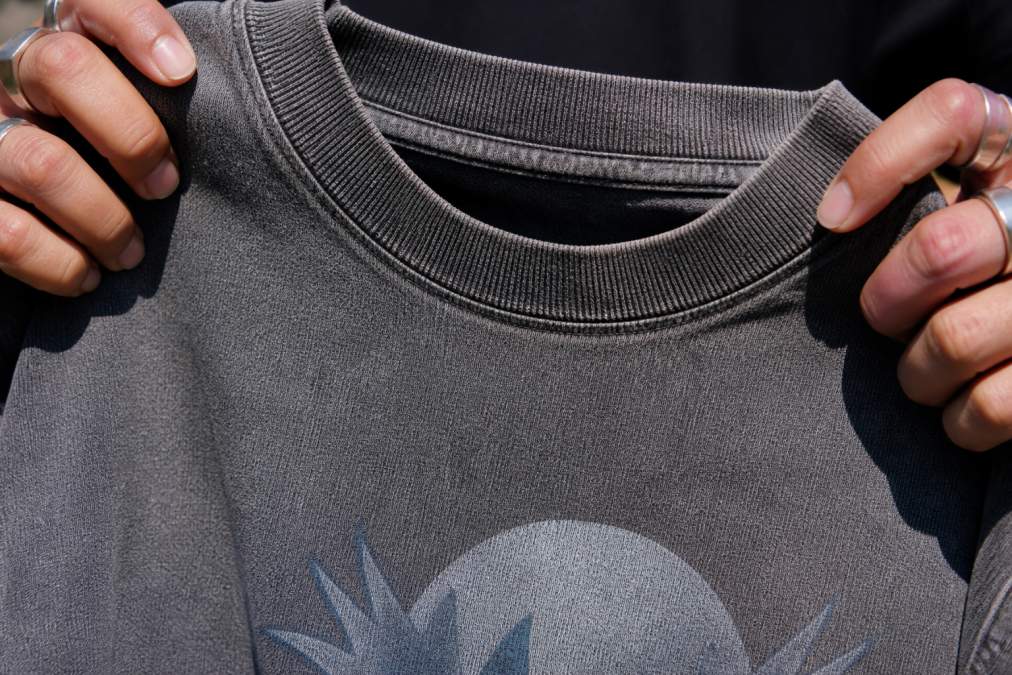
Construction matters as much as the numbers on the tag. Side-seamed construction prevents the twisting that plagues tubular tees, binding-taped neck and shoulder seams stop collar stretch, and double-stitched ribbed collars with coverstitched hems signal a garment built to survive hundreds of washes.
Print Methods: Screen Printed vs. Heat Transfer
Screen printing pushes ink through a mesh screen and cures it into the fabric fibers, so the graphic flexes with the shirt instead of sitting on top of it. Heat transfer presses a printed film onto the surface, and that film is what cracks, peels, and fades first.
On heavyweight cotton, screen printing is the better match: the ink bonds with the denser weave and survives far more laundering. Heat transfer works acceptably on lightweight blends where cost beats longevity, but on a premium garment it is a downgrade.
Best Heavy Weight Graphic Tees: What 280-285 GSM Actually Gets You
The best heavy weight graphic tees sit in the 280-285 GSM range, where fabric has enough body to drape cleanly without feeling like canvas, the weight where a tee stops looking like underwear and starts working as an outfit on its own.
At 285 GSM with 14-count plain weave, the fabric stands slightly away from the body, holds a boxy silhouette, and resists the transparency that ruins thinner tees under direct light. These garments are pre-shrunk, so the fit you buy is the fit you keep, and snow-washed or sun-faded finishes add texture that deepens over time.
| Fabric Weight | Feel | Best Use | Durability |
|---|---|---|---|
| 140-160 GSM | Thin, clingy | Promotional, layering only | Low |
| 180-200 GSM | Standard retail | Everyday basics | Moderate |
| 260 GSM | Dense, soft | Premium streetwear | High |
| 280-285 GSM | Structured, substantial | Statement pieces, standalone wear | Very high |
The trade-off with heavyweight cotton is breathability in extreme heat: a 285 GSM tee holds more warmth than a lightweight alternative. For warm-weather comfort, look for washed finishes that break down the fabric surface and improve airflow.
Where to Buy Premium Graphic Tees: What to Look For in a Store
The best place to buy premium graphic tees is a store that publishes fabric specs, shows real customer photos, and designs around a specific identity rather than generic urban imagery. Any retailer hiding GSM, yarn count, and print method is hoping you won't ask.
But "look for specs" only helps if you know which to check and in what order. Use this five-point vetting sequence before adding anything to a cart.
The Five-Point Seller Vetting Sequence
1. Product page transparency. A serious seller lists GSM, yarn count, weave type, fabric composition, and construction details (side-seamed vs. tubular, taped neck, coverstitched hem) on the product page, not buried in an FAQ. If you have to email support for the fabric weight, that is your answer.
2. Print method disclosure. The page should state whether the graphic is screen printed, DTG, or heat transfer. Screen printing on heavyweight cotton is the durability standard; DTG is acceptable on premium blanks with pretreat and a high-DPI print head, though it sits on the surface rather than bonding into the weave. Heat transfer on a 280 GSM tee is a downgrade not worth premium prices.
3. Real customer photos. Look for review images shot in normal lighting, not studio shots. Check three things: how the graphic looks after multiple washes, whether the fit matches the size chart, and whether the color faded unevenly. A seller with 50 reviews and 30 photos beats one with 500 reviews and zero images.
4. A defined design point of view. Brands built around a specific identity, a city, a subculture, a music scene, hold their catalog stable and restock core pieces. Trend-chasers rotate designs every few weeks and rarely bring anything back.
5. Published care instructions and a stated return window. A brand that tells you how to wash the garment expects it to last, and one offering a clear return window on unworn items with tags attached is confident in its sizing.
NewCity Brand builds its catalog around city-coded graphics on heavyweight cotton, with snow-washed and sun-faded finishes that give each piece a lived-in character from the first wear. The Snow-Washed St. Louis "The Lou" Graphic Tee at $40.00 shows the formula: 285 GSM cotton, drop shoulders, an oversized fit, and a graphic that means something to people from that city.

Where Premium Tees Are Actually Sold: Channel-by-Channel
Where you buy matters as much as what you buy: each channel has a different return policy, restock pattern, and level of product education.
- Direct-to-consumer brand sites. Highest spec transparency, best restock predictability on core designs, and usually the only channel with the full size range. This is where most premium graphic tees are actually bought.
- Specialty streetwear and denim retailers. Curated selection, but product pages often omit GSM and print method. You pay for curation, not education.
- Marketplaces (Amazon, Etsy, eBay). Wide selection, but the same listing can be fulfilled by multiple sellers using different blanks. Verify fabric weight in the listing photos, not the title.
- Print-on-demand storefronts. Convenient for one-off designs, but blanks are typically 140-180 GSM and the print method is DTG or heat transfer. Not premium, whatever the price.
- Vintage and resale. The only way to get a genuinely broken-in heavyweight tee, but sizing is inconsistent and original GSM can't be verified. Inspect the tag and the inside of the print before buying.
City-Coded Graphics vs. Generic Urban Prints
A city-coded graphic references a specific place with real cultural weight, a borough, an area code, a neighborhood name. A generic urban print references "the city" in the abstract, usually with a skyline or distressed font that could belong anywhere.
The difference shows up in how long you keep wearing it. A tee that reps the 305 or the 510 carries personal meaning that doesn't expire when the trend cycle moves on. Generic graphics are disposable by design.
Fit, Sizing, and the Oversized Silhouette
Oversized does not mean sized up. A true oversized fit is cut wider through the chest and shoulders with a dropped shoulder seam, so it drapes correctly instead of hanging off your frame like a borrowed shirt.
Look for these fit markers on any product page:
- Drop shoulders that sit below the natural shoulder line
- A boxy body that stays roughly the same width from chest to hem
- A hem that lands mid-hip rather than at the waist
- Pre-shrunk fabric so the silhouette survives the first wash
If a brand only offers standard sizing and tells you to "size up for oversized," they are selling you a regular tee.
How to Wash Graphic Tees to Prevent Cracking
To prevent cracking, wash graphic tees inside out in cold water on a gentle cycle, then hang dry away from direct sunlight. Heat destroys prints, and the dryer is the single biggest cause of premature cracking.
Follow this routine and a screen printed graphic will outlast the shirt itself:
- Turn the tee inside out before it goes in the machine.
- Use cold water and a mild detergent, never bleach.
- Skip fabric softener, which leaves a residue that dulls prints.
- Wash like colors together, especially on the first wash, since slight bleeding is normal on washed finishes.
- Hang dry in shade. Avoid direct sun, which accelerates fading.
- If you must use a dryer, keep it on low heat at 30°C (90°F) maximum (the FTC).
- Iron inside out on low, never directly on the graphic.
The [FTC's care labeling rule | ftc.gov] requires permanent care instructions on garments, so check the tag before you improvise. A brand that supplies detailed washing guidance is telling you the garment is built to be kept.
How to Style Graphic Tees for Men: Three Fits That Work
Styling a graphic tee comes down to matching the shirt's fit to everything around it. Three combinations cover nearly every occasion, from a casual workday to a night out.
The clean streetwear fit. Pair an oversized heavyweight tee with straight-leg denim or relaxed cargos and clean low-profile sneakers, keeping the graphic the only loud element. The most versatile setup, and it works for most body types.
The layered fit. Wear a boxy tee under an open overshirt, flannel, or bomber, letting the hem and graphic show at the bottom. This adds structure to an oversized silhouette without losing the relaxed feel.
The tailored contrast fit. Combine a fitted graphic tee with a structured jacket and tapered trousers. The contrast between relaxed top and sharp bottom reads intentional rather than sloppy.
The [Business of Fashion's analysis of streetwear's market evolution | businessoffashion.com] notes that graphic tees have shifted from trend items to permanent wardrobe staples, which means buying fewer, better pieces beats cycling through cheap ones.
Pricing, Restocks, and Returns: What a Fair Deal Looks Like
A fair price for a premium graphic tee reflects fabric weight, print method, and construction, not the logo on the chest. Heavyweight cotton at 280-285 GSM with proper construction and a durable print sits in the $38 to $45 range at most direct-to-consumer brands.
NewCity Brand's catalog runs from $38.00 for the Raw Seam Boxy Tee - East Bay 510 to $42.00 for the Washed Oversized Tee, Cali, with most pieces at $40.00. That range buys 280-285 GSM cotton, reactive-dyed color that resists fading, and pre-shrunk construction that holds its shape.


Cost Per Wear: The Math That Justifies a Premium Tee
A $40 tee sounds expensive next to a $12 promotional shirt. Run the numbers over two years and the picture flips.
A 140-160 GSM promotional tee typically loses its shape, stretches at the collar, and cracks its print within 20 to 30 washes, roughly 40 to 60 wears at two wears per wash. Cost per wear: about $0.20 to $0.30, but you replace it two or three times over the same period and never enjoy wearing it.
A 280-285 GSM screen printed tee with side-seamed construction and taped neck and shoulders commonly holds up for 150 to 200 washes before the fabric thins or the print fades noticeably, 300 to 400 wears at two wears per wash. Cost per wear: about $0.10 to $0.13, and you skip the replacement cycle entirely.
The premium tee wins on cost per wear even before you factor in actually wanting to wear it. That is the real argument for buying fewer, better pieces.
Payment Options and Shipping: What to Expect at Checkout
Most direct-to-consumer premium tee brands offer buy-now-pay-later through Afterpay, Klarna, or Shop Pay Installments, splitting a $40 order into four interest-free payments of about $10. This matters less for one tee than a multi-piece order, a three-tee haul at $120 becomes three payments of $30.
Shipping is where the real cost differences show up:
- Standard domestic shipping typically runs $5 to $8 and arrives in 3 to 7 business days.
- Free shipping thresholds commonly sit at $50 to $75. If you are buying one $40 tee, it is often cheaper to add a second piece than to pay $7 in shipping.
- Expedited shipping runs $15 to $25 and arrives in 1 to 3 business days.
- International shipping varies widely and often includes customs duties the buyer pays on delivery. Check the brand's policy before ordering from outside your country.
Sales tax is added at checkout based on your shipping address. Most direct-to-consumer brands don't charge sales tax in states where they have no physical presence, but that varies by brand and state law.
Restocks: How to Tell a Core Design From a One-Off Drop
Restocks are the real frustration with limited-run drops. Before committing to a brand, check whether it restocks core designs or retires them permanently. Core graphics that return seasonally are a safer bet than one-off prints and let you replace a favorite years later.
Three signals separate a core design from a one-off drop:
- It appears in the brand's permanent collection page, not just a "New Arrivals" or "Limited Drop" section.
- It has been available for more than one season. Check the product page for a launch date or a "back in stock" note.
- The brand has a restock notification feature. If you can sign up to be emailed when a size returns, the brand intends to bring it back.
If a design you love is marked "final sale" or "last chance," treat it as gone. Buy your size now or hunt resale later.
Returns: What a Fair Policy Looks Like
Returns matter as much as restocks. A brand selling premium tees should offer a straightforward return window on unworn items with tags attached, plus sizing guidance detailed enough that you rarely need it. Read the policy before you order, not after the fit disappoints.
A fair return policy for a premium tee typically includes:
- A 14 to 30 day window from delivery, not from order date.
- Unworn condition with original tags attached. Washed garments are almost never returnable, so try the fit before washing.
- Free return shipping on defective items (print cracking, seam failure, wrong item shipped) and free or buyer-paid shipping on size exchanges. Policies vary; check before you buy.
- Exchanges for a different size, not refunds only. A brand confident in its size chart makes exchanges easy.
- A stated restocking fee or none at all. A restocking fee on a size exchange is a red flag.
Frequently Asked Questions
What makes a graphic tee considered premium?
Three things decide it: fabric weight, construction, and print method. Premium graphic tees usually land between 260 and 285 GSM, which gives the cotton real structure instead of a thin, see-through feel. Look for side-seamed construction, binding-taped neck and shoulders, and double-stitched ribbed collars. Screen printing or reactive dye holds color longer than cheap heat transfers. A pre-shrunk, ring-spun or combed cotton base keeps the fit consistent after washing, which is where budget tees fall apart.
Where can I buy high-quality graphic tees that don't fade?
Buy from sellers who publish fabric weight and wash instructions on the product page. NewCity Brand lists 260 to 285 GSM cotton, pre-shrunk construction, and reactive-dyed color on every drop, with prices from $38 to $42. Pieces like the Sun-Faded Distressed Tee in Houston 713 or Chicago 312 are built to fade on purpose, not by accident. Cold-water washing inside out and hang drying keeps the print and the base color intact far longer.
Are heavy-weight cotton tees better for graphic prints?
Heavier cotton gives the print a more stable surface, so the ink sits flatter and resists cracking during wear. A 280 to 285 GSM tee like the Raw Seam Boxy Tee in East Bay 510 holds its shape through repeated washes, which matters because a stretching fabric pulls the print apart. Lighter 150 to 180 GSM shirts feel cooler in summer but distort faster. For the best heavy weight graphic tees, aim for at least 260 GSM with a pre-shrunk finish.
How should I care for premium graphic tees to maintain the print quality?
Turn the tee inside out, wash in cold water on a gentle cycle with mild detergent, and skip bleach, soaking, and wringing. Slight bleeding can happen on the first wash, so keep like colors together. Hang dry away from direct sunlight rather than tumble drying. If you need to iron or steam, keep the temperature at or below 30°C (90°F) and never press directly on the graphic. These steps are the core of how to wash graphic tees to prevent cracking.
How do I style graphic tees for men without looking like I'm trying too hard?
Keep the rest of the outfit quiet. Let an oversized snow-washed tee like the Liberty City 305 carry the look with straight-leg denim or cargos and clean sneakers. Tuck the front hem slightly for shape, or layer an open overshirt over a boxy fit for cooler weather. One graphic per outfit is enough. If the print is loud, the pants and shoes should be plain, and the fit should sit at your natural shoulder line rather than swallowing your frame.