

Table of Contents
- Why Minimalist Fashion Works in Professional Environments
- Building a Professional Capsule Wardrobe from Scratch
- Choosing Your Neutral Color Palette and Base Colors
- Minimalist Business Casual Outfits That Actually Work
- The 3-3-3 Rule for Business Casual Fashion
- Fit, Tailoring, and Professional Presentation
- Mixing, Matching, and Rotating Your Outfits
- Frequently Asked Questions
Last Updated: October 10, 2026
Why Minimalist Fashion Works in Professional Environments
Minimalist fashion tips for professional settings cut through the noise. An intentional wardrobe reduces decision fatigue and builds a foundation of pieces that work together.
A clean, cohesive look signals competence, builds client confidence, and eliminates the stress of daily decisions.
At NewCity Brand, we understand that professional style doesn't require complexity. Our minimalist designs with gritty modern aesthetics prove that bold simplicity works in any setting. Whether you're in corporate, creative, or hybrid spaces, a simplified wardrobe gives you room to focus on what actually matters.
Building a Professional Capsule Wardrobe from Scratch
A professional capsule wardrobe is a curated collection of versatile pieces tailored to your specific dress code, work environment, and budget.
Dress-Code-Specific Capsule Sizes:
Business Formal (law, finance, executive roles): 25-35 pieces. Prioritize structured blazers, dress trousers, pencil skirts, and closed-toe heels in polished fabrics (wool, silk blends, structured cotton). Minimal accessories: leather belt, watch, simple jewelry.
Business Casual (corporate, nonprofit, hybrid offices): 20-28 pieces. Core pieces: tailored trousers, chinos, neutral dresses, cardigans, and optional blazers. Shoes include loafers, flats, and low heels.
Creative or Hybrid (tech, design, startups): 15-22 pieces. Looser dress codes allow dark jeans, structured sneakers, and personality pieces. Focus on intentionality and fit over formality.
Core Categories by Dress Code:
For business formal, prioritize: 3-4 structured blazers (navy, charcoal, black, one patterned), 4-5 dress trousers or pencil skirts, 4-5 blouses, 1-2 sheath dresses, 2-3 pairs of closed-toe heels or flats, and minimal accessories (leather belt, watch, small earrings).
For business casual, prioritize: 2-3 blazers, 2-3 pairs of tailored trousers or chinos, 1 neutral skirt or dress, 3-4 tops, 1 cardigan, 2-3 professional shoes, and optional dark jeans.
For creative/hybrid, prioritize: 1-2 optional blazers, 2-3 pairs of trousers or chinos, 3-4 tops, 1-2 cardigans or overshirts, 2-3 shoes, with flexibility for patterns and personality pieces.
Quality Over Quantity, The Cost-Per-Wear Framework:
Invest in pieces you'll wear at least 30 times per year. A $120 blazer worn twice weekly costs $2.31 per wear; a $40 blouse worn monthly costs $3.33 per wear. This justifies spending more on core pieces.
Priority investment areas: Trousers and blazers ($80-$150) anchor outfits; blouses ($40-$80) in natural fibers hold shape better; shoes ($80-$150) prioritize comfort; basics ($25-$60) are workhorses, buy fewer, better versions.
Fit Matters More Than Size:
One well-made pair of trousers that fits beats five cheap pairs that don't. Professional fit means shoulders at your shoulder line, sleeves at your wrist bone, waistbands at your natural waist. Budget $25-$50 for tailoring; a $60 pair tailored perfectly looks better than a $200 pair that gaps.
Start with 12-15 core pieces that fit perfectly and work together. Wear them for two weeks, notice what you reach for, then add strategically based on what's missing.
Choosing Your Neutral Color Palette and Base Colors
Your color palette is the backbone of a minimalist wardrobe. Stick to 3-4 base colors that complement your skin tone: warm neutrals (cream, tan, warm gray, caramel), cool neutrals (white, charcoal, navy, cool gray), or mixed (black, white, navy). Choose colors you naturally gravitate toward and trust your instinct.
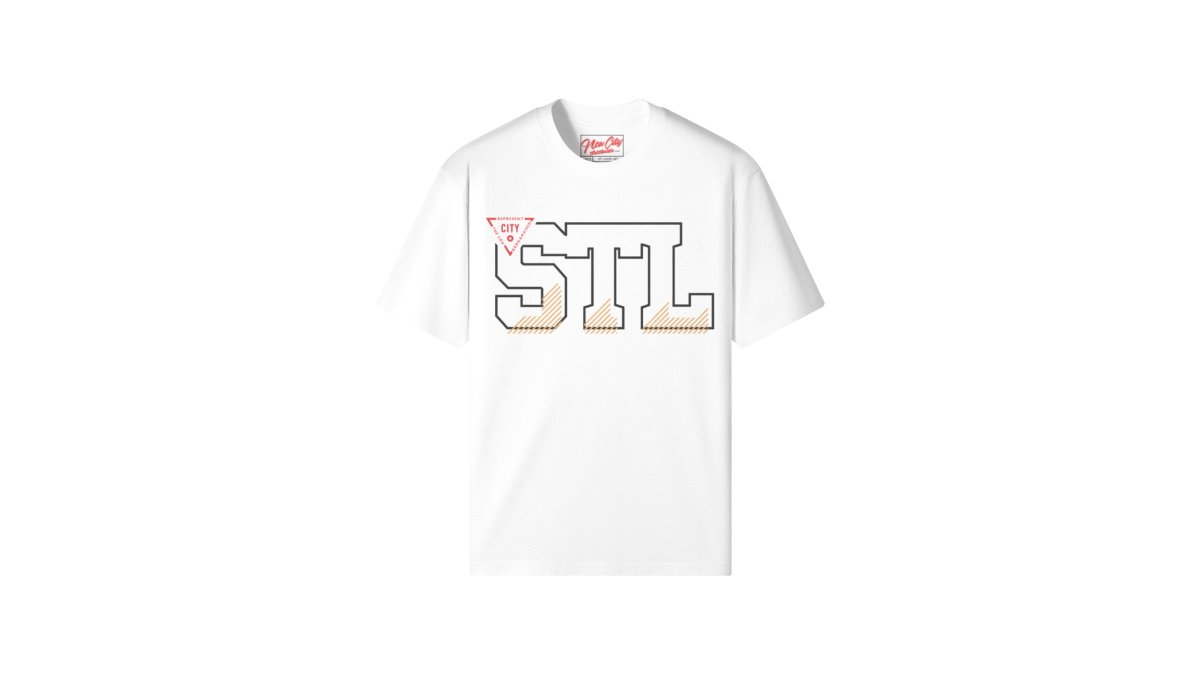
The Color Pop St. Louis 314 from NewCity Brand adds personality while staying grounded in a neutral aesthetic. The vibrant graphic pops against neutral bottoms, but the base tee itself works within a cohesive color system.

Minimalist Business Casual Outfits That Actually Work
Business casual is flexible, but that flexibility can create decision paralysis. Here are five core outfit combinations with tactical notes on when to wear each and how to adjust for fit.
Outfit 1: Tailored Trousers + Crew Neck Tee + Blazer + Loafers

When to wear: Client meetings, presentations, first days, or any high-stakes moment.
Why it works: The blazer instantly elevates a basic tee. The structured silhouette reads as polished without feeling stiff. Loafers add professionalism without the formality of heels.
Fit notes: Blazer shoulders sit at your shoulder point. Tee is fitted but loose enough to move. Trousers break slightly at the shoe (about half an inch of fabric).
Seasonal adaptation: Summer: swap for lightweight linen or cotton. Winter: layer a fitted turtleneck under the blazer.
Outfit 2: Neutral Skirt + Blouse + Cardigan + Flats
When to wear: Regular office days, collaborative meetings, or when you want a softer, less formal impression.
Why it works: This combination is comfortable and approachable. The cardigan adds a layer without the structure of a blazer, making it feel less corporate and more human.
Fit notes: Skirt sits at natural waist, falls just below the knee. Blouse tucks neatly without bulk. Flats have closed toes (ballet flats, loafers, pointed-toe flats work; avoid slip-ons or mules).
Seasonal adaptation: Cold: layer a fitted turtleneck under the blouse. Warm: wear blouse solo or with cardigan draped.
Outfit 3: Sheath Dress + Structured Blazer + Heels + Simple Necklace
When to wear: Important meetings, presentations, or when you want maximum polish with minimal effort.
Why it works: A sheath dress is a complete outfit on its own. The blazer adds authority. One piece of jewelry prevents the look from feeling bare.
Classic Fit Crew Neck T‑Shirt — STL 314 →
Fit notes: Dress skims your body without clinging or billowing. Heels are 2-3 inches for comfort; if painful by 3 p.m., invest in cushioned heels or choose flats. A simple necklace (16-18 inches) sits at your collarbone.
Seasonal adaptation: Winter: layer a fitted turtleneck. Summer: wear solo without blazer if allowed.
Outfit 4: Dark Jeans + Crew Neck Tee + Linen Shirt (Unbuttoned) + Sneakers
When to wear: Casual Fridays, creative offices, or hybrid days when you're not in client-facing meetings.
Why it works: This outfit reads as intentional, not sloppy. The linen shirt adds texture and structure. Sneakers signal confidence and comfort without sacrificing professionalism.
Fit notes: Dark jeans fit at natural waist with minimal distressing. Crew neck tee is fitted. Linen shirt is oversized enough to layer without bunching. Sneakers are clean, neutral, and minimal, avoid athletic sneakers or heavy branding.
Seasonal adaptation: Winter: layer a fitted sweater. Summer: linen shirt alone over tee; linen breathes and wrinkles intentionally.
Outfit 5: Tailored Trousers + Turtleneck + Cardigan + Ankle Boots
When to wear: Cold months, creative offices, or when you want a polished but soft look.
Why it works: Layering creates visual interest without adding pieces. The turtleneck and cardigan are cozy but still professional. Ankle boots ground the outfit and add a contemporary edge.
Fit notes: Turtleneck fits snugly without choking. Cardigan covers hips. Trousers break slightly at ankle boot shaft. Boots have 1-2 inch heel and fit snugly without pinching.
Seasonal adaptation: Ideal for fall and winter. Spring: swap cardigan for lightweight linen shirt or skip outer layer.
The Troubleshooting Framework:
If an outfit doesn't feel right, diagnose the issue:
- Too formal for your office? Remove the blazer or swap it for a cardigan. Swap heels for flats. Add a more casual shoe like a loafer or sneaker.
- Too casual? Add a blazer. Swap sneakers for heels or loafers. Tuck in your top. Add a structured bag.
- Uncomfortable by mid-afternoon? The fit is likely off. Check that waistbands aren't too tight, shoes aren't pinching, and layers aren't restricting movement. Invest in tailoring or swap the piece for something that fits better.
- Doesn't match your office culture? Observe what colleagues wear on similar days. If everyone in your office wears blazers daily, make it a non-negotiable. If most people wear cardigans, lean into that.
The 3-3-3 Rule for Business Casual Fashion
The 3-3-3 rule is a framework for building outfits quickly. It works like this: three neutral bottoms, three neutral tops, three layers. Mix them in any combination and you get nine different outfits.
Three bottoms:
- Tailored trousers (black or navy)
- Neutral skirt or second pair of trousers (gray or tan)
- Dark jeans (if your dress code allows)
Three tops:
- White blouse
- Cream or tan blouse
- Crew neck tee
Three layers:
- Structured blazer
- Cardigan
- Linen shirt
This system eliminates decision paralysis. You know every combination works because everything is neutral and fits the same way. Once you own these nine pieces, you can get dressed in under five minutes.
The rule scales up or down. If you want more outfit variety, add a fourth of each category. If you prefer even more simplicity, stick with two of each.
Fit, Tailoring, and Professional Presentation
Fit is everything. A piece that fits well looks expensive. A piece that doesn't fit looks cheap, no matter the price tag.
Professional fit means:
- Shoulders sit at your actual shoulder line
- Sleeves end at your wrist bone
- Waistbands sit at your natural waist
- Bottoms break slightly at the shoe
- Nothing pulls, gaps, or bunches
Tailoring transforms your wardrobe. A $40 pair of trousers tailored to your exact length and waist looks better than a $200 pair off the rack that doesn't fit right.
Find a good tailor. Ask colleagues for recommendations. Invest in getting your core pieces fitted properly. You'll wear them more because they feel better and look sharper.
Quality fabrics also signal professionalism. Natural fibers like cotton, linen, and wool hold their shape and age well. They breathe better than synthetics. They wrinkle in ways that look intentional, not sloppy.
Mixing, Matching, and Rotating Your Outfits
The magic of minimalist fashion is the mix-and-match potential. Fewer pieces, more combinations. You're not buying more. You're buying smarter.
Rotation strategy: wear favorite pieces on high-stakes days, rotate secondary pieces on lower-pressure days, give pieces rest between wears to extend their life, and wash less frequently. Track what you wear, after two weeks, patterns emerge showing what to keep buying and what to avoid. A minimalist wardrobe keeps everything visible and accessible, naturally encouraging rotation.
The crew neck tee is ideal for rotation. Wear it Monday with a blazer, Wednesday with a cardigan, Friday solo. It's a workhorse that adapts to different contexts and different days.
Building a minimalist fashion approach takes intention, but the payoff is real. You save time getting dressed. You save money buying fewer, better pieces. You feel more confident because your wardrobe is cohesive and intentional.
At NewCity Brand, we believe that professional style shouldn't feel restrictive. Our minimalist designs with luxury finishes prove that bold simplicity works. Start with our Classic Fit Crew Neck T-Shirt as your foundation piece and build from there. Get started with NewCity Brand and create a professional wardrobe that actually reflects who you are.
Frequently Asked Questions
What is the 3-3-3 rule for business casual fashion?
The 3-3-3 rule is a framework for building outfits quickly, using three neutral bottoms, three neutral tops, and three layers. This framework ensures every item coordinates, reduces decision fatigue, and maximizes outfit combinations.
How do you build a minimalist work wardrobe?
Start by identifying your workplace dress code, then select quality basics in neutral colors, such as tailored trousers, a blazer, simple blouses, and a crew neck tee. Invest in proper fit through tailoring rather than quantity. Focus on timeless silhouettes over trends.
What are the essential pieces in a professional capsule wardrobe?
Essential pieces include neutral trousers or chinos, a structured blazer, simple blouses in white and neutral tones, and a crew neck tee. These wardrobe staples form the foundation for many outfit combinations. Choose classic pieces in high-quality fabrics that fit well, as proper tailoring elevates even the simplest items.
How can you make minimalist outfits look polished at work?
Polished minimalist outfits depend on fit, fabric quality, and intentional finishing details. Ensure trousers and blazers are tailored to your frame. Choose high-quality basics like the Classic Fit Crew Neck T-Shirt that drape well and hold their shape. Keep your look clean and intentional; every item should earn its place in your outfit.