

Table of Contents
- Why Fabric Choice Matters in a Minimalist Wardrobe
- Top Natural Fibers for Minimalist Clothing
- How to Identify High-Quality Fabrics
- How to Care for High-Quality Garments
- How to Build a Capsule Wardrobe Foundation
- Fabric Aging and Patina: Why Natural Fibers Improve Over Time
- Frequently Asked Questions
Last Updated: September 18, 2026
Why Fabric Choice Matters in a Minimalist Wardrobe
The best fabrics for a minimalist wardrobe make pieces last long enough to justify their place in your closet. A shirt that pills after five washes or loses its shape within a season doesn't belong in a minimalist rotation.
Minimalism demands intentionality: owning pieces so durable, versatile, and timeless that they earn their place in your life. At NewCity Brand, we've built our approach around high-grade fabrics that improve with age, construction that withstands repeated wear, and designs that don't rely on trends.

The difference between a piece that lasts five years and one that becomes landfill within two comes down to fiber content, fabric weight, and construction. A 280-gram cotton tee performs differently than a 420-gram one. Understanding these distinctions means making smarter choices that align with minimalist philosophy.
Top Natural Fibers for Minimalist Clothing
Natural fibers form the foundation of any minimalist wardrobe. They breathe better than synthetics, age more gracefully, and align with intentional consumption. Each fiber brings distinct properties to a garment.
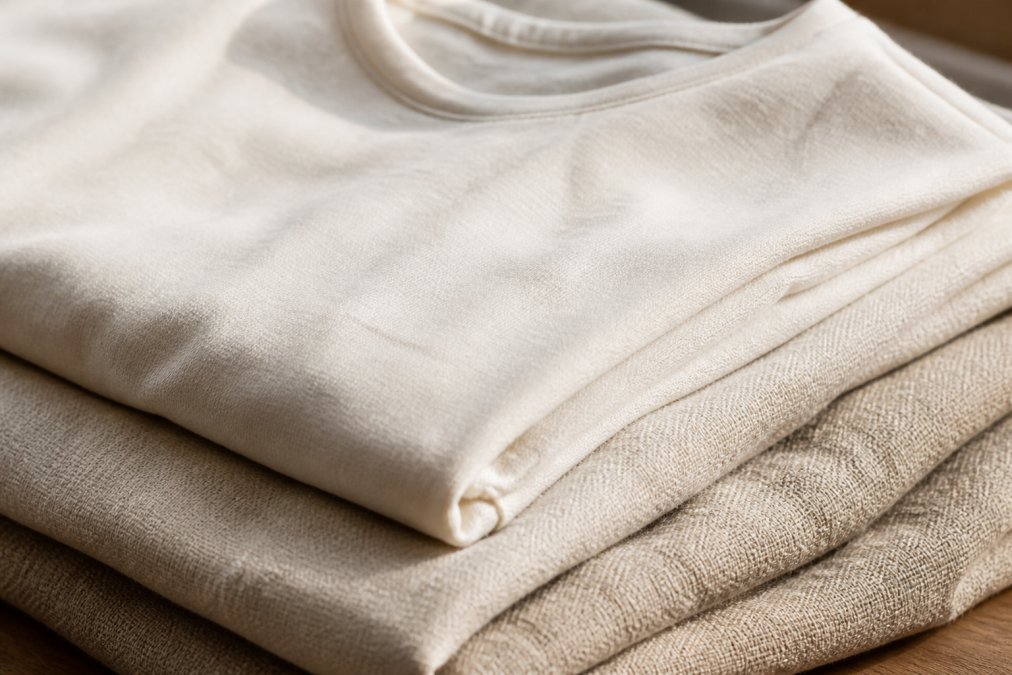
Organic Cotton: The Everyday Foundation
Organic cotton is the workhorse of a minimalist wardrobe. It's breathable, soft, and durable when properly constructed. Grown without synthetic pesticides, it means fewer chemicals in the final fabric and better environmental impact.
Cotton's strength comes from its fiber structure. A heavyweight cotton tee at 280-400 grams per square meter holds its shape through dozens of wash cycles. The Textile Exchange's Organic Cotton Standards confirm that organic cotton maintains consistent quality across growing regions. When you buy an organic cotton piece from NewCity Brand, like the Raw Seam Boxy Tee in East Bay 510 at $38, made from 100% cotton with a 280-gram fabric weight, you're investing in a piece designed to soften and improve with every wash rather than deteriorate.

Cotton absorbs moisture without feeling damp, making it ideal for layering and all-season wear. When pre-shrunk and reactive-dyed, colors remain vibrant through repeated washing.
Pros of organic cotton:
- Durable and improves with age
- Naturally breathable and hypoallergenic
- Biodegradable and environmentally responsible
- Accepts reactive dyes for long-lasting color
Cons of organic cotton:
- Can shrink if not pre-treated
- Requires cold-water washing to preserve color
- Wrinkles more than synthetic blends
Merino Wool: Temperature Control and Durability
Merino wool regulates temperature, wicks moisture, and resists odor. For a capsule wardrobe, this means fewer pieces can do more work.
Merino's scale structure allows fibers to bounce back after compression, so garments hold their shape. Its natural antimicrobial properties mean a merino sweater can be worn multiple times before washing, extending garment life and reducing environmental impact.
Merino is softer than standard wool with less itching and pilling. Its thermal regulation keeps you warm when cold and cool when warm, making it a genuine four-season fiber.
Pros of merino wool:
- Exceptional thermal regulation and moisture-wicking
- Resists odor and requires fewer washes
- Naturally resilient and holds shape
- Hypoallergenic and soft against skin
Cons of merino wool:
- Higher cost than cotton
- Requires gentle washing and drying
- Can be scratchy if not high-quality
Linen: Breathability and Timeless Appeal
Linen is the minimalist's secret weapon for warm-weather pieces. Its distinctive drape and texture improve with wear, becoming softer and developing a subtle patina that signals authenticity.
Linen's fiber structure creates channels that allow air to move through the fabric, making it ideal for humid climates. Linen fibers are stronger than cotton.
Linen wrinkles are part of the aesthetic, signaling that the piece is lived-in and authentic. You can skip ironing entirely and lean into the relaxed, intentional look.
Pros of linen:
- Exceptional breathability and moisture-wicking
- Improves with age and wear
- Naturally durable and long-lasting
- Creates distinctive, timeless aesthetic
Cons of linen:
- Wrinkles significantly (though this is often intentional)
- Can feel stiff until broken in
- Requires careful washing to prevent excessive shrinkage
Silk and Lyocell: Luxury Fibers for Investment Pieces
Silk and lyocell occupy the luxury tier of a minimalist wardrobe. These aren't everyday basics; they're the pieces you invest in because they'll anchor your rotation for years. Both fibers bring sophistication and drape that cotton and wool can't match.
Silk is a protein fiber with natural sheen that's incredibly durable when cared for properly. It's temperature-regulating and breathable, working best in neutral tones and simple silhouettes where the fabric's quality becomes the focal point.
Lyocell is made from wood pulp processed in a closed-loop system with minimal environmental impact (Forest friendly fashion: are MMCFs sustainable?). It has silk-like drape and softness with better durability and easier care while maintaining a luxurious feel.
Both fibers work best in pieces designed to last: a silk camisole worn under minimalist basics, a lyocell slip dress that transitions across seasons, or a silk scarf that becomes a permanent layering tool.
Pros of silk and lyocell:
- Exceptional drape and luxurious hand-feel
- Durable when properly maintained
- Breathable and temperature-regulating
- Create timeless, sophisticated silhouettes
Cons of silk and lyocell:
- Higher cost than natural fibers
- Silk requires delicate care and hand-washing
- Can slip or shift during wear without proper construction
How to Identify High-Quality Fabrics
Quality reveals itself through fabric weight, fiber content, weave structure, and construction details. Learning to read these signals helps you understand what you're buying.
Fabric weight, measured in grams per square meter (gsm), indicates durability and longevity. A 280-gram cotton tee feels substantially different from a 180-gram one. The Classic Boxy Hoodie uses 420-gram fabric weight to hold structure through repeated wear. Lightweight fabrics (under 200 gsm) work for summer pieces.
Look for 100% natural fibers or high-percentage blends (90% cotton, 10% elastane).
A plain weave creates a smooth, balanced surface. A twill weave (diagonal lines) is stronger for workwear and pants. Jersey knit should be tightly knit. Dense, even weaves signal quality.
Construction details separate investment pieces from disposable ones. Look for double-stitched seams (especially at stress points like underarms and crotch), binding-taped necklines, and reinforced hems. Raw seams, when intentional, add character while maintaining durability.
How to Care for High-Quality Garments
How you care for high-quality garments determines whether they last two years or ten. Proper care for natural fibers requires consistency but isn't complicated.
Use cold water to prevent dyes from bleeding and fabrics from shrinking. Wash inside-out to protect prints and reduce fading. Use mild detergent designed for delicate fabrics; standard detergent contains harsh chemicals that break down fibers.
Hang-dry to preserve fabric integrity and extend garment life.
Avoid bleach, soaking, and vigorous rubbing. Treat stains gently with cold water and mild soap.
Fold heavy pieces rather than hanging them to prevent shoulder seam stretching. Store in a cool, dry place away from direct sunlight. Cedar blocks or lavender sachets naturally repel moths.
| Care Practice | Frequency | Impact on Longevity |
|---|---|---|
| Wash inside-out in cold water | Every wash | Prevents fading and shrinkage |
| Use mild detergent | Every wash | Protects fiber structure |
| Air-dry instead of machine dry | Every wash | Extends garment life by years |
| Fold rather than hang heavy pieces | When storing | Prevents shoulder seam stretching |
| Treat stains gently before washing | As needed | Prevents permanent damage |
How to Build a Capsule Wardrobe Foundation
A capsule wardrobe built on the best fabrics for a minimalist wardrobe starts with neutral colors and timeless silhouettes. The goal is to create maximum outfit combinations from minimum pieces.
Start with basics in organic cotton. NewCity Brand's Raw Seam Boxy Tee in East Bay 510 ($38) is 100% cotton at 280 grams with exposed-seam shoulders. Get one in white, one in black, one in gray as your base layer.
Add the Classic Boxy Hoodie from NewCity Brand ($52) in 420-gram cotton with binding-taped construction.
Fabric Aging and Patina: Why Natural Fibers Improve Over Time
Natural fibers reveal their true value to minimalists. Synthetic fabrics degrade, pill, and fade unevenly. Natural fibers age into character and develop patina.
Frequently Asked Questions
What are the best fabrics for a minimalist wardrobe?
Natural fibers like organic cotton, merino wool, linen, and lyocell are ideal for minimalist wardrobes. These fabrics offer durability, breathability, and improve with age. Organic cotton provides versatility and comfort, merino wool regulates temperature, linen offers breathability, and lyocell delivers a luxurious feel. Each fiber contributes to garment longevity, reducing the need for frequent replacements and supporting a sustainable, intentional closet.
How do you identify high-quality fabric when shopping?
Check the fiber content label first, look for 100% natural fibers or high percentages (90%+) with minimal synthetic blending. Feel the fabric's weight and hand-feel; quality fabrics feel substantial and smooth. Examine seam construction for tight, even stitching and finished edges. Look at fabric weight in grams per square meter (gsm), higher weights indicate durability. Pieces use reactive dyes for color longevity and feature details like binding-taped necks and double-stitched hems.
Why is organic cotton better for a minimalist wardrobe than conventional cotton?
Organic cotton is grown without synthetic pesticides, resulting in softer fibers that age beautifully. It maintains its integrity through repeated washing and wear, making pieces last longer, essential for minimalist wardrobes built on investment pieces. Organic cotton also breathes naturally, resists pilling, and develops a lived-in patina that adds character over time rather than degrading. This longevity directly supports the minimalist principle of owning fewer, higher-quality items.
How should I care for natural fiber garments to extend their lifespan?
Wash natural fiber pieces inside out in cold water on a gentle cycle with mild detergent. Avoid bleach, soaking, or wringing. Wash with like-colored garments to prevent dye bleeding. Hang dry away from direct sunlight to preserve color and fiber integrity. For storage, fold rather than hang to prevent stretching. Iron or steam at low temperatures if needed. Proper care prevents shrinkage, maintains fiber resilience, and allows fabrics to develop patina naturally, key to building a wardrobe that improves with age.