

Last Updated: November 11, 2026
Quick Summary
Reverse logistics is the process of moving products back from the customer to the seller, covering returns, exchanges, repairs, resale and disposal. Sustainable reverse logistics keeps garments in use longer, cuts unnecessary trips and lowers the cost of processing each return.
- Returns drive most of fashion's environmental cost because each one can mean double shipping and extra packaging.
- Automated return labels cut label creation time to under one minute per return, compared with 5 to 10 minutes manually.
- Validate eligibility before issuing a label, including the return window, condition attestation and final-sale flags.
- Route inspected returns by outcome: resell as new, repair, resell as used, or recycle or donate, with a daily cutoff.
Table of Contents
- What Reverse Logistics Means for Fashion Brands
- Why Returns Drive Most of the Environmental Cost
- Setting Return Eligibility and Policy Rules
- Setting Up Automated Return Labels
- Returns Processing Best Practices for Inspection and Routing
- Repair, Resale, and Fashion Take-Back Programs
- Tracking Returns and Measuring Results
- Start Your Return Workflow Setup This Week
- Frequently Asked Questions
What Reverse Logistics Means for Fashion Brands
Reverse logistics is the process of moving products back from the customer to the seller. For fashion brands, it covers returns, exchanges, repairs, resale and disposal.
Returns are a normal part of online apparel. Buyers order two sizes, keep one and send the other back. That flow creates shipping cost, labor and waste with every cycle.
Sustainable reverse logistics means handling that flow with less waste and more control. The goal is to keep garments in use for as long as possible, cut unnecessary trips and make every return cheaper to process.
Why Returns Drive Most of the Environmental Cost
Returns are where fashion's environmental footprint grows fastest. A single return can mean a second round of shipping, extra packaging and a garment that may never get resold at full price.
Here is what usually adds up:
- Double shipping: The item travels to the buyer and then back again.
- Excess packaging: Each return often gets a new box and mailer.
- Inspection delays: Garments sit in limbo while staff check them.
- Markdowns or disposal: Items that are damaged or dirty may get sold off cheaply or discarded.
Reducing returns is one of the biggest levers. Clear sizing details, honest product photos and accurate fabric descriptions can prevent many returns before they start.
Setting Return Eligibility and Policy Rules
Your return policy shapes how much reverse logistics you have to manage. A policy that is too loose invites waste. One that is too strict drives away customers.
Start with a few clear rules:
- Return window: Many brands allow 14 to 30 days. Shorter windows cut handling costs.
- Condition requirements: Tags must be attached and the garment must be unworn.
- Final sale items: Mark limited drops or custom pieces as non-returnable.
- Who pays shipping: Customer-paid return shipping can reduce casual returns, though it may hurt conversion.
Write these rules in plain language on your product pages and at checkout. Buyers who understand the policy up front are less likely to be surprised later.
Watch out: a return policy that only works on paper will drain your margins. Check the actual return rate each month and adjust the rules if one product line returns far more than the others.
Setting Up Automated Return Labels
A return label is the prepaid shipping label that lets a customer send an item back. Without one, the buyer has to find a box, print a label and pay for postage, which makes many of them give up.
Automated return labels fix that. The customer starts a return online, picks a reason and receives a label by email. Your team sees the request in a dashboard and does not need to create each label by hand.
Manual Versus Automated Label Creation
Manual label creation works when you ship only a few returns a week. Staff log in to the carrier account, enter the details and print each label. This takes time and is easy to get wrong.
Automated creation makes sense once volume grows. Here is how the two compare:
| Factor | Manual Labels | Automated Labels |
|---|---|---|
| Time per return | 5 to 10 minutes | Under 1 minute |
| Error rate | Higher, from typos | Lower, from stored data |
| Customer experience | Slow, email back and forth | Instant label by email |
| Best for | Under 20 returns per week | Growing order volume |
Many ecommerce platforms and returns apps can generate these labels. Check that any tool connects to your store and your carrier before you commit.
Carrier Selection and Return Label Cost Controls
Carrier choice has a large effect on cost. Return rates are often higher than outbound shipping rates, so a cheap return option can save real money.
Compare carriers on these points:
- Rate per package for your typical weight and size
- Drop-off convenience for customers, such as retail locations or lockers
- Tracking quality so you can see when a return arrives
- Return address routing if you use more than one warehouse
Control costs by setting a flat return fee for low-value items, or by offering free returns only on orders above a set amount. Review the numbers every quarter.
A common pattern among growing apparel sellers is to separate the label cost from the refund. First, set a short label validity window (many carriers void labels after a set number of days) and only issue a new label on request. Second, require a return authorization approval before the label is generated, so labels are not created for orders outside the return window or for final-sale items.
For streetwear specifically, limited drops and final-sale rules change the math.
Watch out: a free-returns policy applied to every order can erase the margin on low-value accessories.
carrier return-label void and expiration policies
Returns Processing Best Practices for Inspection and Routing
Once a return arrives, your team has to decide what happens next. The fastest path is a simple routing rule for each item.
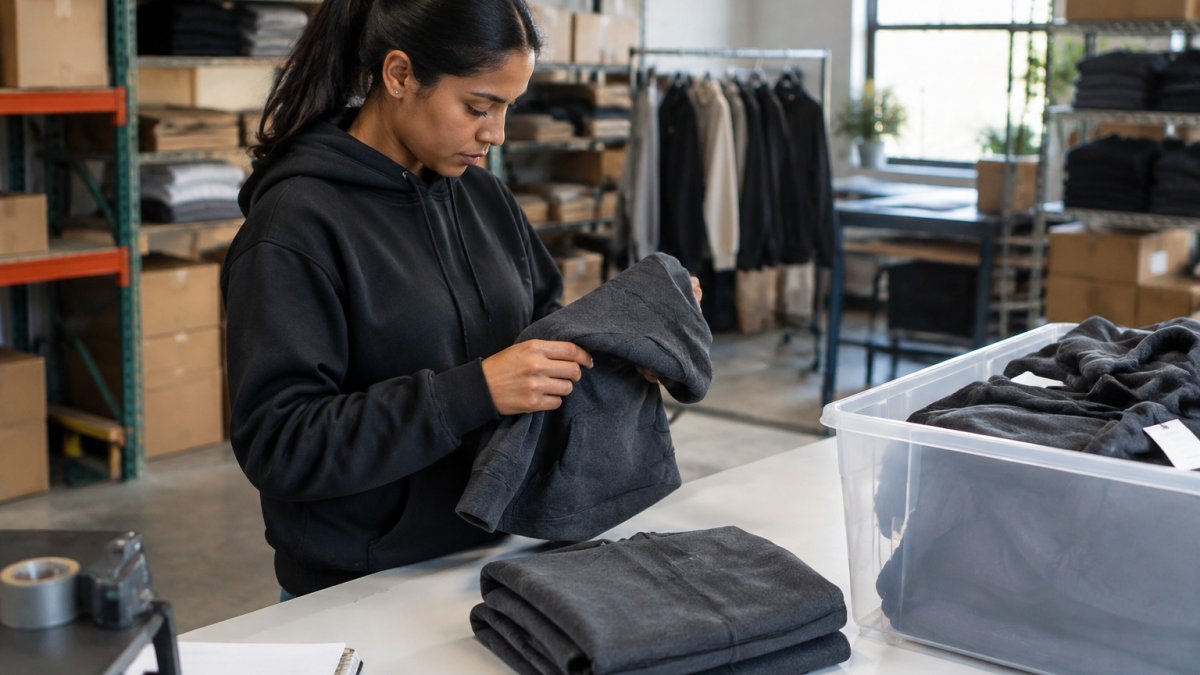
Sort returns into a few clear groups:
- Resell as new: Unworn, tags attached, no damage. Return to stock within a day.
- Repair: Small defects like loose threads or a missing button. Route to a repair station.
- Resell as used: Minor wear that can be sold at a lower price.
- Recycle or donate: Damaged or heavily worn items that cannot be sold.
Inspect each piece against a checklist. Look for odor, stains, pilling, missing tags and fit damage from wet or hot cleaning. Photograph anything that goes to repair or resale so you have a record.
A clear routing rule keeps garments moving. The sooner a sellable item goes back on the shelf, the less likely it is to be discounted or thrown away.
Validate Eligibility Before the Label Is Issued
The cheapest return is the one you never process. Most fraud and abuse in apparel returns happens at the eligibility stage, not at inspection, so the strongest control is a gate before a label is generated. Build these checks into the return portal:
- Order and item validation: Confirm the order number, email and SKU match a shipped item. Reject requests for items never purchased or already returned.
- Return window enforcement: Compare the request date to the delivery date, not the order date. A 14-day window measured from delivery is tighter and fairer than one measured from purchase.
- Condition attestation: Ask the customer to confirm tags are attached and the item is unworn before the label is issued. This creates a record you can point to if the item arrives worn.
- Final-sale and limited-drop flags: Mark these SKUs as non-returnable in the portal so no label is generated. For sizing exchanges on limited drops, route to a manual review instead of an automatic label.
- Repeat-returner review: Flag accounts with an unusually high return frequency for manual approval. A common pattern is to require a photo of the item before issuing a label for flagged accounts.
Streetwear-Specific Condition Checks
Streetwear returns carry risks that general apparel guides underplay. Worn-item checks matter more because buyers often wear a piece once and then return it. Inspect for:
- Creasing and body odor at the collar and underarms
- Sole scuffing on sneakers and footwear
- Shrinkage or wash damage from home cleaning
- Missing or swapped tags, including tags from a different item
- Altered or hemmed pieces that cannot be resold as new
Photograph the item at intake and again after inspection. If a return fails the condition check, document it and apply the policy consistently. Inconsistent enforcement is what drives disputes and chargebacks.
Route by Outcome, Not by Habit
Give each inspection outcome a destination and a time target. Resell-as-new items should go back to stock within one business day. Repair items should move to a repair queue with a parts list. Resell-as-used items should route to a secondary channel with photos attached. Recycle or donate items should be batched so you are not paying per-item disposal costs.
Letting inspected returns sit in a staging area can turn sellable inventory into markdown inventory. Set a daily cutoff for routing so nothing waits more than a day.
Repair, Resale, and Fashion Take-Back Programs
Repair and resale keep clothing in use longer. Both reduce the need to make new garments, which is where much of the environmental cost sits.
Simple programs work well:
- Repair service: Offer fixes for seams, zippers and hardware, and charge a small fee.
- Resale channel: Sell lightly used pieces through a secondary store or outlet section.
- Take-back credit: Give customers store credit when they return old items in exchange for a new purchase.
Tracking Returns and Measuring Results
You cannot improve what you do not measure. Track a small set of numbers each month so you can see whether your changes work.
Focus on these metrics:
- Return rate by product, size and color
- Cost per return including shipping and labor
- Restock rate for returns that go back on sale
- Time to restock from the day the return arrives
- Repair and resale revenue from recovered items
Look for patterns. If one hoodie has a high return rate, check the size chart and product photos first. If shipping costs keep rising, compare carrier rates again.
Use these numbers to decide where to spend effort next. Small changes to sizing content or return routing often give the best return on time invested.
Start Your Return Workflow Setup This Week
You do not need to fix everything at once. Pick one step from this guide and put it in place this week.
Begin by writing your return policy in plain language. Then set up one automated label flow and test it with a few real returns. After that, add a simple routing checklist for your team.
Each step can cut waste and cost. Over time, these small changes make reverse logistics a source of value instead of a drain on your business. Get started with NewCity Brand's approach to streetwear.
Frequently Asked Questions
What is reverse logistics in the fashion industry?
Reverse logistics is the process of moving products back from customers to the brand after a return, exchange, or repair request. In fashion, it covers return label creation, carrier pickup, inspection, grading, and the decision to restock, repair, resell, recycle, or donate each item. Because apparel returns are common, this flow often costs more than the forward shipment itself. A well-run reverse flow limits unnecessary trips, keeps garments in circulation, and gives the brand a clear record of why items came back.
Is it more sustainable to repair, resell, recycle, or donate returned clothing?
Generally, the order of preference is to restock or resell in original condition, then repair and resell, then donate, and recycle last. Keeping a garment in use avoids the emissions of manufacturing a replacement. Recycling fibers is useful for garments that cannot be worn again, but it recovers less value than extending the item's life. The right choice depends on condition, demand for the style, and the cost of inspection and handling, so each route should be checked against those factors.
How can a fashion brand automate return labels and processing?
Most ecommerce platforms and returns apps can generate a prepaid return label when a customer submits a return request, then email it with return instructions. Automation rules can also route the package to a set return address based on the item's condition or the customer's region. Automated return labels reduce manual errors and speed up processing, and they make it easier to enforce eligibility rules such as return windows. Review carrier options before switching on automatic labels, since the cheapest shipping method is not always the fastest.
What metrics should fashion brands track for reverse logistics?
Useful metrics include return rate by product and size, average time from return request to label delivery, time from carrier receipt to inspection, the share of returns restocked versus repaired, resold, donated, or recycled, and the cost per return including label postage. Tracking return reasons alongside these figures helps identify fit problems or quality issues upstream. Review the numbers monthly so changes to policy, carriers, or workflows can be judged against a consistent baseline.
