

Last Updated: November 9, 2026
Quick Summary
Managing international streetwear returns and customs is harder and costlier than domestic returns, mainly because of distance, paperwork, and cross-border shipping. Plan for return shipping, duties and import charges, and handling time from the start. Accurate customs forms, clear eligibility rules, and tracked labels keep returned goods moving.
- Cross-border tracked return shipping costs far more than a domestic label.
- Customs forms need accurate descriptions, declared values, HS codes, and return reference numbers.
- Declare the price the customer actually paid, and never under-declare to lower duties.
- Confirm the importer of record before issuing a return label to avoid holds.
- Log refund claims with entry numbers and response deadlines, and weigh admin cost against duty recovered.
Table of Contents
- Why International Streetwear Returns Cost More Than Domestic Ones
- Setting Your International Return Policy and Eligibility Rules
- Creating an International Return Shipping Label
- Customs Forms for Returned Clothing: What to Declare and How
- Claiming a Customs Duty Refund for Returned Goods
- Tracking an International Return From Carrier Pickup to Restock
- Your Next Step: Auditing Your Own Return Process
- Frequently Asked Questions
Why International Streetwear Returns Cost More Than Domestic Ones
Managing international streetwear returns and customs is harder than running domestic returns, and the cost gap is wide. A returned hoodie that crosses a border can cost more to process than the garment is worth. A returns policy that works at home can fall apart once packages cross a border, which is why managing international streetwear returns and customs deserves its own plan.
The main reason is distance. Shipping the same item back across a border means paying for tracked service, handling more hands along the route, and sometimes paying import charges on the way back. Each step adds cost and delay.
Customs adds another layer. Returned goods still need paperwork, and a missing or wrong form can hold a package for weeks. A common mistake is treating the return like a new export without the right documentation.
Plan for three cost drivers from the start:
- Return shipping: Cross-border tracked service costs far more than a domestic label.
- Duties and import charges: These can apply when goods come back, depending on the route.
- Handling time: Delays tie up inventory and slow down restocking.
Setting Your International Return Policy and Eligibility Rules
A clear policy prevents most problems before they start. Decide what you will accept, under what condition, and within what window. Write these rules down before the first return arrives.
Set eligibility rules that protect resale value. Compare your terms against current premium streetwear return standards before you publish them. Most streetwear brands accept items that are unworn, unwashed, and still have original tags. Say so plainly on your site, and name the window in days, such as 30 days from delivery.
Decide who pays return shipping. Some brands charge the customer, while others offer a prepaid label for defective items only. Either approach works if the terms are stated before checkout.
Be specific about exceptions, like final-sale drops or limited collaborations. Shoppers will accept a no-return rule for these items if it appears before they buy.
Creating an International Return Shipping Label
A return label should make the trip easy for the customer and trackable for you. Use a carrier that offers tracked international service and confirms delivery. Tracking matters most when a package goes missing.
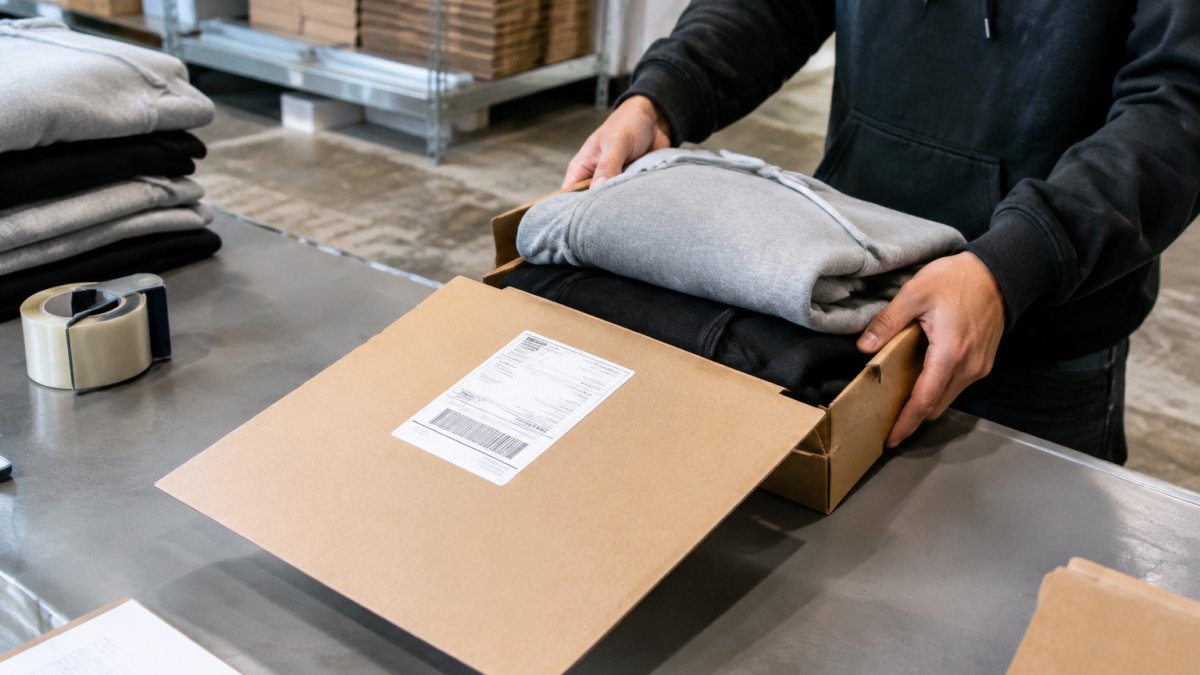
Send the label with clear packing instructions. Ask customers to fold items in their original mailer, include the return authorization number, and keep the receipt. This cuts down on mismatched or lost returns.
Check the label before it goes out. Confirm the destination address, the return authorization number, and the declared value. A small error here can send the package to the wrong facility.
Customs Forms for Returned Clothing: What to Declare and How
Customs forms for returned clothing are where many brands lose time and money. The document must describe the goods accurately, list the declared value, state the reason for the return, and make clear that the shipment is a return of goods that originated in the destination market, not a new sale.
Start with the commercial invoice. Every returned item needs its own line, and each line should carry the same fields a customs officer uses to match goods to a prior entry:
- Description: specific enough to classify, "Men's 100% cotton fleece hoodie, screen-printed graphic, size L," not "clothing" or "apparel sample."
- Quantity and unit value: the price the customer actually paid, in USD, not a wholesale or replacement estimate.
- Country of origin: where the garment was manufactured, which is often not where your brand is based. This field drives duty treatment on re-import.
- HS code: the Harmonized Tariff Schedule classification for the item. Apparel classifications are specific, knit versus woven, cotton versus synthetic, men's versus women's, so confirm the code rather than guessing.
- Order and return reference: the original order number, the return authorization number, and the original export date. These are what let a broker tie the return to the outbound shipment.
- Reason for return: use plain language such as "returned merchandise, original export," "warranty replacement," or "defective goods." Avoid vague entries like "gift" or "sample" on a return.
A practical example helps. A customer returns two jackets and one pair of pants from an order that shipped in March. The invoice should list three lines, one per garment, each with its own description, quantity of one, the original unit price in USD, the country of origin, the HS code, and the original order number. The reason field should read as returned merchandise tied to the original export, and the invoice should reference the outbound shipment date. That combination is what signals to customs that the goods are coming back, not arriving for the first time.
Watch out: if the return is going back to a fulfillment partner or a third-party warehouse rather than your own entity, the importer of record on the return may differ from the importer on the original export, and that mismatch is a frequent trigger for a held shipment. Confirm who is listed as importer of record before the label is issued.
Attach the supporting documents to the shipment, not just the invoice. A copy of the original outbound commercial invoice, the return authorization, and the carrier tracking showing the outbound delivery give the receiving customs authority the paper trail to treat the goods as returned merchandise. Some carriers let you upload these electronically; if yours does not, print them and include them in a document pouch on the outside of the package.
Declare values truthfully. Under-declaring to lower duties creates legal risk and can lead to a shipment being held for examination. If the item was discounted at sale, declare the price the customer paid and note the discount on the invoice rather than inventing a lower value.
The customs invoice needs specific fields for every returned item. The table below lists what each field must contain.
| Field | What to enter | Why it matters |
|---|---|---|
| Description | Specific item, e.g. men's cotton fleece hoodie, size L | Lets customs classify the goods |
| Quantity and unit value | One per garment, price paid in USD | Matches the original sale, not a replacement estimate |
| Country of origin | Where the garment was manufactured | Drives duty treatment on re-import |
| HS code | Harmonized Tariff Schedule classification | Confirm it rather than guessing |
| Order and return reference | Original order number and return authorization number | Ties the return to the outbound shipment |
| Reason for return | Plain language, e.g. returned merchandise, original export | Signals goods are coming back, not arriving new |
Claiming a Customs Duty Refund for Returned Goods
A customs duty refund for returned goods may be possible, but it is a paperwork exercise with a clock on it. The rules depend on the route and on which country's customs authority handled the original import, so the first step is to identify the authority that collected the duty, not the one receiving the return.
Build the claim file before you file anything. A refund claim generally depends on the completeness of supporting documents, including:
- The original import entry: the customs form showing the goods entered, the duty paid, and the entry number. Without the entry number, the authority cannot locate the payment.
- Proof of export or return: the outbound tracking showing the goods left the destination market, plus the carrier's delivery confirmation at the return destination.
- The return authorization and inspection record: evidence the goods came back unchanged and were not resold.
- The commercial invoice for the return: matching the line items and values on the original entry.
- A written claim: stating the entry number, the duty amount in USD, the reason for the refund, and the legal basis the authority recognizes for returned or re-exported goods.
File with the authority that collected the duty, using the form that authority publishes for refunds or drawback. Check the filing window with the authority, as it depends on the claim type. Do not assume the window is generous.
Watch out: a refund claim on a returned item that was later resold, altered, or replaced with a different garment is unlikely to succeed. Keep the returned item segregated until the claim is resolved, and photograph it at inspection so the file shows the goods were unchanged.
Track the claim like a shipment. Log the filing date, the entry number, the duty amount claimed in USD, and the authority's response deadline. If the authority requests additional documentation, respond inside the stated window; missed responses are treated as abandonment. When the refund is issued, reconcile it against the original duty payment so you can see whether the claim recovered the full amount or only part of it.
If the volume of international returns is small, the staff time to chase refunds can exceed the duty recovered. Weigh the administrative cost against the duty recovered before pursuing each claim.
Tracking an International Return From Carrier Pickup to Restock
Tracking should cover the full route: pickup, transit, customs clearance, delivery to your warehouse, and inspection. Each stage can stall, so watch for gaps.
Set up alerts for any package that sits in customs for more than a few days. Contact the carrier early instead of waiting for a customer to ask.
When the return arrives, inspect it for condition, authenticity, and completeness. Check tags, stitching, and any graphics for damage. Only then mark the item as restockable.
Move quickly once an item passes inspection. Learn how restock notifications work for items returning to inventory so the item reaches buyers sooner. Items that sit on a shelf lose value as new drops arrive.
Your Next Step: Auditing Your Own Return Process
Start by reviewing the last 20 international returns. Note how long each one took, what the return cost, and where delays happened. This shows you which step is costing the most.
Then fix one thing at a time. Tighten your eligibility rules, improve your label instructions, or clean up your customs paperwork. Small changes compound quickly.
Shop NewCity Brand's latest streetwear pieces at our online store.
Frequently Asked Questions
Can I get a customs duty refund for returned goods in the USA?
It depends on how the goods were imported and whether they are returned in the same condition. Refund claims generally require documentation showing the original entry, the proof of export, and the declared value. Brands handling international returns should keep original commercial invoices and clearly label returned shipments as returned goods on the customs paperwork. Check with a licensed customs broker before promising refunds to customers, since requirements vary by product, country of origin, and entry type.
What documents should I include with an international return?
Include a copy of the original order or packing slip, a return authorization number if you issued one, and a commercial invoice that states the reason for export as a return. The invoice should list each item, its condition, and its declared value, which is often the original sale price or a lower agreed figure. Tag the package clearly with the return authorization number so the receiving warehouse can match it quickly. Keep a copy of every document for your records in case customs or the carrier requests it later.
How long does an international clothing return and refund take?
International return timelines depend on transit time, customs clearance, and inspection. Transit time, customs clearance, and inspection at your warehouse each add time. Set a clear processing window in your return policy, send tracking updates at key milestones, and issue refunds once the item passes inspection rather than waiting for the customer to ask. Communicating these timelines upfront reduces chargebacks and repeat inquiries.
How can I track an international streetwear return?
Use a tracked, trackable shipping service with a tracking number that is linked to your return authorization. Share the tracking number with the customer right after they drop off the package, then monitor the shipment through customs clearance and delivery to your warehouse. Tracking alerts can help you spot delays early. Record delivery confirmation so you have proof if a return is later disputed.
