

Table of Contents
- The Grunge and Alternative Subcultures That Started It All
- Nostalgia as a Driving Force in Fashion Cycles
- Oversized Silhouettes and Baggy Fits Redefining Modern Style
- The Difference Between Streetwear and Urban Fashion
- Key Staple Pieces Making a Return to Wardrobes
- How to Style 90s Streetwear Today
- Why 90s Streetwear Resonates With Modern Consumers
- Frequently Asked Questions
Last Updated: September 22, 2026
The Grunge and Alternative Subcultures That Started It All
The 90s streetwear aesthetic didn't emerge from a vacuum. It grew directly from grunge and alternative subcultures that rejected the polished excess of the 1980s. Bands like Nirvana and Pearl Jam wore thrifted flannels, ripped jeans, and worn sneakers on stage. Their fans replicated the look, turning anti-fashion into a movement. What started as authentic rebellion became the decade's defining visual identity.
This aesthetic represented something deeper than clothing choices. It signaled a rejection of materialism and a embrace of authenticity. The subculture valued raw, unfinished quality over designer labels. Thrift stores became fashion destinations. Worn textures and faded colors communicated real experience rather than manufactured perfection.
NewCity Brand understands this heritage. The brand's minimalist designs with gritty modern aesthetics directly channel that 90s ethos of authentic street culture. When you wear pieces like the Heavyweight Sun-Faded Hoodie, STL 314, you're tapping into that same spirit of urban authenticity that defined the grunge era.

The alternative subcultures of the 90s created permission for fashion to be imperfect. Seams could be visible. Colors could fade naturally. Fit could be intentionally oversized. This philosophy directly influences why 90s streetwear is making a comeback today.
Nostalgia as a Driving Force in Fashion Cycles
Fashion moves in cycles, and nostalgia drives those cycles. The 90s nostalgia behind streetwear's comeback operates on multiple psychological levels beyond simple "remember the good old days" sentiment.
Escapism nostalgia is the most powerful: the 90s represent the last era of widespread pre-digital childhood. For millennials now in their 30s and 40s, that period offered genuine disconnection from constant surveillance and algorithmic curation. Wearing 90s streetwear creates a psychological bridge to that freedom, worn textures and faded colors embody analog imperfection that feels rebellious in 2026.
Authenticity nostalgia operates differently. The 90s subcultures, grunge, hip-hop, skate culture, rejected manufactured identity. Authenticity was earned through community participation, not purchased through marketing. Contemporary consumers, fatigued by influencer culture, crave that genuine-or-nothing ethos. A vintage band tee or city graphic signals resistance to the curated self that dominates social media.
Comfort nostalgia addresses physical and emotional experience. The 90s aesthetic prioritized function over form: clothes for actual bodies and movement, not Instagram aesthetics. Oversized silhouettes and durable fabrics feel liberating after a decade of body-conscious fits.
The 90s revival differs from previous cycles in staying power and cross-demographic appeal. It taps into genuine psychological needs: authenticity, escape from algorithmic performance, and functional design. Vintage shopping embodies the anti-corporate values the 90s represented, each thrifted piece carries history, the opposite of mass-produced fast fashion.
For Gen Z, the 90s feel retro and rebellious because they predate TikTok and Instagram. Wearing 90s streetwear becomes historical rebellion, claiming an aesthetic from an era that felt less surveilled and performative than their own.
The most successful pieces aren't cynical recreations but authentic engagements with 90s values: durability over disposability, community identity over homogenization, and genuine expression over algorithmic optimization.
Oversized Silhouettes and Baggy Fits Redefining Modern Style
The 90s introduced oversized silhouettes that rejected body-conscious fits. Baggy jeans, oversized hoodies, and loose shirts communicated that your body didn't define your identity, clothes were about expression, not attraction.
Modern fashion has cycled back to this philosophy. After years of skinny jeans dominating the 2010s, consumers crave comfort and freedom of movement. Oversized fits deliver both, practical for layering, forgiving across body types, and visually striking.
The appeal crosses demographic lines. Oversized pieces work for teenagers and adults alike without signaling age.
NewCity Brand's collection embraces this aesthetic completely. The Snow-Washed Zip-Up Hoodie, Los Angeles 213 features that signature oversized fit with drop shoulders and a boxy silhouette. The Raw Seam Boxy Tee - East Bay 510 delivers the same relaxed, wide-set proportions that defined 90s street style. These pieces prove oversized silhouettes remain central to why 90s streetwear is making a comeback.
The Difference Between Streetwear and Urban Fashion
"Streetwear" and "urban fashion" are distinct categories with different origins and philosophies.
Streetwear emerged from skate culture, hip-hop, and street communities. It prioritizes function and authenticity, with graphics rooted in specific neighborhoods. Streetwear communicates identity and belonging.
Urban fashion is broader, any clothing worn in cities, regardless of origin. It's about context more than origin.
The 90s streetwear revival pulls from authentic street culture, not generic urban clothing. This explains why vintage pieces from skate and hip-hop communities command premium prices, they carry genuine cultural weight.
NewCity Brand positions itself squarely in the streetwear category, not generic urban fashion. The brand celebrates specific city identities through pieces like the Raw Seam Paneled Miami Boxy Tee and the New York Sports Logo Snow-Washed Tee. These aren't abstract urban pieces. They're rooted in actual city culture and community identity.
Key Staple Pieces Making a Return to Wardrobes
Certain 90s pieces are foundational to contemporary streetwear, not trends that cycle in and out.
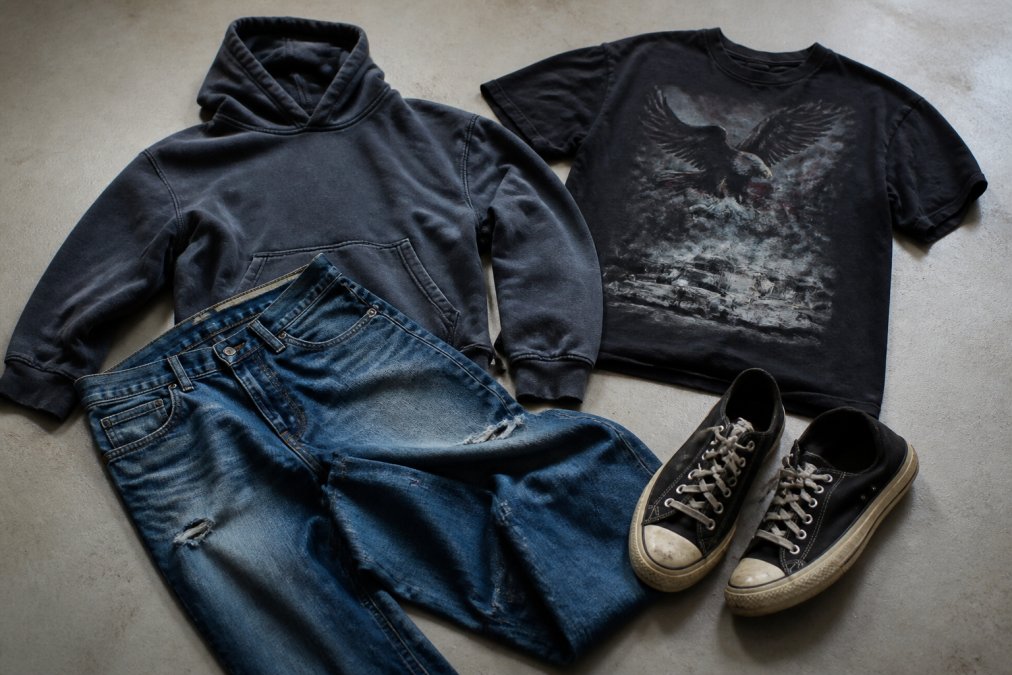
Oversized hoodies anchor the 90s streetwear look with drop shoulders, roomy torso, and mid-thigh length. The Brushed Fleece St. Lou 314 Hoodie captures this silhouette with brushed interior warmth and relaxed fit.
Graphic tees represent the second pillar. 90s graphics were bold, referencing cities, bands, or subcultures. The Snow-Washed St. Louis "The Lou" Graphic Tee delivers a loud graphic celebrating city identity.

Baggy jeans complete the foundation. High-waist cuts with a loose thigh and tapered ankle define the silhouette. The wash matters too. Faded, distressed, and naturally worn textures beat crisp, dark denim.
Snap-collar hoodies and utility-inspired pieces add modern edge. The Snow-Washed Snap Collar Hoodie, St. Louis bridges 90s authenticity with contemporary utility, featuring a snap-front collar that adds a unique silhouette without losing that clean minimal look.

These staple pieces don't feel dated because they never left. They've remained constant in skate culture and hip-hop communities for 30 years. Mainstream fashion is simply catching up to what street culture has known all along.
Heavyweight Sun‑Faded Hoodie — STL 314 →
How to Style 90s Streetwear Today
Wearing 90s streetwear successfully requires understanding proportion and intentionality. The aesthetic was about deliberate choices that communicated identity while working with your actual body.
Foundation: Choose Your Anchor Piece
Start with an oversized hoodie or graphic tee as your anchor. Choose something authentic to you, not trendy. Your anchor piece sets the visual tone.
Proportion Strategy: The One-Oversized Rule
The most common mistake is overdoing the oversized aesthetic. One oversized piece per outfit creates impact; multiple oversized items lose their punch.
If your top is oversized, wear fitted or tapered bottoms. An oversized hoodie with baggy jeans reads costume-like. If wearing baggy jeans, pair with a fitted top to maintain balance.
Body-Specific Styling Approaches
Oversized silhouettes work across different body types, but the execution varies:
For petite frames: Choose cropped or hip-length oversized tops. Pair with fitted bottoms that show ankle to create vertical line. A cropped oversized hoodie with tapered jeans and white sneakers maintains the aesthetic.
For taller frames: Embrace full-length oversized hoodies or long graphic tees. Balance with fitted bottoms that show proportions. Avoid extra layering length.
For broader shoulders or athletic builds: Choose structured oversized pieces (hoodies with defined shoulders, boxy tees with clean seams). Pair with fitted bottoms to show intentionality.
For curvier frames: One oversized piece balanced with fitted bottoms. Choose pieces with subtle structure. A boxy hoodie with seam detail paired with fitted high-waist jeans creates intentional proportion.
Layering Strategy
Effective 90s layering: fitted long sleeve under oversized tee or hoodie (cuffs visible), or oversized long sleeve solo. Avoid layering two oversized pieces, the visual weight becomes overwhelming.
Footwear and Grounding
Footwear grounds the entire look. 90s streetwear pairs with:
- Clean white canvas sneakers (the universal anchor)
- Worn or vintage-looking basketball silhouettes
- Simple canvas slip-ons
- Classic leather low-tops
The shoe should feel utilitarian, not fashion-forward. Avoid anything overly trendy, logo-heavy, or pristine-looking. The 90s aesthetic valued worn-in authenticity over new-condition perfection.
Context-Specific Styling
The same 90s pieces work across contexts, but styling adjustments matter:
Casual/Social: Full oversized hoodie, fitted jeans, white sneakers, minimal accessories. This is the baseline 90s look.
Work-Adjacent (creative industries): Oversized graphic tee under a structured oversized button-up or overshirt, fitted dark jeans, clean sneakers or minimal leather shoes.
Accessories: Less Is More
Why 90s Streetwear Resonates With Modern Consumers
The minimalist design philosophy underlying 90s streetwear also appeals to modern sensibilities. Less is more. Quality over quantity. One great piece beats ten mediocre ones. This ethos directly contradicts the fast-fashion model that dominated the 2010s.
Frequently Asked Questions
Why is 90s streetwear making a comeback in 2026?
90s streetwear resonates because it represents authenticity, rebellion, and individuality, values that define modern urban culture. The aesthetic combines minimalist design with bold graphics, oversized silhouettes, and worn-in textures that feel genuine rather than manufactured.
What's the difference between streetwear and urban fashion?
Streetwear is rooted in subculture, born from skate, hip-hop, and grunge communities, and prioritizes bold graphics, limited drops, and authentic self-expression. Urban fashion is broader, encompassing any contemporary clothing worn in cities, often designed for mainstream appeal. Streetwear is intentional, sometimes confrontational, and builds community identity. Urban fashion is versatile and accessible. The 90s streetwear revival blurs these lines, bringing subculture authenticity into mainstream wardrobes through premium pieces with city-specific graphics and heritage craftsmanship.
How do I style 90s streetwear without looking dated?
Pair oversized pieces with fitted bottoms or vice versa to balance proportions. Layer a washed hoodie over a long sleeve tee, then add structured outerwear. Combine vintage graphics with modern minimalist basics in neutral tones. Accessorize with contemporary sneakers or boots rather than period-specific shoes. Mix high and low: premium pieces like a heavyweight sun-faded hoodie paired with everyday basics create an effortless, current look. The key is intentionality, wear pieces that feel authentic to your personal aesthetic, not as a costume.
Which 90s streetwear pieces are most worth investing in?
Invest in oversized hoodies and graphic tees with authentic city identity, as these are versatile and timeless. Quality matters: premium cotton, proper construction, and unique wash effects like sun-fading or snow-washing ensure pieces age well and remain collectible. Baggy jeans and cargo pants work for layering and create visual interest. Avoid trend-specific items that date quickly. Look for pieces with minimalist design and bold graphics that represent real culture rather than manufactured trends, these hold value and remain relevant across seasons.