

Table of Contents
- What Minimalist Urban Fashion Actually Means
- Minimalist Streetwear Essentials You Need First
- Building Your Neutral Color Palette
- How to Layer Streetwear for Beginners
- Minimalist Outfit Formulas That Work
- Fit, Tailoring, and Proportion Matter
- Care and Maintenance for Your Investment Pieces
- Frequently Asked Questions
Last Updated: September 25, 2026
What Minimalist Urban Fashion Actually Means
Minimalist urban fashion blends clean, intentional design with the raw energy of city streetwear. It's not about owning fewer clothes, it's about choosing pieces that work together effortlessly and reflect your city's authentic culture.
The core principle is simple: every item in your wardrobe should earn its place. No excess. No clutter. Just elevated basics that layer well, fit your body properly, and tell a story about who you are and where you're from.
At NewCity Brand, we've built our entire approach around this idea. Our minimalist designs combine gritty modern aesthetics with luxury finishes, creating pieces that work as hard in your daily rotation as they do standing alone. Think boxy hoodies with precision stitching, tees with raw seam detailing, and sweatpants that feel like an investment rather than a throwaway.
The difference between minimalist urban fashion and basic streetwear comes down to intentionality. Basic streetwear can feel like you grabbed whatever was available. Minimalist urban fashion feels curated. Deliberate. Like you know exactly who you are and what you're representing.
Minimalist Streetwear Essentials You Need First
Start with five non-negotiable pieces that form the foundation of any minimalist urban wardrobe. But before you invest, understand what makes each piece essential for city living, and how to find them affordably.
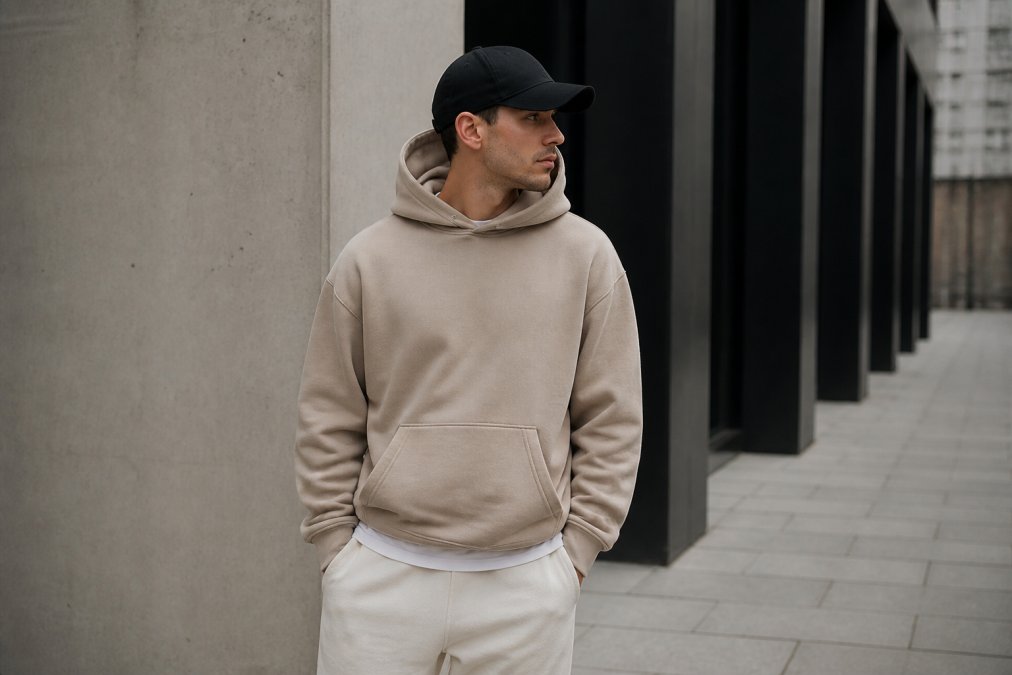

A well-made hoodie is non-negotiable for urban environments. Look for heavyweight cotton (420g/m² or higher) that holds structure without feeling stiff. The fit matters enormously: boxy but not oversized, with clean lines and minimal graphic placement. This piece must work layered under jackets for commuting and worn solo on casual days.
The Structured Tee
Your everyday tee should have presence and versatility for day-to-night transitions. Raw seam detailing, proper weight (280g/m² cotton minimum), and a boxy cut that doesn't cling are non-negotiable. This is the piece you'll wear constantly, it needs to feel premium because it's doing the work. It should transition from layered under a hoodie during your morning commute to worn solo over an unbuttoned overshirt for evening plans.
Quality Sweatpants
Sweatpants aren't loungewear in minimalist urban fashion. They're a functional statement that handles weather transitions and active movement through the city. Choose brushed fleece with tapered ankles, side pockets for urban practicality, and a crotch gusset for proper movement during commuting. The tapered ankle is critical, it prevents pooling on stairs and looks intentional rather than sloppy.
A Neutral Overshirt or Jacket
Layer with intention for unpredictable weather and temperature shifts throughout your day. An overshirt in cream, gray, or black extends your outfit combinations exponentially and handles the transition from heated indoor spaces to cold streets. It works unbuttoned over your hoodie for layered depth or layered under a heavier jacket for insulation.
Solid Neutral Sneakers
White, cream, or gray leather sneakers ground your fits and handle daily urban wear. They should be clean-lined without excessive branding. Quality matters here because your shoes anchor every outfit visually and physically, and you'll walk miles in them daily.
The Urban Functionality Principle
Each piece should solve a real problem in city living: commuting in variable weather, moving between professional and casual spaces, or handling unexpected temperature shifts. Before buying anything, ask: Does this work for my actual day? Can I layer it? Will it survive frequent washing? Does it handle the transition from morning to evening? This practical lens separates intentional minimalism from aesthetic minimalism.
Building Your Neutral Color Palette
Minimalist urban fashion lives in neutral territory. This doesn't mean boring. It means strategic.
Your foundation should include:
- Core neutrals: Black, white, cream, gray (light and charcoal)
- Warm neutrals: Beige, tan, khaki
- Cool neutrals: Navy, olive
These colors work together seamlessly. A cream hoodie over a gray tee over charcoal sweatpants creates depth through texture and fit, not color clash.
The power of a monochromatic or near-monochromatic outfit is that it forces you to focus on fit, fabric quality, and proportion. When colors aren't competing, your silhouette becomes the statement. Your tailoring becomes visible. Your investment in quality pieces pays off.
NewCity Brand pieces come in reactive-dyed colors designed to hold their tone through repeated wear and washing. This matters more than you'd think, cheap dyes fade unevenly, making pieces look tired after a few washes. Our pieces maintain their character because the fabric itself is built to last.
Consider adding one accent color strategically: a burgundy, forest green, or rust piece that you build outfits around. But keep it minimal. One accent color, worn repeatedly, creates visual cohesion.
How to Layer Streetwear for Beginners
Layering is where minimalist urban fashion becomes functional. You're not adding random pieces. You're building depth through intentional combinations.
The Three-Layer Foundation
Start with a fitted base layer, your structured tee. Add a mid-layer with volume: your boxy hoodie or overshirt. Finish with an outer layer: a jacket or heavier overshirt. Each layer should be slightly looser than the one beneath it, creating clean lines rather than bulk.

Proportions Matter
If your base is fitted, your mid-layer can be boxy. If your mid-layer is structured, your outer layer should drape slightly. This creates visual interest without chaos.
Texture Over Pattern
Minimize graphic clashing by layering pieces with different textures. A smooth cotton tee under a brushed fleece hoodie creates dimension. Raw seams on one piece, taped seams on another. Matte finishes with slight sheen variations.
Sleeve and Hem Visibility
Let portions of each layer show. Your tee sleeves should peek from under your hoodie. Your hoodie should show beneath your jacket. This layered visibility is what makes the outfit feel intentional rather than just "wearing multiple things."
Minimalist Outfit Formulas That Work
Stop thinking about outfits as random combinations. Think in formulas.
Formula One: Neutral Monochromatic
Gray sweatpants + cream hoodie + white sneakers + minimal accessories. Everything in the cool-to-neutral family. The focus is on fit and fabric quality because color isn't doing the work.
Formula Two: Tonal Blocking
Charcoal sweatpants + cream tee + gray overshirt + cream sneakers. You're working within a limited palette but creating visual separation through slight tone shifts. This works because each piece has distinct texture.
Formula Three: Neutral Base, Accent Layer
Black sweatpants + white tee + forest green overshirt + white sneakers. The green acts as your only color statement. Everything else supports it. This formula lets you introduce color without overwhelming your fit.
Formula Four: Monochromatic with Texture Variance
Black sweatpants + black raw-seam tee + black brushed fleece hoodie + black sneakers. Same color family, completely different visual interest through fabric weight and finish variation.
These formulas work because they're repeatable. You can execute them multiple ways with pieces you already own. That's the real power of minimalist urban fashion, you're not constantly hunting for new combinations. You're maximizing what you have through intentional choices.
Fit, Tailoring, and Proportion Matter
This is where minimalist urban fashion separates from generic streetwear.
Fit is everything. A boxy hoodie that's actually oversized looks sloppy. A boxy hoodie with proper proportions, roomy but structured, with defined shoulder seams, looks intentional. The difference is minimal measurements but massive visual impact.
Shoulder Seams
Your shoulder seams should sit at your actual shoulder point, not drooping down your arm. This creates clean lines and prevents that "wearing someone else's clothes" look.
Sleeve Length
Sleeves should hit your wrist bone when arms are relaxed. Not longer. Not shorter. This proportion matters for layering visibility and overall silhouette.
Pant Length
Sweatpants should break slightly at your ankle. Not pooling. Not showing your socks. Just touching the top of your shoe. This single detail transforms the entire outfit from casual to curated.
Chest and Waist
A boxy piece should be genuinely boxy, room through the chest and torso. But it shouldn't drown you.
Care and Maintenance for Your Investment Pieces
Quality pieces demand proper care, not because it's complicated, but because minimalist urban fashion relies on longevity. You're building a wardrobe that lasts years, not seasons. Urban environments create specific wear patterns and stains that require targeted approaches.
Washing Frequency and Method
Drying and Shape Preservation
Storage That Prevents Stretching
Stain Treatment by Urban Exposure Type
- Grease and food: Blot with a damp cloth and mild dish soap. Let it sit for 10 minutes, then rinse gently. Don't rub.
- Dirt and pollution: Brush off dry debris first, then treat with a damp cloth. Many "stains" are just surface dirt.
- Coffee or tea: Rinse immediately with cold water from the back of the fabric (pushing the stain out rather than through). Blot with a cloth.
- Sweat marks: Soak in cold water with a small amount of white vinegar for 30 minutes, then wash normally.
Fabric-Specific Care
Refresh Between Washes
When to Repair, Not Replace
Frequently Asked Questions
What is the 3-3-3 rule for minimalist urban wardrobes?
The 3-3-3 rule helps beginners build a functional minimalist wardrobe: choose 3 neutral base colors (like black, gray, and white), 3 secondary colors for variety, and 3 accent shades. This framework ensures every piece works together, making it easy to create outfit combinations without overthinking. For urban minimalism, stick to versatile neutrals that work across seasons and occasions.
How do I balance minimalism with urban streetwear aesthetics?
Urban streetwear and minimalism meet at functionality and intentionality. Choose pieces with clean silhouettes, elevated basics, and subtle city-focused graphics rather than loud logos. Invest in high-quality fabrics and structured fits that hold their shape. Layering strategically, pairing a boxy tee with a tailored jacket, creates visual interest while keeping the look minimal. The key is selecting pieces that serve a purpose and represent your city identity without clutter.
What essential items should I buy first for a minimalist urban wardrobe on a budget?
Start with versatile basics: a quality boxy hoodie, neutral t-shirts, tailored trousers, and a simple jacket. These pieces layer easily and work across seasons. NewCity Brand's Classic Boxy Hoodie ($52) and Raw Seam Boxy Tee ($38) offer premium construction at accessible prices. Add one pair of well-fitting jeans or sweatpants and neutral sneakers. These five items form the foundation of hundreds of outfit combinations.
Is minimalist fashion still trending in 2026?
Yes. Minimalist fashion continues to dominate because it prioritizes quality, sustainability, and personal style over fast-fashion trends. Urban professionals and style-conscious consumers increasingly value timeless pieces and curated wardrobes. The shift toward slower, more intentional shopping aligns with minimalism's core principles. Streetwear culture has also embraced minimalist design, proving the aesthetic works across age groups and city cultures.
Minimalist urban fashion isn't a trend you chase. It's a foundation you build. Start with NewCity Brand's essentials, pieces like the Classic Boxy Hoodie and Raw Seam Boxy Tee that deliver luxury finishes and gritty modern aesthetics without excess. These pieces amplify your city identity and fuel the collective energy that makes urban style matter. Shop now and start building a wardrobe that works as hard as you do.