

Last Updated: October 25, 2026
Quick Summary
Transitioning streetwear from day to night works best with a few smart streetwear swaps rather than a whole new outfit: keep your jeans, tee, or hoodie as the base, then change the top layer, swap the shoes, and add one accessory. Shoes shift formality fastest, so swap clean sneakers for Chelsea boots or leather sneakers.
- Keep the base and change only two or three elements so the same fit reads night-ready.
- Swap the top first: a polo, sheer layer, or textured piece elevates a casual outfit fastest.
- Layer in order: breathable base, mid layer like a hoodie, then a removable outer layer.
- Match the venue's energy, not its formality label, and stay slightly underdressed for the room.
- Build a packable kit with one dressier top, one structured layer, shoes, and one accessory.
Table of Contents
- Why Streetwear Transitions Fail (and What Fixes Them)
- Day-to-Night Outfit Ideas Built on One Base
- How to Elevate a Casual Outfit With One Top Change
- Streetwear Layering That Survives a Temperature Drop
- Streetwear Accessories That Read Evening, Not Gym
- Shoes: The Swap That Shifts Formality Fastest
- Dress Codes, Venues, and Weather: Adjusting the Same Fit
- Build Your Transition Kit Before Your Next Night Out
- Frequently Asked Questions
Why Streetwear Transitions Fail (and What Fixes Them)
Most day-to-night outfits fail for one reason: people try to change everything at once. According to Vogue's reporting on evening dressing, the strongest evening looks build on a daytime base rather than replacing it.
At NewCity Brand, we build pieces meant to move with you from afternoon to after-dark. The fix is not a whole new outfit.
Here is the tension: streetwear is casual by design. Denim, hoodies, and sneakers read daytime. But evening style is about intent, not formality.
- Keep the base: your jeans, tee, or hoodie stays
- Change the top layer: add structure or texture
- Swap the shoes: the fastest formality shift
That is the whole system. Below, we break down each swap with real formulas you can use tonight.
Day-to-Night Outfit Ideas Built on One Base
The best day-to-night outfit ideas start with a base that already works for both settings. Think neutral trousers, a plain white shirt, or a well-cut tee. These pieces are your constant.
The Formula: Base, Layer, Swap, Finish
Every transition follows four moves:
- Base: a neutral top and bottom that fit well
- Layer: add a blazer, overshirt, or zip hoodie
- Swap: change shoes or the top for something dressier
- Finish: add one accessory that signals evening
Follow that order and you never overthink it. The base does the heavy lifting. The swaps do the rest.
Three Formulas for Men, Women, and Gender-Neutral Fits
- Men: tee + neutral trousers + zip hoodie → swap hoodie for a tailored blazer, change sneakers to Chelsea boots
- Women: plain white shirt + dark jeans + clean sneakers → add statement jewelry, swap to heeled boots or a dressier sneaker
- Gender-neutral: boxy tee + wide trousers + overshirt → add a fitted hat and a textured layer, swap shoes to leather
Each formula keeps the base and changes only what the eye notices at night.
How to Elevate a Casual Outfit With One Top Change
To elevate a casual outfit fast, swap the top.
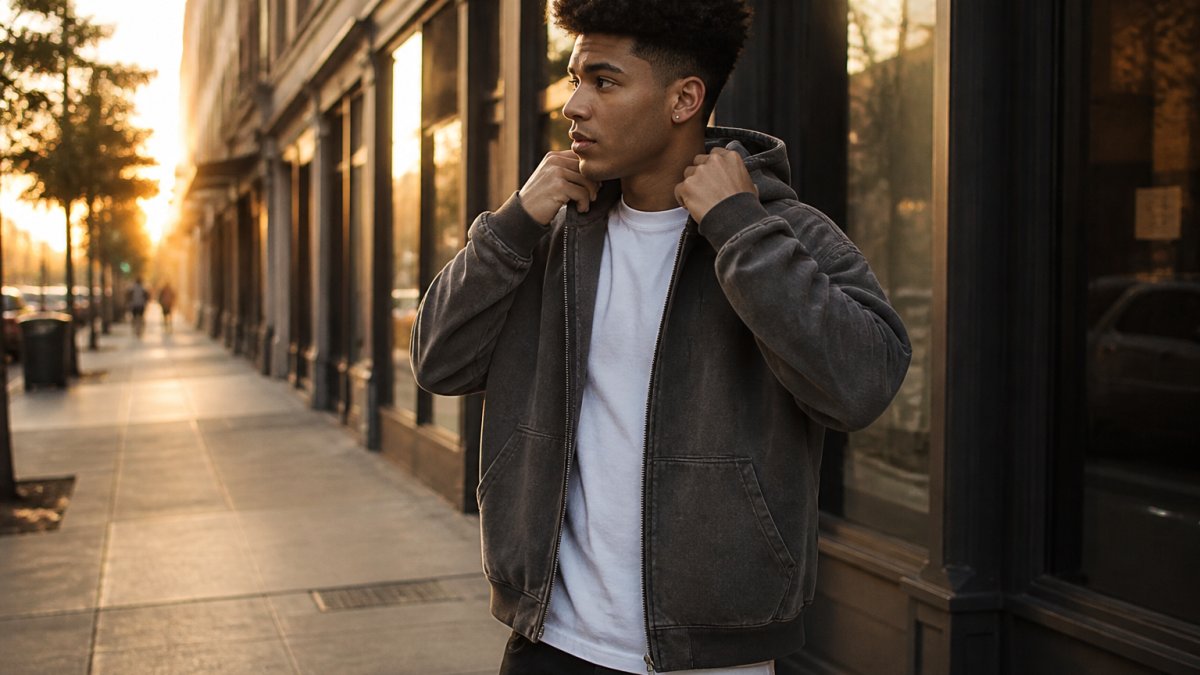
A common mistake is reaching for a whole new look. The Snow-Washed Zip Front Hoodie, St. Lou 314 is a good example of a top that does double duty.

Texture matters here. Snow-washed fabric creates natural highs and lows, so the top looks intentional even when the rest of the fit is simple.
Streetwear Layering That Survives a Temperature Drop
Layering is how you handle a temperature drop without losing the look. Start with a breathable base, add a mid layer, then finish with an outer layer you can remove indoors.
The order matters:
- Base: cotton tee or long-sleeve
- Mid: hoodie or overshirt
- Outer: blazer, coach jacket, or heavier layer
For colder nights, a zip-front hoodie under a tailored blazer keeps warmth while adding shape. If you want a deeper comparison of warmth and fit, see our guide to hoodies vs sweatshirts for layering.
Watch out: layering too many bulky pieces makes you look wider, not warmer. Keep one layer fitted.
Streetwear Accessories That Read Evening, Not Gym
Accessories are the fastest way to signal evening without changing clothes. A fitted hat, a chain, or a structured bag reads night-ready.
The 314 Fitted Hat, St. Louis Headwear is a clean example. Matte black with bold embroidery, it adds a finished edge to any base.

What most guides miss is restraint. One or two accessories is enough:
- A fitted hat or beanie
- A simple chain or ring
- A structured crossbody or small bag
Skip the gym bag and the sports cap. They pull the look back to daytime.
Snow‑Washed Snap Collar Hoodie — St. Lou 314 →
Shoes: The Swap That Shifts Formality Fastest
Shoes change an outfit's formality faster than any other piece. Clean sneakers read casual. Chelsea boots or leather sneakers read evening.
Here is the practical rule:
- Daytime: clean sneakers, canvas shoes, or chunky trainers
- Evening: Chelsea boots, leather sneakers, or a sleek low-profile shoe
The base outfit stays the same. Only the footwear changes. That is why shoes are the highest-use streetwear swap in the whole system.
A common mistake is wearing beat-up sneakers to an evening venue. Keep one clean pair reserved for nights out.
Dress Codes, Venues, and Weather: Adjusting the Same Fit
Venue and weather decide how far you push the swap. The mistake most people make is treating every evening plan the same. A concert, a dinner, and a dim lounge each tolerate a different amount of elevation, and streetwear has a narrower margin than most styles.
The rule of thumb: match the venue's energy, not its formality label. Streetwear reads best when it stays slightly underdressed for the room. That tension is the point.
How Far to Elevate at Each Venue Type
- Concert or casual live show: stay close to your daytime fit. Keep the hoodie or graphic tee, swap beat-up sneakers for clean boots, add a beanie or fitted hat. One swap is enough. Overdressing here reads as trying too hard.
- Bar or pub, casual: keep the base, add a structured overshirt or coach jacket, swap to leather sneakers. A chain or watch finishes it. Two swaps maximum.
- Dinner, smart casual: this is where streetwear needs the most care. Keep the trousers and tee, add a tailored blazer or a clean zip-front hoodie under a blazer, swap to Chelsea boots or sleek leather sneakers. Skip the graphic tee if the print is loud; a textured or plain tee holds up better.
Reading the Room Before You Commit
A quick pattern most stylists use: count the number of dressy elements in your fit and compare it to the room. If most people are in tees and sneakers, keep one dressy element (shoes or a layer). If most are in button-downs and boots, add two (a structured layer plus dressier shoes). Never add three unless the venue is explicitly formal, because streetwear loses its identity past that point.
Weather Adjustments That Keep the Look Intact
- Cold evenings: layer a zip-front hoodie under a tailored blazer. The hoodie adds warmth without bulk, and the blazer adds shape. Keep the outer layer removable for indoors.
- Rain: swap canvas sneakers for leather or boots, and choose a coach jacket or a water-resistant overshirt over a hoodie. A structured bag keeps your kit dry.
- Seasonal shifts: if the temperature swings between afternoon and night, build around a base that works alone and add one layer you can carry. Our guide to transitioning your wardrobe between seasons covers the fabric choices in more detail.
For more complete city-ready looks that hold up across venues, see best streetwear outfits for city style.
Match the venue's energy, not its formality label, here is how far to push the swap at each type of night out.
| Venue type | How far to elevate | Key swaps |
|---|---|---|
| Concert or casual live show | Stay close to daytime fit; one swap is enough | Clean boots, beanie or fitted hat |
| Bar or pub, casual | Two swaps maximum | Structured overshirt or coach jacket, leather sneakers |
| Dinner, smart casual | Needs the most care | Tailored blazer, Chelsea boots or sleek leather sneakers |
| Dim lounge or cocktail-adjacent | Push texture and shine | Snow-washed or raw-seam top, fitted hat, metal-band watch |
| Rooftop bar, mild night | Lighter layers win | Lightweight overshirt over a tee, clean sneakers, chain |
Build Your Transition Kit Before Your Next Night Out
A transition kit is a small set of packable pieces you carry or keep nearby for a quick outfit change. It turns a daytime fit into an evening one in minutes, and it is the part most day-to-night guides skip. The difference between a smooth transition and a rushed one is whether you planned the swap before you left the house.
What Actually Fits in a Packable Kit
The kit should be small enough to carry in a backpack, a tote, or a desk drawer. Think in terms of one change of shoes, one layer, and one accessory, not a full outfit.
- A dressier top: a polo, a textured tee, or a sheer layer. Fold it flat; cotton and blends pack without creasing badly.
- A structured layer: a lightweight blazer or an overshirt. Roll it rather than fold it to avoid sharp creases.
- Shoes: Chelsea boots or clean leather sneakers. If you are wearing sneakers by day, carry the dressier pair in a shoe bag or leave them at the office.
Where to Keep It
The kit works best when it lives where your day ends, not where it starts. Common setups:
- At the office: keep a drawer or locker with the dressier shoes, the structured layer, and the accessory. Change in the restroom before you leave.
- In the car: a small duffel in the trunk holds the layer and shoes. Keep the accessory in the glovebox so it stays clean.
- In a backpack: if you are moving between plans, pack the top and accessory flat against the back panel and carry the shoes in a drawstring bag.
How to Change on the Go
The fastest transition is shoes first, then layer, then accessory. Shoes take the longest, so do them where you have space, a restroom, a car, or a friend's place. The layer and accessory can go on almost anywhere. If you are changing in a public restroom, bring a small bag for the clothes you take off so nothing gets lost.
A Sample Kit for a Weekday
Suppose you leave the house in a boxy tee, wide trousers, and clean sneakers. Your kit holds a lightweight blazer, a pair of Chelsea boots, and a chain. At the end of the workday, you swap the sneakers for boots, add the blazer, and put on the chain.
The Black Raw Seam Paneled St. Louis 314 Boxy Tee works as a base in every formula above.

Frequently Asked Questions
How do you transition a streetwear outfit from day to night?
Keep the base fit and change one or two things. Swap a plain tee for a dressier top, add a structured layer like a zip-front hoodie or blazer, and move from clean sneakers to Chelsea boots. Streetwear swaps work best when you change texture and footwear rather than the whole outfit. A 314 fitted hat or a piece of statement jewelry finishes the look without a full wardrobe change.
Can you wear sneakers for a night out?
Yes, if they are clean and low-profile. Beat-up running shoes read daytime; a crisp pair of minimal leather or canvas sneakers reads intentional. For venues with a stricter dress code, switch to Chelsea boots or a dark loafer.
What streetwear accessories make an outfit feel more elevated?
Metal over plastic. A chain, a fitted cap with bold embroidery, a leather belt, and a small crossbody bag do more than a stack of bracelets. Streetwear accessories should add texture and weight, not noise. One statement piece per outfit is usually enough, and it should match the metal tone of anything else you wear.
How do you layer streetwear for changing temperatures?
Start with a breathable base, then add a mid layer you can remove and an outer layer you can carry. A 100% cotton tee under a zip-front hoodie gives you two settings; a packable shell adds a third. Streetwear layering works when each layer looks finished on its own, so removing one never leaves you in something that reads like underwear.
Most people overcomplicate the transition. They buy a whole new outfit when two swaps would do. NewCity Brand builds premium pieces with the texture and structure that make those swaps work, from snow-washed hoodies to fitted headwear. Get started with NewCity Brand and turn one base into a full night-out look.
