

Table of Contents
- Kith vs Fear of God: Design Philosophies and Brand Identity
- Fear of God Mainline vs Essentials Quality: What You Actually Get
- Kith vs Fear of God Pricing: A Cost-Per-Wear Breakdown
- Fear of God Essentials Sizing Guide: Fit, Proportions, and Layering
- Best Streetwear Brands Like Kith for Wardrobe Staples
- Material Quality, Construction, and Long-Term Durability
- Where Each Brand Wins: Use Cases and Styling Versatility
- Conclusion: Finding Your Best Fit in the Streetwear Ecosystem
- Frequently Asked Questions
Last Updated: September 12, 2026
Kith vs Fear of God: Design Philosophies and Brand Identity
The Kith vs Fear of God comparison starts with a simple truth: these two brands sit at opposite ends of the same streetwear spectrum. Kith built its reputation as a curator, a retailer and collaborator that assembles taste from other labels. Fear of God built its reputation as a creator, with Jerry Lorenzo's label pushing elongated silhouettes, muted palettes, and a distinctly American take on accessible luxury. This guide from NewCity Brand breaks down construction, sizing, pricing, and long-term value so you can decide which approach fits how you dress.

Kith is a New York-based retail and apparel brand known for curated collaborations and a lifestyle-driven aesthetic. Fear of God is a Los Angeles-based fashion house split between a mainline collection and the Essentials diffusion line, rooted in minimalist, elongated proportions.
| Attribute | Kith | Fear of God |
|---|---|---|
| Origin story | Retailer turned label | Designer-led fashion house |
| Design language | Curated streetwear, bold collabs | Minimalist, elongated, muted |
| Line structure | Single mainline focus | Mainline + Essentials diffusion |
| Entry price point | Mid-tier apparel | Essentials is the entry tier |
| Best for | Collaborative, graphic-led fits | Neutral, layered, tonal fits |
Fear of God Mainline vs Essentials Quality: What You Actually Get
The quality gap between Fear of God mainline and Essentials is real, and it shows up first in fabric weight and construction. Mainline pieces use heavier knits, more complex garment construction, and cut-and-sew patterns that hold their shape after repeated washing. Essentials leans on simpler construction at a much lower price point, which is why it became the brand's volume driver.
Mainline Construction and Materials
Mainline Fear of God pieces feature heavier cotton fleece, boxier drop shoulders, and finishing details like taped seams and reinforced hems. The proportions are deliberate: longer bodies, wider shoulders, and a drape meant to layer over other pieces rather than sit flat.
Essentials: Accessible Luxury or Compromised Quality?
Essentials is accessible luxury with a shorter lifespan. A common mistake is expecting mainline construction at an Essentials price. The pieces are comfortable and the fit is consistent, but the fabric is lighter and the construction simpler. If you're buying for daily rotation and don't mind replacing basics every season or two, Essentials does the job. If you want a piece that ages with you, mainline is the honest answer.
Kith vs Fear of God Pricing: A Cost-Per-Wear Breakdown
Cost per wear, not sticker price, is the metric that separates these two brands. Kith apparel sits mid-tier, making individual pieces easy to justify as staples. Fear of God splits sharply: Essentials is priced for volume, while mainline sits in genuine luxury territory. Comparing the two on sticker price alone is a mistake, because a $60 hoodie worn twice a month costs more per wear than a $400 hoodie worn three times a week.
Retail Positioning and Price-to-Value Ratio
Here is the honest tier structure, using commonly observed retail ranges rather than one-off sale prices:
| Tier | Typical hoodie range | Typical tee range | What you are paying for |
|---|---|---|---|
| Kith mainline apparel | Mid-tier | Mid-tier | Curation, collab access, consistent fit |
| Fear of God Essentials | Entry tier | Entry tier | Silhouette, brand signal, volume pricing |
| Fear of God mainline | Luxury tier | Luxury tier | Fabric weight, cut-and-sew construction, made-in-USA or Italy production on many pieces |
Kith positions itself as a lifestyle retailer with apparel attached, so pricing reflects broad accessibility and the collab calendar. Fear of God positions mainline as a fashion house product, and its price-to-value ratio depends entirely on how often you wear it.
The Cost-Per-Wear Math
Run the numbers before you buy:
- Essentials hoodie at entry tier, worn twice a month for two years: roughly 48 wears. If it pills or fades by month 18, your effective cost per wear climbs fast because the piece exits the rotation early.
- Kith hoodie at mid-tier, worn weekly for three years: roughly 156 wears. Mid-tier construction usually holds shape long enough to reach that number.
- Fear of God mainline hoodie at luxury tier, worn three times a week for three years: roughly 468 wears. Even at several times the Essentials price, the per-wear figure can land below the entry-tier piece, but only if the construction actually holds.
That last clause is the whole game. Cost per wear only favors luxury when the garment survives the wear schedule you are promising it. If you rotate ten hoodies and wear each one monthly, no tier justifies its price.
Bureau of Labor Statistics apparel expenditure data shows how much the average household actually spends on clothing each year, which is a useful reality check before committing to a luxury-tier piece. Most buyers underestimate their annual apparel spend and overestimate how often a single piece will enter rotation.
Where Resale Changes the Equation
Fear of God mainline and limited Kith collabs hold resale value better than Essentials, which floods the secondary market every drop (the FTC). Buy mainline at retail and resell after a season, and your net cost per wear can drop below the entry tier. Essentials rarely resells above retail, so treat it as a sunk cost, not an asset.
Fear of God Essentials Sizing Guide: Fit, Proportions, and Layering
The Fear of God Essentials sizing rule is simple: size down for a standard fit, stay true to size for the intended oversized fit. Essentials is cut with dropped shoulders and a longer body, so the "correct" size depends on the silhouette you want.
- True to size: full oversized fit, best for layering over tees
- Size down one: closer to a standard fit, less excess fabric in the body
- Size down two: slim fit, only if you're between sizes and want a cropped look
- Sleeve length: runs long by design; expect cuffs past the wrist on true-to-size
- Layering: the longer body works under a jacket but can bunch over a tucked tee
For anyone comparing this to Kith sizing, Kith runs closer to standard American sizing with less deliberate volume. If you're coming from Kith, expect Essentials to feel noticeably roomier in the same labeled size.
Best Streetwear Brands Like Kith for Wardrobe Staples
Finding the best streetwear brands like Kith means looking for what Kith gets right: consistent fit, wearable colorways, and pieces that work across multiple outfits. The category has shifted toward capsule thinking, where a few well-chosen pieces carry a rotation instead of a closet full of one-off graphics.
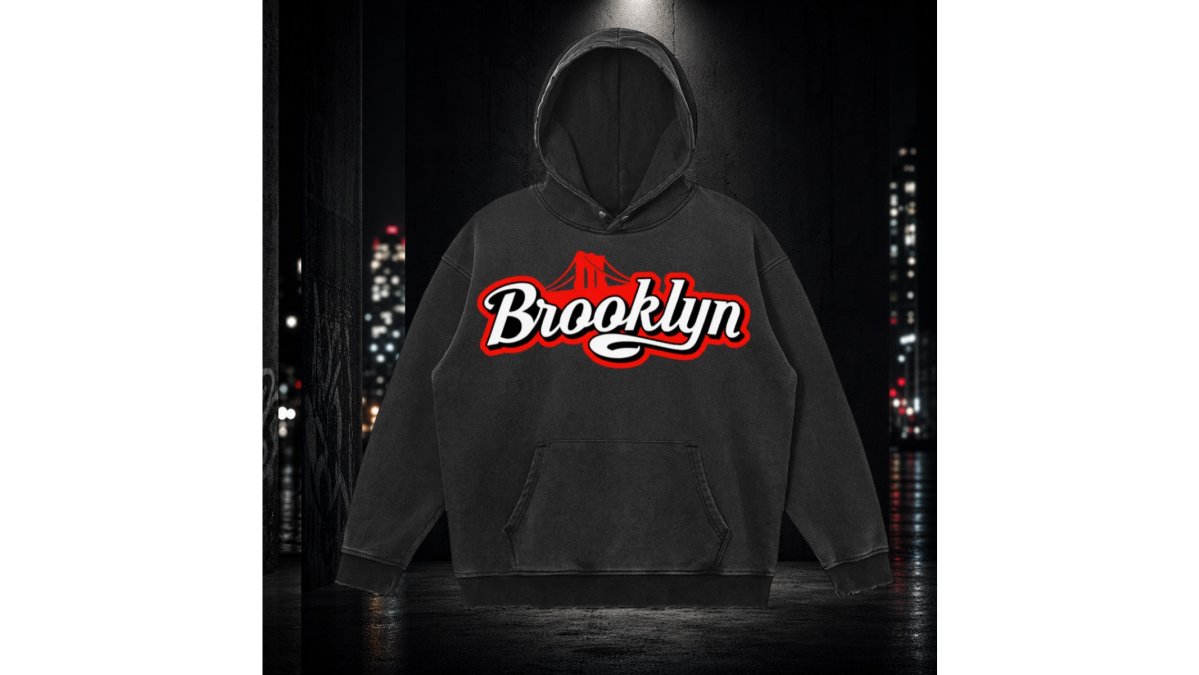
That shift is where NewCity Brand fits. Our snow-washed snap collar hoodies are built around the same wardrobe-staple logic, but with city identity baked in rather than borrowed from a collaboration calendar. The Snow-Washed Snap Collar Hoodie, Brooklyn 718 uses a 380g/m² heavyweight cotton build, drop shoulders, and a bold 718 graphic that reps a specific borough instead of a generic urban aesthetic.
If you're in the Midwest, the Snow-Washed Snap-Collar Hoodie - Westside 314 carries the same construction with St. Louis heritage. On the West Coast, the Snow Washed Snap Collar Hoodie - East LA 323 delivers a sun-faded finish that reads lived-in from day one.
Shoppers who want Kith-level fit consistency with a specific city story attached, rather than a collaboration drop they have to chase.
Material Quality, Construction, and Long-Term Durability
Fabric weight and seam construction predict durability better than brand name. Look for three things: fabric weight, whether the neck and shoulders are taped, and whether the cuffs and hem are double-stitched. Those details determine whether a hoodie survives a hundred washes or pills by month three.
What the Spec Sheet Actually Tells You
- Heavyweight: holds structure, resists pilling
- Taped neck and shoulders: prevents stretching at stress points
- Double-stitched ribbed cuffs: stops the classic stretched-out cuff problem
- Pre-shrunk cotton: keeps the fit you bought after the first wash
- Side-seamed construction: better drape and less twisting over time
Textile Exchange materials guidance outlines how fiber sourcing and textile innovation affect longevity, which matters more than most buyers realize. Fiber length matters as much as fabric weight: long-staple cotton resists pilling far better than short-staple cotton, which is why two heavyweight hoodies can age completely differently.

A Wear-Test Framework You Can Run Yourself
Most comparisons stop at the spec sheet, and almost nobody reports what happens after 30, 60, and 100 washes. Here is a repeatable test any buyer can run on a single garment:
- Baseline (day 0): photograph the cuffs, hem, and underarm seams flat, and note the measured chest and body length.
- 30 washes: check for pilling at the underarm and side seam, measure shrinkage, and note whether the neckline has relaxed.
- 60 washes: inspect cuff recovery, does the ribbing snap back or stay stretched? Check for seam slippage at the shoulder.
- 100 washes: compare drape and color against the baseline photo. Fading and twisting show up here first.
A common pattern across mid-tier and luxury tiers: heavyweight fleece holds shape through 60 washes, then cuff ribbing fails first. Taped shoulders and double-stitched cuffs push that failure point later. Lighter Essentials-tier fleece shows pilling and cuff relaxation earlier, the trade-off you accept at the entry price.
Sustainability and Supply Chain
None of the standard comparisons address where the cotton comes from or who sews the garment, and that matters more each year. Look for brands that disclose fiber origin, mill partners, and factory audits. Fear of God mainline has publicly discussed domestic and Italian production on select pieces; Essentials is produced at higher volume with less disclosure. Kith's apparel is largely produced through third-party partners, with limited supply-chain detail. If ethical sourcing is a priority, treat disclosure itself as a quality signal, brands that name their mills and factories usually have nothing to hide.
Where Each Brand Wins: Use Cases and Styling Versatility
Kith wins on collaborative energy and graphic-led statement pieces. Fear of God wins on tonal layering and elongated silhouettes that read as elevated rather than loud. Neither is universally better; they solve different wardrobe problems.
A styling versatility matrix makes the split clearer:
| Use Case | Kith | Fear of God | NewCity Brand |
|---|---|---|---|
| Daily rotation staple | Strong | Essentials only | Strong |
| Tonal layering | Moderate | Strong | Moderate |
| Statement graphic | Strong | Weak | Strong |
| City-specific identity | Weak | Weak | Strong |
| Entry price accessibility | Moderate | Essentials strong | Strong |
The fastest way to test whether a piece belongs in your rotation is the three-outfit rule: if you can't build three complete outfits around it in your head, it's a display piece, not a wardrobe staple.
Conclusion: Finding Your Best Fit in the Streetwear Ecosystem
The Kith vs Fear of God decision comes down to what you're buying: curated collaboration or designer-led minimalism. Neither is a mistake if it matches how you dress. What matters is matching construction quality to how hard you'll wear the piece, and being honest about whether you're paying for fabric or a name.
NewCity Brand sits in that space with a different angle: premium construction, snow-washed textures, and graphics tied to a real city rather than a seasonal drop. The Snow-Washed Snap Collar Hoodie, St. Louis and the Snow-Washed Snap Collar Hoodie, Bushwick 718 both carry 380g/m² heavyweight cotton, taped neck and shoulders, and double-stitched ribbed cuffs at $56.00. If your wardrobe needs staples that hold up and say something about where you're from, shop now and build a rotation that actually lasts.

Frequently Asked Questions
Is Kith considered a high-quality streetwear brand?
Kith has built a reputation for premium materials and thoughtful design since its founding in 2011. The brand frequently uses Italian wool, cashmere, and high-grade cotton in its mainline collections. However, quality can vary across seasonal drops and collaborations. The brand's retail positioning as accessible luxury means you are paying for both construction and cultural cachet. For buyers focused purely on fabric weight and garment construction, comparing specific pieces side by side reveals that price does not always equal superior materials.
What is the difference between Fear of God mainline and Essentials?
Fear of God mainline sits at the top of the brand's hierarchy, using premium materials like Italian wool and cashmere with complex garment construction and made-in-Italy or made-in-USA manufacturing. Essentials is the diffusion line, offering similar oversized silhouettes and muted palettes at a lower price point with simpler construction and more accessible fabrics. The mainline targets collectors seeking luxury basics, while Essentials serves a broader audience wanting the Fear of God aesthetic without the mainline price. Understanding this distinction matters when evaluating long-term value.
How does the sizing compare between Kith and Fear of God?
Kith generally runs closer to standard American sizing with a relaxed but not extreme fit, though some collaborations and seasonal drops vary. Fear of God mainline and Essentials both lean heavily into oversized, elongated silhouettes. The Fear of God Essentials sizing guide suggests most buyers size down for a closer fit or stay true to size for the intended oversized look. Kith pieces tend to require less guesswork, while Fear of God rewards trying pieces on or checking measurements carefully before purchasing.
Which brand offers better long-term value for streetwear collectors?
Long-term value depends on whether you prioritize resale potential or cost-per-wear. Kith collaborations with brands like Nike and Versace have historically held or increased in value, while Fear of God mainline pieces appeal to collectors seeking luxury craftsmanship. For everyday wardrobe staples, cost-per-wear matters more than hype. A heavyweight hoodie that holds its shape after 50 washes delivers better value than a hyped piece worn twice. Evaluate garment construction, fabric weight, and how often you will actually wear the piece before deciding.
Is Fear of God Essentials worth the price point?
Essentials sits in the accessible luxury tier, typically priced between $40 and $150 depending on the piece. The value proposition depends on what you want. You get the Fear of God aesthetic, oversized fit, and muted palettes at a fraction of mainline prices. However, the diffusion line uses simpler construction and lighter fabrics than the mainline. If you want the look without the investment, Essentials delivers. If you want heirloom-quality wardrobe staples, the mainline or comparable brands with transparent material sourcing offer better long-term value.