

Table of Contents
- Define Your Sneaker Purpose and Wardrobe Role
- Master the Sneaker Fit Guide for Your Foot Type
- How to Style Sneakers with Streetwear Outfits
- Evaluate Comfort, Support, and Materials
- Best Streetwear Sneakers for Everyday Wear
- Assess Durability, Care, and Cost Per Wear
- Build Your Decision Framework
- Frequently Asked Questions
Last Updated: October 9, 2026
Define Your Sneaker Purpose and Wardrobe Role
The first step in learning how to choose the right streetwear sneakers is understanding their role in your rotation: versatile everyday shoe or statement piece?
Oversized hoodies and baggy jeans call for sneakers with visual weight, like chunky runners or platform soles.
NewCity Brand designs pieces that celebrate local identity and community. Decide whether you want a bold statement about your city culture or a neutral foundation that works across outfits.
Master the Sneaker Fit Guide for Your Foot Type
Fit is where most sneaker purchases go wrong. Understand your foot type and how different brands accommodate it.
Fit varies dramatically across brands. Research how the specific model fits your foot shape, and look for reviews mentioning break-in periods and whether people size up or down.
Sizing and Break-In Expectations
Most quality streetwear sneakers need a 1-2 week break-in as materials soften and mold to your foot. Discomfort is normal; sharp pain or blistering is not.
When ordering online, measure your foot length in millimeters from heel to longest toe and your width at the widest point. Compare to brand-specific sizing charts, since many streetwear brands run small or narrow.
How to Style Sneakers with Streetwear Outfits
How to choose the right streetwear sneakers extends beyond the shoe: silhouette, color, and material must work with your outfit proportions and palette.
Streetwear styling relies on balance: oversized tops pair with fitted bottoms, or vice versa. A chunky sneaker grounds an oversized fit; a sleek one feels lost under baggy proportions.
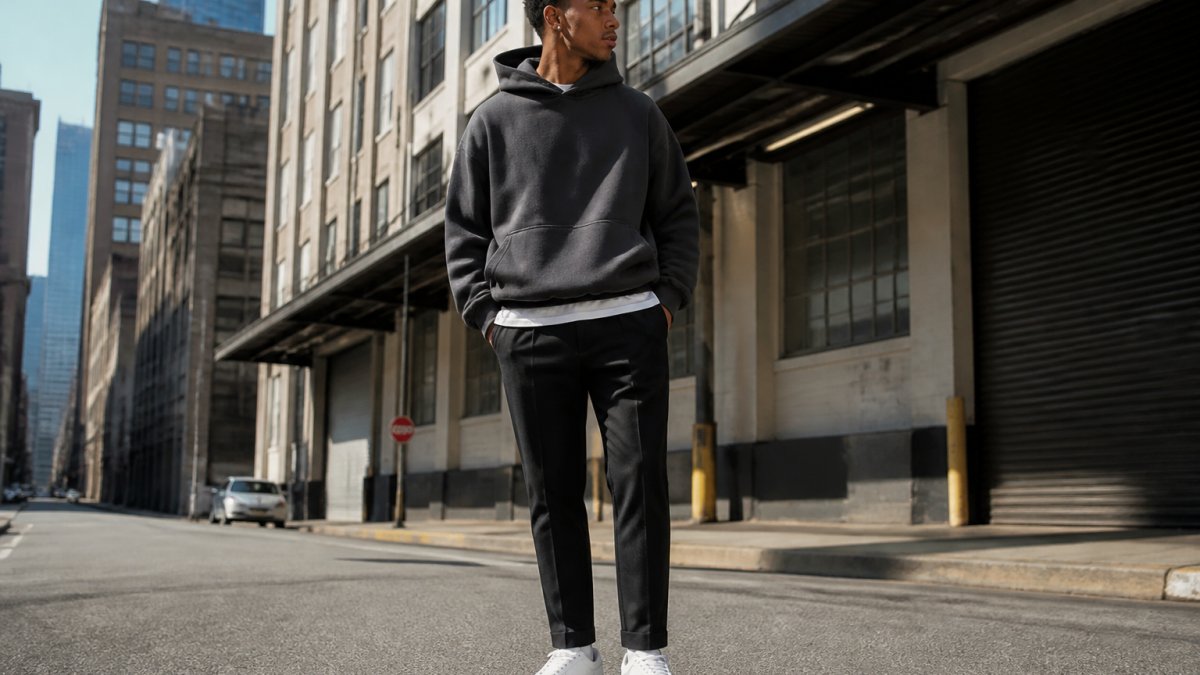
Color Coordination and Proportions
White sneakers are the foundation of most streetwear wardrobes: they work with nearly every color and tone, brightening dark outfits without competing for attention.
After white, add one neutral (black, gray, or cream) and one accent color that appears elsewhere in your wardrobe.
Proportions matter as much as color. Low-profile sneakers work with slim or tapered fits; high-tops and chunky silhouettes need looser or cropped pants that show the shoe clearly.
Evaluate Comfort, Support, and Materials
Comfort separates sneakers you'll actually wear from ones that sit in your closet. It's the sum of cushioning, arch support, heel stability, weight, breathability, and pressure distribution. Evaluate each separately before you buy.
Cushioning: What's Actually Under Your Foot
Most streetwear sneakers use one of four cushioning systems:
- EVA foam is the most common midsole material: lightweight and inexpensive, but it compresses and loses rebound after roughly 300 to 500 miles. Worn daily, expect noticeable flattening within 6 to 12 months.
- Compression-molded EVA (often called Phylon) is denser and holds its shape longer than standard EVA, which is why many running-derived silhouettes use it.
- Polyurethane (PU) is heavier but far more durable and resistant to compression, common in older-school court and basketball silhouettes.
A practical test: press your thumb firmly into the midsole. It should compress and spring back. Rock-hard won't soften much; soft-bread will pack out fast.
Support, Stability, and Foot Shape
Support matters most if you pronate, have flat feet, or stand for long stretches. Look for:
- A firm heel counter (the stiff cup at the back). Squeeze it, it should resist collapsing. A flimsy heel counter lets your foot roll inward or outward.
- A torsionally stiff midfoot. Twist the shoe like a towel. It should resist in the middle but flex at the ball of the foot. Too much twist means poor arch support.
- A removable insole. This is a quiet advantage: if the stock insole is thin, you can swap in an aftermarket one with more arch support without changing the shoe's fit much.
For wide feet, look for wide widths or a rounded toe box rather than a tapered one. For high arches, prioritize cushioning and a roomier instep; for flat feet, a firmer midfoot and supportive heel counter.
Materials and How They Age
- Full-grain leather is the most durable upper. It resists moisture, holds shape, and develops a patina. It needs a break-in period and periodic conditioning.
- Canvas is breathable and cheap but stains easily, stretches, and offers almost no structure. It's a warm-weather material.
- Suede and nubuck feel soft and premium but absorb water and show scuffs. They need a protective spray and a suede brush.
Outsole and Traction
Rubber outsoles vary more than most buyers realize. Carbon rubber is hard and abrasion-resistant, best for heel-strike zones. Blown rubber is lighter and grippier but wears faster. Gum rubber offers excellent wet traction but yellows over time. Deeper lugs grip wet pavement better but add weight.
How to Test Before You Commit
- Try shoes on late in the day when your feet are at their largest.
- Wear the socks you'll actually wear with them.
- Leave a thumb's width (about half an inch) between your longest toe and the front of the shoe.
- Walk on a hard floor, not carpet, so you can feel the cushioning and any pressure points.
- Check the heel: your heel should not slip when you walk.
- If ordering online, buy from a retailer with free returns and test indoors for a few hours before deciding.
takeaway The best streetwear sneaker balances aesthetics with wearability. If a shoe looks perfect but causes foot pain by evening, it's not the right choice, regardless of price or brand prestige.
Best Streetwear Sneakers for Everyday Wear
This section gives you a repeatable way to pick the right everyday sneaker for your wardrobe, foot, and routine, rather than copying a trend list.
Start With Your Use Case, Not the Silhouette
Match the shoe to how you'll actually use it:
- Commuting and walking 5+ miles a day: prioritize cushioning, a breathable upper, and a lightweight midsole. Runner-derived silhouettes with mesh or knit uppers work best. Skip heavy leather high-tops.
- Desk job with light walking: you can trade some cushioning for style. Leather court sneakers and retro low-tops are ideal.
- Standing all day (retail, service, events): look for a firm heel counter, a removable insole you can upgrade, and a PU or compression-molded EVA midsole that won't flatten by month three.
Match the Silhouette to Your Wardrobe Proportions
Silhouette choice is a proportion decision:
- Low-profile court sneakers (minimal branding, leather upper, rubber toe cap) work with slim, tapered, or straight-leg pants. They're the safest first pair because they don't fight any outfit.
- Retro basketball and high-tops add visual weight at the ankle. They pair best with looser pants, cropped hems, or shorts that show the collar.
- Chunky and runner-inspired sneakers have architectural soles that ground oversized fits. They can overwhelm slim pants or smaller frames, so balance them with volume up top.
A quick rule: the visual weight of your sneaker should roughly match that of your pants. Baggy pants want a substantial shoe; tapered pants want a sleeker one.
Build a Rotation Instead of Buying One Perfect Pair
No single sneaker does everything well. A practical rotation:
- One versatile neutral (white or off-white leather low-top) for most outfits.
- One darker or weather-resistant pair for rain, travel, and days you don't want to worry about scuffs.
- One statement or comfort-focused pair for long-wear days or outfits that need a focal point.
Three pairs rotated evenly each last significantly longer than one worn daily, because the midsole foam recovers between wears and the uppers dry out.
A Quick Fit and Sizing Checklist
- Measure your foot at the end of the day, heel to longest toe, in millimeters. Compare to the brand's own size chart, not a generic conversion.
- Know your width. Many streetwear brands run narrow. If you're between widths, size up rather than down.
- Expect brand-to-brand variance. A size 10 in one brand can fit like a 9.5 or 10.5 in another. Read reviews that mention fit specifically.
Where Budget Actually Matters
You don't need to spend the most for a good everyday sneaker, but understand what your money buys:
- Entry range: canvas and synthetic uppers, glued construction, basic EVA. Fine for occasional wear; expect faster breakdown with daily use.
- Mid range: leather or mixed uppers, stitched reinforcement at stress points, better midsole foam. This is the sweet spot for most people.
- Premium range: full-grain leather, durable PU or advanced foam midsoles, replaceable insoles. Worth it if you'll wear them 3+ times a week.
A useful way to judge value is cost per wear: divide the price by the number of times you realistically expect to wear the shoe. A mid-range pair worn 200 times often beats a cheap pair worn 60 times before it falls apart.
Care That Extends Everyday Life
- Clean uppers with a soft brush and mild soap; avoid soaking leather.
- Air dry away from direct heat, never in a dryer or on a radiator.
- Use shoe trees or stuff with newspaper to hold shape.
If you're unsure between two sizes or two models, buy both from a retailer with free returns, test each indoors for a few hours on different days, and keep the one that disappears on your feet. The shoe you forget you're wearing is usually the right everyday choice.
Assess Durability, Care, and Cost Per Wear
How to choose the right streetwear sneakers also means thinking beyond the initial purchase.
Durability depends on materials, construction, and wear frequency. Leather outlasts canvas, stitched construction outlasts glued-only assembly, and thicker outsoles resist wear better. Rotation also slows breakdown.
Care extends durability significantly. Clean with a soft brush and mild soap, air dry away from direct heat, use shoe trees to hold shape, and condition leather periodically to prevent cracking.
Some enthusiasts track resale value as a durability proxy.
Build Your Decision Framework
A personal decision framework prevents impulse purchases and ensures each sneaker serves a purpose in your rotation.
Start with these questions in order:
- What's my primary use? Daily wear, occasional outfit anchor, or specialty piece for specific settings?
- What's my foot type? Narrow, wide, high arch, flat? Which brands accommodate this?
- What's my style anchor? Minimalist, retro, athletic, or hybrid?
- What's my color strategy? Start with white, then add complementary neutrals and one accent.
- What's my budget per pair? Realistic spending prevents regret and guides quality expectations.
- How often will I rotate? Frequent rotation (3+ pairs) means each can be more specialized. Limited rotation (1-2 pairs) requires maximum versatility.
- What's my break-in tolerance? Can you commit 2 weeks to breaking in a shoe, or do you need comfort immediately?
Answer these honestly before shopping. Your framework filters out trend-driven purchases that don't fit your wardrobe and lifestyle.
At NewCity Brand, this intentional approach applies to all streetwear. Pieces that celebrate your city identity work best when they fit your actual life, not when they chase trends.
| Decision Factor | Priority Level | Impact on Choice |
|---|---|---|
| Foot type and fit | Critical | Determines which brands work for your feet |
| Primary use case | Critical | Guides comfort, durability, and style priorities |
| Color palette fit | High | Ensures sneaker works with existing wardrobe |
| Budget per pair | High | Sets quality expectations and material options |
| Break-in tolerance | Medium | Affects material choices (leather vs. canvas) |
| Rotation strategy | Medium | Determines specialization vs. versatility needs |
| Resale interest | Low | Matters only if you plan to resell later |
Choosing the right streetwear sneakers isn't about the most hyped release or the most expensive option.
When you're ready to build your streetwear rotation with intention, NewCity Brand offers premium urban apparel designed around community and authenticity.
Frequently Asked Questions
How should streetwear sneakers fit?
Streetwear sneakers should have a snug heel without slipping, about a thumb's width of space at the toe box, and secure midfoot support. Most street-style sneakers run true to size, but some silhouettes, especially retro or vintage-inspired designs, may require sizing up by half a size. Wear the socks you plan to use daily when trying on, and walk around for at least 10 minutes to test comfort and break-in feel. Cushioning should feel responsive underfoot, not mushy or too firm.
What's the best way to choose sneakers for everyday wear?
Start by identifying your daily activities: commuting, standing, walking long distances, or mixed use. Choose silhouettes that match your existing wardrobe colors and proportions, neutral tones like white, black, or grey pair with almost any streetwear. Prioritize materials like leather or canvas for durability and breathability. Test the sneaker on smooth and textured surfaces to verify traction. Finally, calculate cost per wear by dividing the price by expected wear days over the shoe's lifespan; quality streetwear sneakers worn 3-5 days weekly for 2-3 years offer strong value.
How do I know if a sneaker will actually work with my streetwear collection?
Lay out your most-worn pieces and note the dominant colors, silhouettes, and proportions. Classic white or black sneakers work with nearly any streetwear fit. If you wear oversized tops, opt for sleeker silhouettes to balance proportions. For structured, fitted streetwear, chunky or runner-inspired sneakers create visual interest. Check the sneaker's design details, minimal graphics and clean lines blend into any outfit, while bold logos or colorways become statement pieces. Try the sneaker mentally against at least three existing outfits before purchasing.
What materials should I prioritize in a quality streetwear sneaker?
Look for premium leather uppers for durability and longevity, suede or canvas for texture and breathability, and rubber outsoles with visible traction patterns. High-quality construction means stitching is tight and even, with no gaps around seams. Materials should feel substantial in hand, cheap materials feel thin or plasticky. Lining should be breathable (mesh or cotton blend) to prevent moisture buildup during daily wear. Check that the collar and tongue padding provide cushioning without creating pressure points during extended wear.