

Last Updated: October 29, 2026
Quick Summary
Eco-friendly clothing returns packaging can be worth it because returns often double packaging waste, so switching to reusable or recyclable mailers targets a source most sellers overlook. The right choice depends on a simple, clear return process that customers will actually follow.
- Returns often add a second box, mailer and set of shipping materials for each order.
- Reusable mailers need a durable, resealable closure and printed return instructions to work.
- Paper mailers are widely collected, while recycled poly mailers often need store drop-off.
- Compostable mailers usually need industrial composting, so label them and give clear customer instructions.
- Test one reusable or recyclable option first and track mailer returns and reuse each month.
Table of Contents
- Why Clothing Returns Create So Much Packaging Waste
- Reusable Packaging for Clothing Returns: How It Works
- Recyclable Mailers for Clothing: Materials and Trade-Offs
- Compostable Mailers for Apparel: When They Make Sense
- Return-Ready Packaging Instructions and the Customer Experience
- Apparel Return Packaging Best Practices for Your Operation
- Measuring Waste Reduction and Choosing Your Next Packaging Step
- Frequently Asked Questions
Why Clothing Returns Create So Much Packaging Waste
Returns are one of the biggest sources of packaging waste in apparel e-commerce, and clothing returns packaging is often the most overlooked part of that waste. Every returned order usually means a second box, a second mailer, and a second round of shipping materials.
The cost is not just environmental. Each return adds materials, labels, and handling steps that most sellers never track closely.
- Outbound and return shipments each use their own packaging
- Mailers are often single-use and go straight to the trash
- Return labels and tape add small but constant waste
Watch out: Many brands only count outbound packaging in their waste plans. Returns can add significant volume without anyone noticing.
Reusable Packaging for Clothing Returns: How It Works
Reusable packaging for clothing returns means the same bag or mailer makes multiple trips. The customer sends the item back in a durable mailer, and the seller collects, inspects, and reuses it.
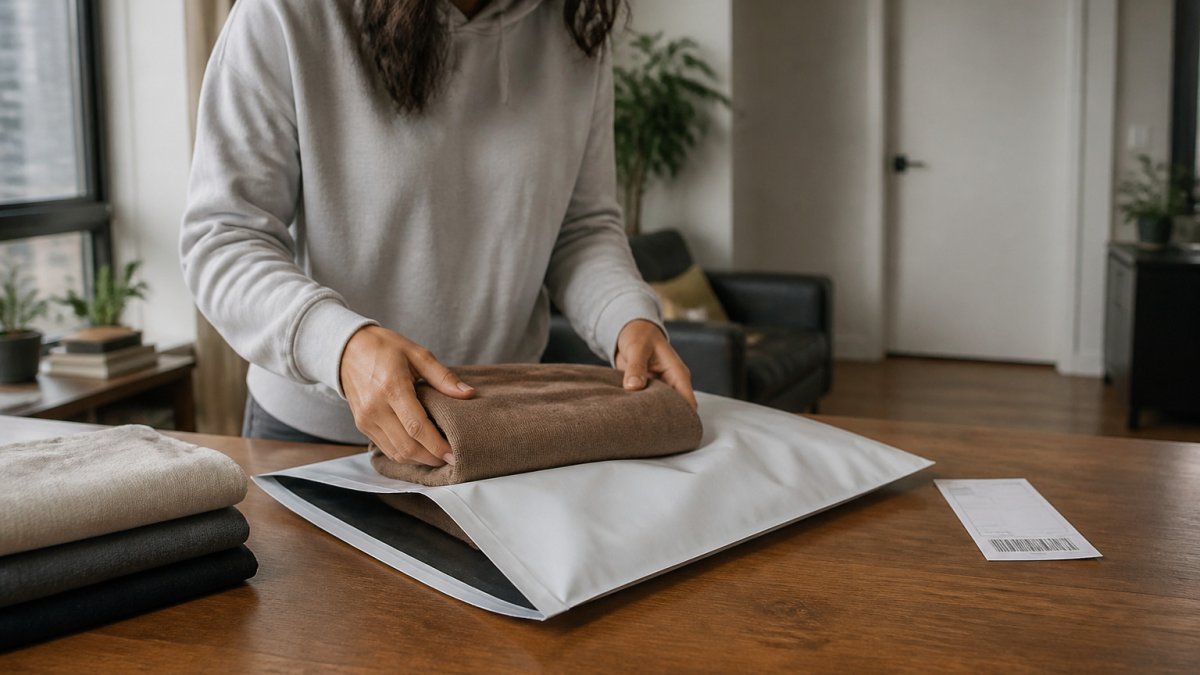
The process only works when the system is simple. A customer who has to hunt for a special bag will usually ignore the instructions and use whatever box they have on hand.
- The customer gets a prepaid return label in the same package
- The mailer is sealed with a resealable closure
- The seller tracks each mailer and sends it back into circulation
Designing a Reusable Return Mailer Customers Will Actually Send Back
A reusable mailer has to look good, feel sturdy, and be easy to close. If it looks like a cheap bag, customers will treat it like one. Plan for a closure that works more than once, such as a zip or a strong adhesive strip.
Make the return instructions printed right on the mailer. Customers should not have to search your website to figure out what to do.
Recyclable Mailers for Clothing: Materials and Trade-Offs
Recyclable mailers are often the easiest switch for a clothing brand. Paper and cardboard are widely collected, and most curbside programs accept them (the EPA). Recycled plastic poly mailers are also common, but they carry different trade-offs.
Paper mailers protect less against moisture and tearing. Poly mailers are lighter and cheaper, but they need to be recycled through store drop-off programs in many areas, not curbside bins.
Watch out: Labeling a mailer "recyclable" does not mean your customers will recycle it. Check how your local program handles each material before you make the claim.
The article compares the two main recyclable mailer materials and their trade-offs:
| Material | Key trade-off | Disposal note |
|---|---|---|
| Paper | Less protection against moisture and tearing | Widely collected, often curbside |
| Recycled poly | Lighter and cheaper | Often needs store drop-off |
Compostable Mailers for Apparel: When They Make Sense
Compostable mailers break down under the right conditions, usually in an industrial composting facility. Home compost piles rarely reach the heat needed. That makes labeling and customer instructions important.
Return-Ready Packaging Instructions and the Customer Experience
Clear instructions are what turn a packaging choice into a working returns system.
What the instructions should cover. A return-ready insert or printed panel should answer four questions in order:
- How to repack the item. Fold and bag the garment the same way it arrived, or place it directly in the resealable mailer if the design allows.
- How to reseal the mailer. Point to the specific strip or closure with an arrow or a numbered step. If there are two adhesive strips, label which one is for the return.
- Where the return label goes. Show the label placement area, and note whether the original outbound label needs to be covered or removed.
- What happens to the packaging. State plainly whether the mailer should be reused, recycled curbside, taken to a store drop-off, or composted, and under what conditions.
Format matters more than length. Three numbered steps with simple line icons outperform a paragraph of text. Put the steps on the inside of the mailer flap, on a card that doubles as the packing slip, or on a sticker that stays with the package. Keep the language plain and avoid sustainability jargon; "peel here and seal" beats "resealable closure system."
Disposal and reuse guidance. Compostable mailers only break down in the right conditions, and recycling availability varies by material and by local program. Tell the customer what to do with the specific packaging they received rather than offering a generic "please recycle" line. For reusable mailers, explain that the mailer goes back with the return and will be reused, customers are more likely to cooperate when they understand the loop.
The customer-experience payoff.
Apparel Return Packaging Best Practices for Your Operation
Good operations make eco-friendly returns practical, not just appealing. Start with a small test group, track how many mailers come back, and adjust the process before scaling up.
- Pick one reusable or recyclable option to test first
- Train staff on inspecting and cleaning returned mailers
- Set a clear rule for when a mailer is too damaged to reuse
- Track return rates and mailer reuse each month
Many sellers also review minimum order quantities and supplier options before choosing materials. Compare at least three suppliers, ask for samples, and check how each material holds up in a real return trip.
Measuring Waste Reduction and Choosing Your Next Packaging Step
Measurement tells you whether your change worked. Track the number of mailers sent out, the number returned, and the number reused. Over a few months, those numbers show whether your reusable or recyclable system is saving material.
Start with one change you can measure this quarter. Once the numbers look good, expand to more products or regions.
Frequently Asked Questions
What is the most eco-friendly packaging for clothing returns?
Reusable mailers that customers can send back and forth are generally the lowest-waste option, because one package replaces many single-use mailers. Where reuse is not practical, recyclable paper-based or mono-material mailers are the next best choice, with compostable mailers suited to brands that can confirm local composting access. The right answer depends on your return volume, how the mailer comes back to you, and whether your customers can reliably recycle or compost what they receive.
Can customers reuse the original packaging to return clothing?
Yes, and it is one of the simplest ways to cut return waste. Include a clear, printed note explaining that the mailer can be reused, add a prepaid return label that can be placed over the original shipping label, and make sure the package is sturdy enough to survive a second trip. Brands that design their outbound packaging for reuse often see more customers willing to return items in it.
Are recyclable mailers better than compostable mailers for apparel returns?
Recyclable mailers are usually the more practical choice for most US brands because recycling collection is widely available, while compostable mailers only deliver their benefit where commercial composting exists. Compostable mailers that end up in a standard recycling stream can contaminate it. Choose based on what your customers can actually dispose of correctly, and label the package clearly so the disposal step is obvious.
How can brands reduce packaging waste from clothing returns?
Start by reducing the number of packages per return, using one mailer for multiple items where possible. Switch to reusable or recyclable materials, right-size the mailer so it uses less filler, and avoid adding extra inserts. Track the number of packages and materials used per return over several months so you can see which changes actually lower waste rather than assuming they do.
Eco-friendly return packaging is worth it when you match the material to how your returns actually work. Start small, measure what happens, and let the data guide the next step. At NewCity Brand, we are still learning what works best for our own customers, and we expect you will learn the same in your operation.
