

Last Updated: October 22, 2026
Quick Summary
A capsule wardrobe affordable strategy means buying fewer, versatile pieces that work together, so you wear what you own and spend less overall. Start by auditing your existing closet, identify specific gaps, and build gradually using secondhand shopping and strategic purchases. Most people can build a working capsule for $300 or less by using what they already own and filling only the gaps.
- Audit your existing closet first by sorting into keep, maybe, and release piles, then apply the outfit test to reveal what you actually wear.
- Set a realistic starter budget with three tiers: $150 low tier, $350 medium tier, or $700 higher tier, depending on your needs.
- Shop secondhand first through thrift stores, consignment shops, and resale platforms like Poshmark and Depop to expand your budget significantly.
- Build gradually by adding one piece every two weeks and tracking cost per wear to measure progress and guide future purchases.
- Before buying anything, verify it matches at least three items you own, fills a gap on your list, and justifies its price.
Table of Contents
- What Makes a Capsule Wardrobe Worth Building
- Assess What You Already Own Before Spending
- Capsule Wardrobe Essentials: The Foundation Pieces
- Capsule Wardrobe on a Budget: Smart Shopping Strategies
- Capsule Wardrobe Checklist: Your Shopping Framework
- Capsule Wardrobe Outfit Ideas: Mix-and-Match Combinations
- Build Gradually and Measure Your Progress
- Frequently Asked Questions
What Makes a Capsule Wardrobe Worth Building
A capsule wardrobe affordable strategy isn't about deprivation. It's about intentional choices that save money, time, and mental energy.
The math works because repetition cuts waste. When you own 30 versatile items instead of 100 random pieces, you actually wear what you buy.
Building a capsule wardrobe means curating pieces that mix and match effortlessly. A white shirt pairs with jeans, blazers, and sweaters. Neutral pants work with everything in your closet.
At NewCity Brand, we understand that building a wardrobe shouldn't drain your bank account. Quality basics paired with statement pieces create outfits that feel intentional and confident.

Assess What You Already Own Before Spending
Most people skip this step. They see a gap and buy to fill it. That's how closets get cluttered and budgets get blown. The fastest way to make a capsule wardrobe affordable is to treat your existing closet as inventory, not as a problem to replace.
Instead of a vague clean-out, run a structured audit. Set aside two hours, pull everything out, and sort into three piles: keep, maybe, and release. Then apply the outfit test below to every item in the keep and maybe piles.
The Three-Pile Audit
- Keep: Fits now, worn in the last 60 days, and works with at least two other keep items.
- Maybe: Fits but rarely worn, or worn but needs repair or tailoring.
- Release: Doesn't fit, worn out, or hasn't been worn in a year and doesn't fill a specific gap.
Be honest about the release pile. Donate, sell, or swap it. This is your baseline, and it's free inventory you already paid for.
The Outfit Test
For each keep item, build three complete outfits using only other keep items. If you can't build three, the item is either a gap-filler you're missing pieces for or it doesn't belong. This test reveals what you actually wear versus what you own. Most people find they wear about 20 percent of their closet 80 percent of the time. Your goal is to raise that ratio, not add more clothes.
The Targeted-Gap Checklist
After the audit and outfit test, list the specific outfits you want to wear but can't build. Then translate each missing outfit into a single gap item. For example:
- Want a casual Friday outfit? Gap: one pair of dark wash jeans that fit well.
- Want a layered work look? Gap: one neutral blazer or cardigan.
- Want a weekend outfit that isn't sweatpants? Gap: one pair of neutral trousers or a simple skirt.
Keep this list on your phone. It becomes your shopping guide and your impulse-buy filter. If a purchase doesn't fill a listed gap, it waits.
The items you already own are free. They count toward your capsule wardrobe. If you have five white t-shirts in decent condition, you don't need to buy more. If you're missing neutral pants that fit well, that's a gap worth filling.
Capsule Wardrobe Essentials: The Foundation Pieces
Every capsule wardrobe starts with versatile basics. These are the pieces that work with almost everything else you own.
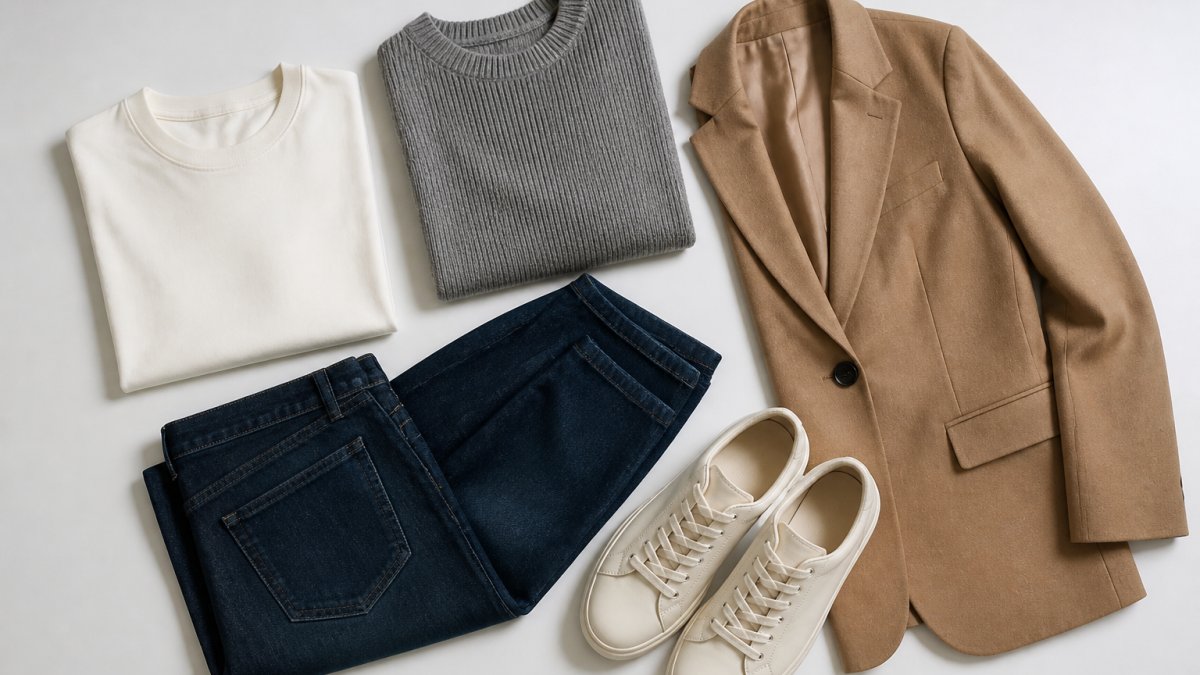
Neutral tops form the backbone.
Neutral bottoms come next. Quality denim in a shade that flatters you. Neutral pants for work or casual wear.
Layering pieces extend your outfit combinations. A tailored blazer, a cardigan, or a lightweight sweater.
One statement piece per season keeps things interesting. It works with your neutrals but adds personality. The Washed Oversized Tee, Cali ($42.00) brings that lived-in, bold aesthetic that pairs with everything from basic jeans to tailored trousers.

Outerwear appropriate to your climate. A jacket you actually wear. Not a showpiece. Something functional that coordinates with your basics.
The goal is pieces that feel good to wear repeatedly. Quality matters here because you're wearing these constantly.
Capsule Wardrobe on a Budget: Smart Shopping Strategies
Building affordably means being strategic about where you spend. The goal isn't to buy the cheapest item; it's to buy the right item at the lowest total cost of ownership. That means planning a starter budget, shopping secondhand and swaps first, and repairing before replacing.
Set a Realistic Starter Budget with Itemized Tiers
Decide how much you can spend. Be honest. A starter capsule doesn't require a full wardrobe replacement. Most people can build a working capsule for $300 or less by using what they own and filling only the gaps.
| Category | Low Tier ($150) | Medium Tier ($350) | Higher Tier ($700) |
|---|---|---|---|
| Neutral bottoms (1-2 pairs) | $40 (thrifted jeans) | $90 (new jeans + thrifted trousers) | $180 (quality denim + tailored trousers) |
| Neutral tops (2-3 pieces) | $30 (thrifted tees) | $70 (2 new tees + 1 thrifted button-up) | $140 (quality cotton tees + linen shirt) |
| Layering piece (blazer or sweater) | $25 (thrifted cardigan) | $70 (new sweater or thrifted blazer) | $150 (tailored blazer or merino sweater) |
| Statement piece | $15 (thrifted) | $40 (new or resale) | $80 (new or designer resale) |
| Shoes (1-2 pairs) | $40 (thrifted or sale) | $80 (new everyday sneakers) | $150 (quality leather or everyday pair) |
| Total | $150 | $350 | $700 |
This breakdown ensures you buy basics first and add personality later. Basics are your foundation. They matter most. If your budget is $150, spend it on bottoms and tops that fit well, and use secondhand for the rest.
Once you set a budget, track every purchase. A simple spreadsheet works. When you hit your limit, stop. This discipline is what makes affordable dressing sustainable.
Secondhand, Swaps, and Repair Strategies
New isn't the only option. Secondhand shopping expands your budget significantly and is the single biggest lever for affordable capsule building.
Thrift stores, consignment shops, and online resale platforms like Poshmark, Depop, and eBay often have quality pieces at a fraction of retail.
Classic Fit Crew Neck T‑Shirt — STL 314 →
When evaluating secondhand items, check three things before buying:
- Condition: Look at seams, underarms, crotch, and cuffs for thinning or stains. Check zippers and buttons. Skip anything that needs more than a simple repair.
- Fit: Try it on if possible. Secondhand is final sale more often than new, so fit matters more. If you can't try it on, compare measurements to a piece you already own that fits well.
- Cost per wear: A $30 secondhand blazer worn twice a week for a year is a better deal than a $15 fast-fashion blazer worn twice. Divide the price by the number of times you expect to wear it.
Clothing swaps with friends work too. You each bring items you don't wear. Trade for something you actually want. No money changes hands.
Repair is the most overlooked affordability strategy.
Rental services exist for pieces you wear occasionally. A fancy dress for one event. A seasonal coat.
Quality matters more in secondhand shopping. Check seams, zippers, and fabric condition.
Capsule Wardrobe Checklist: Your Shopping Framework
Use this framework when shopping. It keeps you focused and prevents impulse buys.
Before buying anything, ask:
- Does this match at least three items I already own?
- Will I wear this at least twice a month?
- Does the quality justify the price?
- Is this a gap I identified, or am I buying on impulse?
- Does this fit my color palette?
If you hesitate on any question, don't buy it. The right piece will feel obvious.
Keep a running list of gaps. When you spot something that fills a gap, that's when you buy. This approach prevents buying things you don't need and ensures everything works together.
Take photos of your basics. Keep them on your phone. When you're shopping, pull up the photos and check if the new item coordinates. This simple step eliminates most regrettable purchases.
Capsule Wardrobe Outfit Ideas: Mix-and-Match Combinations
The real test of a capsule wardrobe is how many outfits you can create.
Start simple. White tee plus jeans. Add a blazer. That's three different outfits right there.
Add a statement piece like the Brushed Fleece St. Lou 314 Sweatpants ($42.00). Wear it with the white tee and sneakers.

Layer strategically. A cardigan over a tee changes the vibe completely. A blazer makes it professional. A jacket makes it casual.
The magic happens when basics meet statement pieces. Your neutral foundation gives statement pieces room to shine.
Seasonal swaps keep things fresh without buying much. In winter, add a sweater and a coat.
Build Gradually and Measure Your Progress
Don't buy everything at once. Gradual building lets you test what actually works before investing more money.
Start with one outfit. Basics that fit well and feel good. Wear it for a week. How do you feel?
Add one piece every two weeks. This pace lets you assess what's missing. It also prevents buyer's remorse.
Track what you wear. After a month, look back. Which pieces got worn most? Which didn't get touched?
Measure progress by cost per wear.
Over time, your cost per wear drops. You're wearing things more because they work together.
Frequently Asked Questions
What are the essential items to include in a capsule wardrobe?
Core capsule wardrobe essentials include neutral basics like white and black t-shirts, well-fitting denim, a tailored blazer, neutral pants, and simple sweaters. Add versatile layering pieces like cardigans and lightweight jackets. Include one or two statement pieces that reflect your personal style. The Classic Fit Crew Neck T-Shirt from NewCity Brand ($36) works as a foundational basic. Focus on pieces that mix and match easily and work across multiple seasons.
How many pieces should a beginner capsule wardrobe have?
Start with 20-30 pieces that you genuinely wear. This includes basics, layering items, and a few statement pieces. Quality matters more than quantity. A smaller, intentional collection forces you to choose items that work together, reducing decision fatigue and ensuring higher cost per wear. Build gradually over time rather than buying everything at once, which helps you avoid impulse purchases and regrets.
Can I start a capsule wardrobe with clothes I already own?
Yes, this is the best place to start. Conduct a closet clear-out and identify pieces you actually wear. Assess the colors, styles, and fit of items that make you feel confident. Use these existing pieces as your foundation and identify gaps. This approach saves money immediately and ensures your capsule wardrobe reflects your real preferences rather than trends. You'll only buy new items to complement what works for you.
What's a realistic budget for starting a capsule wardrobe on a budget?
A starter capsule wardrobe on a budget can be built by focusing on essential pieces. For example, NewCity Brand's Classic Fit Crew Neck T-Shirt is $36 and the Classic Boxy Hoodie is $52. Secondhand shopping, clothing swaps, and rental options can cut costs significantly, especially for statement pieces.
Building a capsule wardrobe affordably means starting with what you own, shopping intentionally, and choosing quality over quantity. The pieces you select should feel like an extension of who you are, not a compromise. NewCity Brand pieces like the Classic Boxy Hoodie, STL ($52.00) bring that premium feel to everyday basics, helping you build a wardrobe that feels confident and cohesive. Start with one gap, fill it thoughtfully, and let your capsule wardrobe grow from there.
