

Table of Contents
- Why City Identity Is the New Streetwear Currency
- What Makes a Streetwear Brand Authentic to Urban Culture
- How to Build a Minimalist Wardrobe Using Streetwear Staples
- Urban Fashion Essentials for Men: The City-Identity Starter Pack
- How to Style Premium Streetwear Without Looking Like You Tried Too Hard
- Sustainable and DIY Streetwear: Building a Capsule Collection with Local Character
- Frequently Asked Questions
Last Updated: September 23, 2026
Why City Identity Is the New Streetwear Currency
Walk through any major metro and you'll notice the shift: the most respected fits aren't logo-heavy flexes anymore. They're coded. A 314 on a hoodie in St. Louis says more than a designer monogram ever could. City identity is the new streetwear currency because it signals belonging instead of just spending power.
This guide from NewCity Brand breaks down what makes a brand authentic to urban culture, how to build a minimalist wardrobe around streetwear staples, and how to style premium streetwear without looking like you tried too hard. Below, we'll show you exactly how to build a wardrobe that reps where you're from.
Quick picks for 2026:
- Best overall for city-coded basics: NewCity Brand
- Best for a single statement layer: snap-collar hoodies
- Best for a starter capsule: one graphic tee, one hoodie, one long sleeve
What Makes a Streetwear Brand Authentic to Urban Culture
Authenticity in streetwear comes down to specificity. A brand is authentic to urban culture when its designs reference real neighborhoods, real codes, and real subcultures instead of borrowing a generic "urban" aesthetic that could be anywhere.

That's the line most shoppers miss. Plenty of labels sell washed tees and oversized silhouettes. Far fewer connect those silhouettes to a place. According to research on youth culture and fashion consumption, younger buyers increasingly treat apparel as a form of personal and community expression rather than pure status signaling.
The brands that last in this space share three traits:
- Local references with real meaning (area codes, landmarks, regional slang)
- Garment construction that holds up (heavyweight cotton, pre-shrunk fits, reinforced seams)
- Consistency across drops so the audience knows what they're getting
What most guides miss is that authenticity is a production decision, not just a design one. A graphic means nothing on a flimsy blank.
The Role of Limited-Edition Drops and Hype Culture
Limited-edition drops create urgency, but hype culture has a downside: scarcity without substance burns out fast. A drop that sells out because of a real story holds value longer than one that sells out because of manufactured scarcity.
How to Build a Minimalist Wardrobe Using Streetwear Staples
A minimalist streetwear wardrobe is a small set of versatile, high-quality pieces that mix and match across most days, built around neutral colors and one or two statement graphics. Fewer, better pieces beat a closet full of trend-cycle filler.
Here's a capsule formula that works for most people:
| Layer | Piece | Why It Works |
|---|---|---|
| Base | Oversized graphic tee | Carries the city code, layers under everything |
| Mid | Snap-collar hoodie | Adds texture and warmth without bulk |
| Top | Long sleeve tee | Bridges seasons, works alone or layered |
| Bottom | Straight or loose denim | Balances the oversized top half |
Start with one base, one mid, one top. Add from there only when a piece fills a real gap.
Urban Fashion Essentials for Men: The City-Identity Starter Pack
The starter pack for urban fashion essentials for men is four pieces: an oversized graphic tee, a heavyweight hoodie, a long sleeve, and one pair of loose denim. Get those right and you can dress for most of the week without thinking.
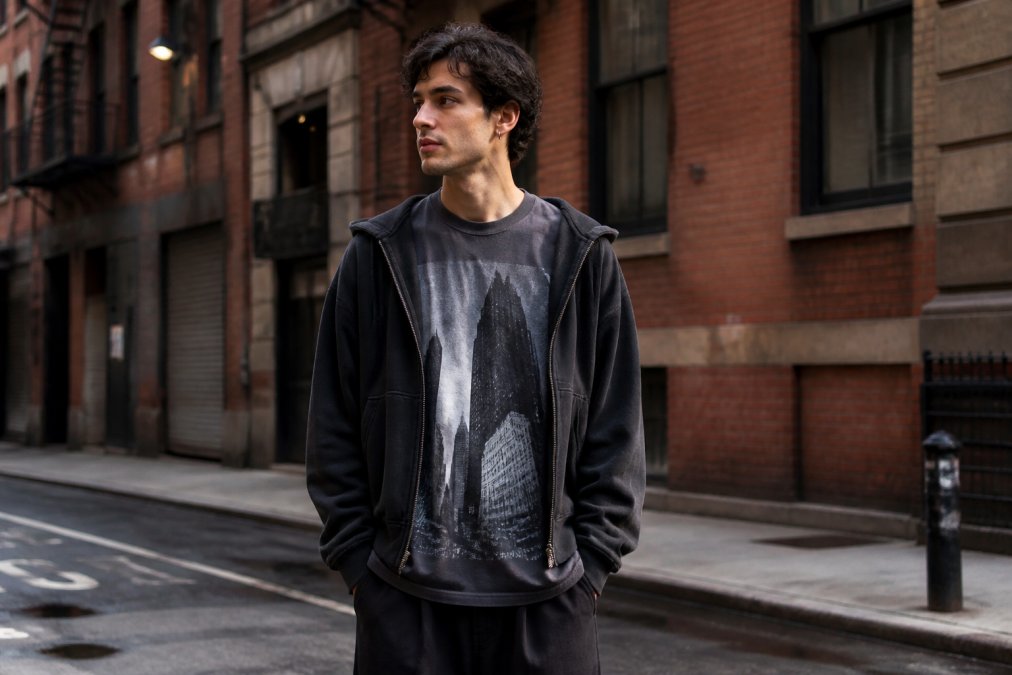
How a Garment Actually Carries a City Code
Most guides stop at "wear a graphic tee." That skips the part that matters: the mechanism. A piece reads as city-coded when three layers line up.
Oversized Snow Washed Tee — STL 314 →
- The mark. An area code, a street name, a transit line, a neighborhood nickname. It has to be legible to locals and opaque to outsiders, that asymmetry is the whole point. A 314 on a hoodie in St. Louis says more than a designer monogram ever could because it filters for people who already know.
- The silhouette. Cities have shapes. A boxy, drop-shoulder cut reads as Midwest and Southern; a cropped, fitted cut reads as coastal. The cut is doing as much signaling work as the graphic.
- The surface. Wash and texture carry regional weather and wear. Snow-washed and sun-faded finishes reference climate and grit, not just trend.
The Four-Piece Starter Pack, With the Specs That Matter
Specificity is what separates a real starter pack from a generic one. NewCity Brand builds each piece around an actual metro code, so the graphic means something to the person wearing it.
| Layer | Piece | What to Check Before You Buy |
|---|---|---|
| Base | Oversized graphic tee | Fabric weight, reactive dye vs. pigment dye, boxy vs. relaxed drop |
| Mid | Snap-collar hoodie | Cotton weight, combed vs. ring-spun, collar hardware |
| Top | Long sleeve tee | Wash treatment, cuff ribbing, whether it layers under the hoodie without bunching |
| Bottom | Straight or loose denim | Rise, leg opening, whether it balances an oversized top half |
A City-by-City Cheat Sheet
This is the part most "best streetwear brands" lists skip entirely. City identity isn't one aesthetic, it's a set of regional dialects. Here's how the codes shift:
- Rust Belt and Midwest (St. Louis 314, Detroit 313, Memphis 901). Industrial textures, snow-washed and sun-faded finishes, heavy cotton. The palette leans muted; the graphic does the talking. Layering matters because the seasons are real.
- Sun Belt and Southwest (Phoenix 602, San Diego 619, Los Angeles 213). Lighter fabric weights, sun-faded washes, exposed-seam construction that reads as unfinished on purpose. Fewer layers, more surface texture.
- Coastal and Southeast (Miami). Reactive-dyed cotton; boxy cuts with paneled seams.
Graphic Tees and Oversized Fits That Carry a City Code
Graphic tees carry a city code when the graphic references a real place and the fit matches the silhouette of that scene. An oversized boxy cut isn't a trend detail, it's the shape streetwear has used for decades.

How to Style Premium Streetwear Without Looking Like You Tried Too Hard
Styling premium streetwear comes down to restraint. Pick one statement piece, keep everything else quiet, and let fit do the work instead of stacking logos.
Three rules that hold up:
- One loud piece per outfit. If the tee carries the graphic, the rest stays neutral.
- Match the silhouette, not the brand. Boxy top pairs with a straighter bottom.
- Let the wash do the talking. Snow-washed and sun-faded textures already add visual interest.
Sustainable and DIY Streetwear: Building a Capsule Collection with Local Character
Sustainable streetwear means buying fewer, better-made pieces and wearing them long enough to justify the cost. A capsule collection with local character does double duty: it reduces waste and it deepens the connection to where you're from.
Three practical moves:
- Buy heavyweight over fast fashion. A 380g/m² hoodie outlasts three cheap ones.
- Wash cold and hang dry. This preserves the fade and extends garment life.
- Customize instead of replacing. Adding a patch or swapping laces makes a piece feel new again.
Frequently Asked Questions
How do I choose a streetwear brand that fits my personal style?
Start by identifying the city codes and cultural references you want to wear. Look for brands that use premium fabrics, like heavyweight cotton and snow-washed textures, and offer designs that feel specific to your city rather than generic. Check fit details: oversized boxy cuts, drop shoulders, and raw seams signal modern streetwear. Read reviews and look for fit videos to confirm quality. A brand that celebrates local identity through graphics and construction will feel more authentic than one that chases every trend.
What makes a streetwear brand authentic to urban culture?
Authenticity comes from genuine connection to city life, not just marketing language. Brands that reference specific neighborhoods or area codes, and use construction details like exposed seams and distressed finishes show they understand street culture. Limited-edition drops that sell out quickly and a consistent aesthetic across collections also signal authenticity. When a brand's designs feel like they could only come from your city, that's a strong sign it's rooted in real urban identity.
How can I build a minimalist wardrobe using streetwear staples?
Focus on a tight color palette (black, grey, washed neutrals) and invest in a few high-quality pieces: an oversized snow-washed tee, a heavyweight hoodie with a snap collar, and a boxy long-sleeve tee. These items mix easily and can be layered for different looks. Choose garments with unique textures like snow-washed fades or raw seams to add interest without extra items.
Are premium streetwear brands worth the investment for everyday wear?
Yes, if you prioritize fabric weight, construction, and fit. Premium pieces often use 100% combed cotton, pre-shrunk fabrics, and reinforced stitching that hold up to daily wear and repeated washing. For example, a 380g/m² hoodie is substantial, while cheaper alternatives may pill or fade quickly. The higher upfront cost is offset by longevity and a better silhouette. Look for specific details like double-stitched cuffs, taped neck seams, and reactive-dyed colors that resist fading.
How does local city identity influence modern fashion trends?
City identity shapes streetwear through area-code graphics, regional color palettes, and references to local landmarks or subcultures. Brands that rep specific cities, like 314 for St. Louis or 213 for Los Angeles, turn clothing into a statement of place. This hyper-local approach contrasts with generic 'urban' styles and lets wearers express pride in their community. As streetwear becomes more global, the most sought-after pieces often celebrate the specific over the universal, making city identity a key driver of trend cycles.