

Table of Contents
- What Makes a Hoodie Heavyweight: Understanding GSM
- Heavyweight Cotton vs. Cotton-Polyester Blends: Durability Comparison
- Key Quality Markers: Construction, Stitch Quality, and Seam Integrity
- Performance Benefits: Insulation, Breathability, and Comfort
- How to Wash Heavy Cotton Hoodies and Maintain Longevity
- The Value Proposition: Price vs. Lifespan and Wear
- Is the Investment Worth It?
- Frequently Asked Questions
Last Updated: September 30, 2026
What Makes a Hoodie Heavyweight: Understanding GSM
Heavy cotton hoodies are defined by their fabric weight, measured in grams per square meter (GSM). A heavyweight hoodie typically falls between 350-500 GSM, with premium options reaching 400+ GSM. This metric directly determines how much cotton fiber is packed into every square inch of fabric, the higher the number, the denser and more substantial the garment feels.
Standard hoodies at 250-300 GSM feel thin after a few washes; 400+ GSM offers 30-50% more fabric weight, a structural difference you'll feel immediately.
Denser fabric resists pilling, maintains shape, and withstands repeated washing. A 400 GSM hoodie won't feel papery after ten washes; a 250 GSM hoodie will.
NewCity Brand's Heavyweight Sun-Faded Hoodies are constructed at 400g/m² using 100% combed cotton with brushed fleece interiors. This density puts them squarely in the heavyweight category, meaning they're built to hold structure and maintain softness through extended wear.

Brands claiming "premium" without listing GSM often sell standard-weight hoodies at premium prices. Real heavyweight manufacturers disclose the number.
Heavyweight Cotton vs. Cotton-Polyester Blends: Durability Comparison
Pure 100% cotton offers superior breathability and softness but shrinks more easily. Cotton-polyester blends (80/20 or 70/30) trade softness for durability and shrink resistance.
A 100% cotton hoodie at 400 GSM feels softer but requires careful washing; an 80/20 blend feels slightly stiffer but forgives washing mistakes and maintains fit longer.
Polyester fibers resist mechanical stress better than cotton, so blends resist pilling and maintain color longer. Pure combed cotton outperforms blends on softness and breathability but demands careful maintenance.
| Fabric Composition | Softness | Shrinkage Risk | Pilling Resistance | Longevity | Best For |
|---|---|---|---|---|---|
| 100% Cotton (Combed) | Highest | High | Medium | 3-5 years | Daily wear, careful washing |
| 80/20 Cotton-Poly | High | Low | High | 4-6 years | Frequent washing, durability priority |
| 70/30 Cotton-Poly | Medium | Very Low | Very High | 5-7 years | Heavy rotation, low maintenance |
| 100% Cotton (Standard) | Medium | Very High | Low | 1-3 years | Limited use, infrequent wear |
NewCity Brand uses 100% combed cotton at 400 GSM, prioritizing feel and breathability. Combed cotton removes short fibers, leaving only the strongest strands, genuine softness without sacrificing durability if you follow care instructions.
100% cotton requires reverse-side washing and low heat, but investing in a heavyweight hoodie assumes you'll care for it properly.
Key Quality Markers: Construction, Stitch Quality, and Seam Integrity
Durability depends on assembly: double-stitched seams, flatlock hoods, and taped necklines determine whether a hoodie survives 50 washes or fails after 15.
Standard hoodies use single-stitch construction; heavyweight hoodies upgrade to double-stitching on high-stress areas and reinforced hood attachment. Flatlock seaming interlocks pieces without visible interior stitching, distributing stress across a wider area.
Taped necklines and shoulder binding reinforce the hoodie against stretching and shape loss through hundreds of washes; budget hoodies skip this.
At-Store Quality Tests You Can Perform:
Before committing to a purchase, perform these tactile checks in-store or during the return window:
Seam Stress Test: Pull the side seam gently. Double-stitched seams show two distinct parallel thread lines and feel firm; single-stitched seams feel like one thin line. Loose or shifting seams indicate inadequate tension.
Stretch Recovery: Pinch and stretch the front panel two inches, then release. Quality heavyweight cotton snaps back within one second; slow recovery indicates compromised fiber quality or overstated GSM.
Seam Flatness: Flatlock construction feels smooth; standard seams create a raised ridge that traps moisture and causes chafing.
Hood Attachment Integrity: Look for multiple parallel stitch lines at the hood-neckline connection. The hood edge should not shift when tugged; poor attachment is a common failure point.
Cuff and Hem Binding: Quality construction uses double-stitched ribbing with reinforced binding. The interior edge should feel smooth and secure, not loose or puckered.
Fabric Density Check: Hold the hoodie to light. Minimal light should pass through; easy light passage suggests a suspect GSM claim.
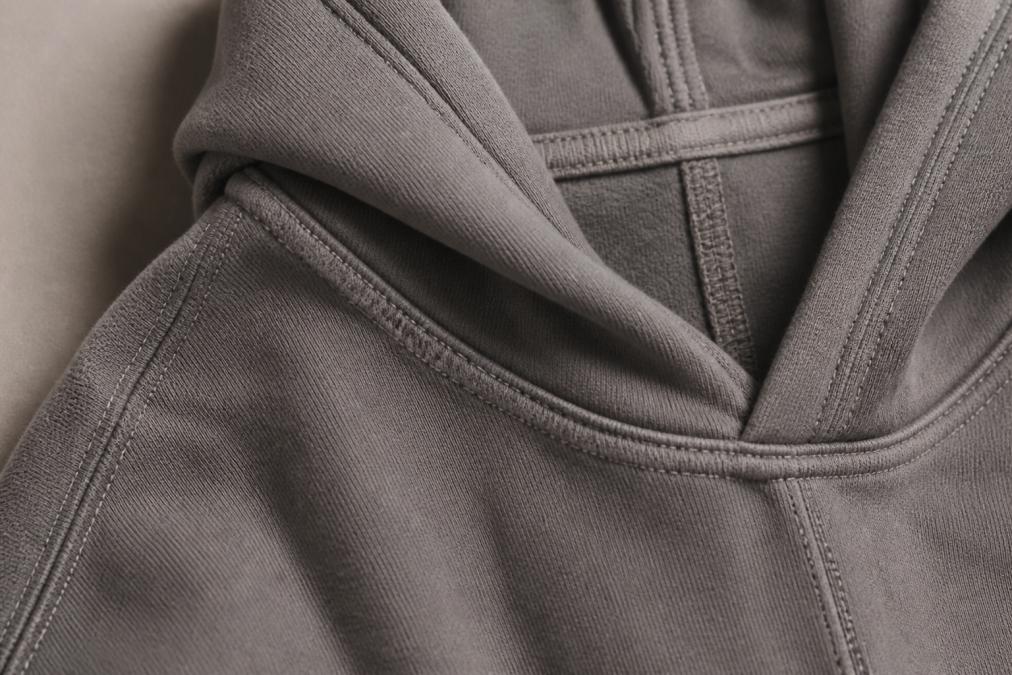
NewCity Brand's construction includes double flatlock seamed hoods, binding-taped neck and shoulders, and double-stitched ribbed cuffs and hem. These aren't cosmetic upgrades, they're the difference between a hoodie that holds its shape for years and one that stretches out after a season.
Verify construction by examining product photos for interior stitching patterns, reinforced hood stitching, and taped neck binding. If the brand doesn't show these details, that's a red flag.
Heavyweight Sun‑Faded Hoodie — STL 314 →
Performance Benefits: Insulation, Breathability, and Comfort
Heavyweight cotton hoodies excel at temperature regulation: the brushed fleece interior traps warm air while the outer cotton layer allows moisture to escape, preventing clamminess.
Cotton naturally wicks moisture and allows air circulation, making heavyweight cotton hoodies ideal for fall/spring layering without overheating. Polyester blends sacrifice breathability for durability.
A 400+ GSM hoodie feels substantial and structured, reassuring compared to the loose, papery feel of lighter hoodies.
The brushed interior creates air pockets that slow heat loss. Standard hoodies with smooth interiors offer minimal insulation.
How Body Type Affects Heavyweight Hoodie Performance:
Fabric weight and drape interact differently depending on your frame, and this directly impacts whether a heavyweight hoodie will feel comfortable or restrictive.
Smaller frames (XS-S sizes): A 400 GSM hoodie may feel bulky and constraining on a smaller build. Consider whether you prefer relaxed fit (heavyweight works well) or closer fit (mid-weight 300-350 GSM may be more flattering).
Medium frames (M-L sizes): Heavyweight cotton shines here. The fabric weight creates structure without overwhelming the silhouette; most brand sizing is optimized for this range.
Larger frames (XL and up): Heavyweight fabric provides excellent support and prevents drooping.
Seasonal and Climate Suitability:
Activity Level and Moisture Management:
How to Wash Heavy Cotton Hoodies and Maintain Longevity
The investment in a heavyweight hoodie only pays off if you care for it correctly. Improper washing is the fastest way to ruin 100% cotton garments.
Washing protocol for 100% cotton:
- Wash on reverse side with cold water to protect the graphic and color
- Use neutral detergents only, avoid bleach, fabric softeners, and optical brighteners
- Don't soak the hoodie before washing
- Avoid direct sunlight exposure, which fades color and weakens fibers
Drying:
- Air dry whenever possible. Tumble drying on high heat shrinks cotton and weakens fibers
- If you must use a dryer, use low temperature settings (max 30°C or 90°F)
- Remove the hoodie while still slightly damp to minimize wrinkles
Storage:
- Fold rather than hang to prevent stretching at the shoulders
- Store in a cool, dry place away from direct sunlight
- Avoid compression in tight spaces, which can create permanent creases
The Value Proposition: Price vs. Lifespan and Wear
At $64, NewCity Brand's heavyweight hoodies sit at the premium end of the streetwear market. The question is whether lifespan and wear quality justify the cost.
Is the Investment Worth It?
Heavy cotton hoodies are worth the investment if you wear them regularly, follow care instructions, and value consistency over frequent rotation.
Frequently Asked Questions
What GSM should I look for in a quality heavyweight hoodie?
Heavy cotton hoodies typically range from 350-450g/m². At 400g/m², you get the optimal balance: enough density for durability and structure without excessive weight. Below 300g/m² feels flimsy; above 500g/m² becomes rigid and less wearable daily. The Heavyweight Sun-Faded Hoodies use 400g/m² combed cotton, hitting that sweet spot for streetwear that maintains its shape while staying comfortable for everyday rotation.
Is 100% cotton better than a cotton-polyester blend for durability?
Not necessarily. 100% cotton offers superior breathability and a premium hand-feel, but pure cotton shrinks more and pilling can occur with wear. Cotton-polyester blends (like 60/40 or 70/30) add stretch recovery and reduce pilling, extending garment life. For heavy cotton hoodies specifically, 100% combed cotton with proper construction, like side-seamed construction and double-stitched ribbing, outperforms blends in longevity because the weight and density compensate for cotton's natural properties.
How do I test quality before buying a heavyweight hoodie?
Check the fabric weight (aim for 400g/m²), inspect seam construction (double-stitched, flatlock hood), and verify material (combed cotton resists pilling better than regular cotton). Look for binding-taped necklines and shoulders, this prevents stretching. Feel the brushed fleece interior; quality hoodies have a soft, consistent hand-feel. Pre-shrunk construction is essential. When it arrives, examine seam integrity under light and feel for uniform fabric density across the garment.
Do heavy cotton hoodies shrink more than lighter fabrics?
Heavy cotton can shrink 3-5% if not pre-shrunk, while lighter fabrics shrink less due to lower density. Pre-shrunk hoodies (like NewCity's 400g/m² options) minimize this risk significantly. Wash in cool water on reverse side with neutral detergents and tumble dry on low heat to prevent additional shrinkage. Avoid hot water and direct sunlight, which accelerate both shrinkage and fading, though intentional fading is part of the sun-washed aesthetic.
Is a $64 heavyweight hoodie worth the price compared to cheaper options?
At $64 for a 400g/m² combed cotton hoodie with double-stitched construction, binding-taped shoulders, and flatlock hood seams, you're paying for durability that lasts 3-5 years of regular wear. The premium covers superior fabric density, construction integrity, and longevity, making the per-wear cost competitive over time.
The real value of investing in a heavy cotton hoodie comes down to intention. You're not buying a garment to replace in six months. You're buying a piece that reflects your city identity and holds up to real wear. NewCity Brand's heavyweight hoodies are built for that kind of commitment, dense fabric, reinforced construction, and premium materials that earn their place in your rotation. Get started with NewCity Brand and build a wardrobe that lasts.